
Small Space, Big Impact: Décor Principles That Hold Up in Any Apartment

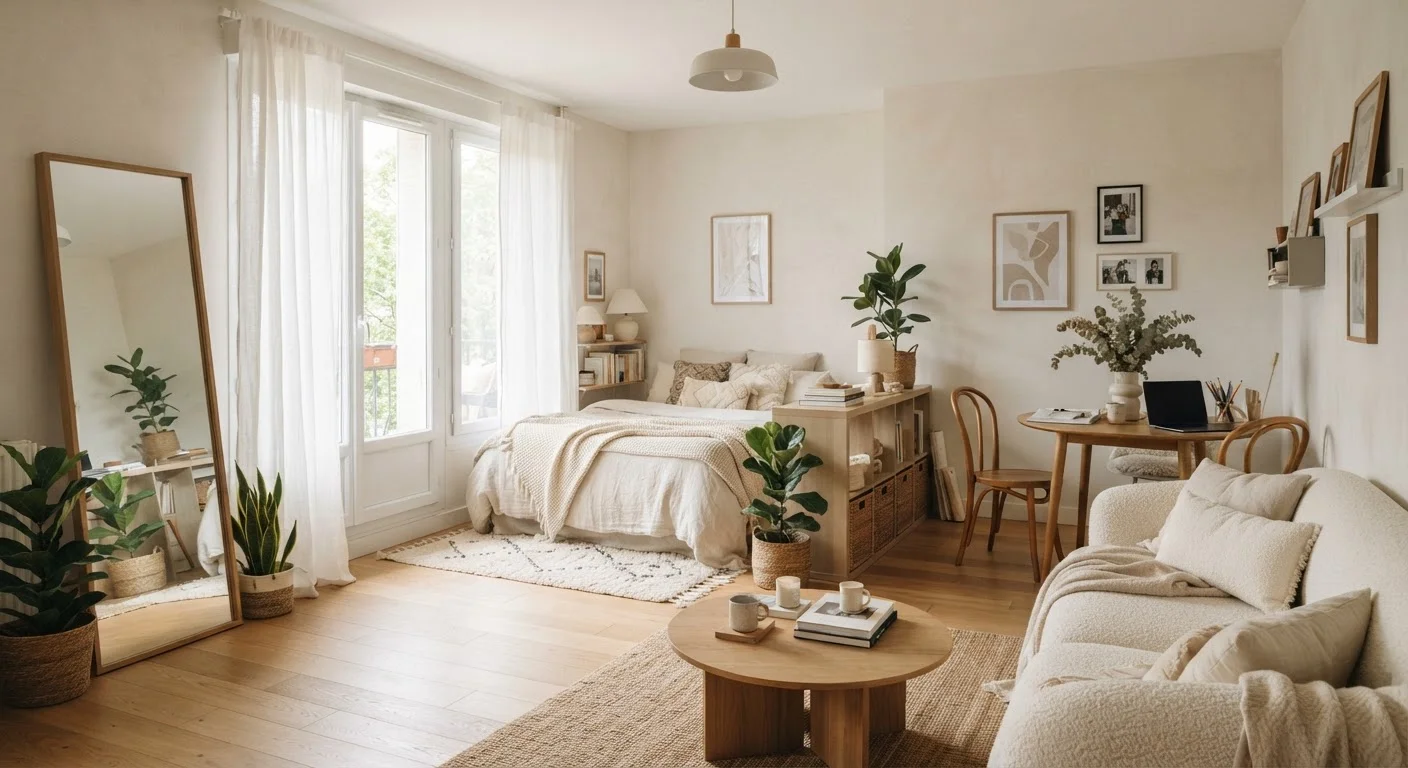
Photo: FaqsBay.com | Trending Blogs, Top Genres editorial
Key Takeaways
- Correctly scaled furniture — not necessarily small furniture — makes compact rooms feel more intentional.
- Mirrors and layered lighting are among the most effective tools for expanding perceived space.
- Every storage piece in a small apartment should serve a dual purpose whenever possible.
- A consistent color palette reduces visual noise and makes a room feel larger and calmer.
- Rugs, lighting, and furniture arrangement can define distinct zones without walls.
- Regular editing — removing items that don't earn their place — is as important as adding new ones.
Why Small Spaces Are a Design Opportunity
Small apartments come with real limitations: limited square footage, fewer walls to work with, and often restrictive lease terms. But they also come with an underappreciated advantage — constraints force thoughtful decisions. Every item you place has to earn its spot, and that discipline tends to produce rooms that feel more considered than sprawling ones that accumulate clutter over time.
The principles that work in compact spaces also happen to be the foundational principles of good interior design generally: proportion, light, visual hierarchy, and purposeful editing. If you're starting from scratch or looking to reset a room that isn't working, our room refresh checklist walks you through what to assess before spending anything new.
This guide focuses on durable principles — ones that hold up across different apartment layouts, budgets, and personal styles.
The Scale Myth: Furniture Sizing in Small Rooms
One of the most persistent misconceptions about small-space decorating is that everything in the room should be small. In reality, a room full of tiny furniture often feels more chaotic and cramped than one anchored by a single, appropriately sized sofa or dining table. The myths around scale and matching sets have steered a lot of people toward cluttered, undersized rooms.
The more useful rule: choose fewer pieces at the right scale rather than many pieces at a reduced scale. A sofa that fits the room proportionally — not one shrunken to match a studio footprint — will ground the space. Pair it with a coffee table that leaves 18 inches of clearance for circulation, and the room immediately feels intentional.
When arranging furniture, float pieces slightly away from the walls rather than pushing everything to the perimeter. Counter-intuitive as it sounds, this actually makes a room feel larger by creating breathing room and a defined center.
Use a single oversized piece of art rather than multiple small frames scattered across a wall. One large-scale artwork reads as confident and intentional; clusters of small pieces can fragment visual attention and make a wall feel busier.
Leggy furniture — pieces with exposed legs rather than furniture that sits flush on the floor — visually opens up a room by letting the eye travel underneath. This works for sofas, chairs, and side tables alike.
Light, Mirrors, and Visual Depth
Natural light is the single biggest driver of how spacious a room feels. Keep window treatments light and simple — heavy drapes drawn close to the window frame reduce both light and perceived ceiling height. If privacy is needed, consider sheer panels or cellular shades that allow diffused daylight through.
Mirrors amplify light and create the illusion of depth. A large mirror placed opposite a window reflects the outdoor view and effectively doubles the sense of space. Leaning a full-length mirror against a wall is a low-commitment approach that avoids drilling — useful if you're thinking about decorating without risking your deposit.
Layer your artificial lighting: overhead fixtures alone flatten a room. Adding floor lamps or table lamps in corners draws the eye around the room and creates warmth after dark.
Storage That Earns Its Place
In a small apartment, storage that only stores is wasted potential. Ottomans with interior storage, bed frames with drawers, and benches at the foot of a bed all serve two functions simultaneously. The goal is to reduce the number of freestanding pieces competing for floor space.
Vertical storage is consistently underused. Shelving that runs from mid-wall to ceiling draws the eye upward, making ceilings feel higher while genuinely increasing storage capacity. Whether open shelving or closed cabinets works better depends on your habits and the room's visual needs — our piece on open shelving versus closed cabinets breaks down the real trade-offs.
Go Vertical with Storage
Color and Pattern Without Overwhelm
A unified color palette — typically two to three colors used consistently across walls, textiles, and larger furniture pieces — reduces visual noise and makes a room read as larger and more cohesive. This doesn't mean everything must match exactly; it means the overall palette should be consistent enough that the eye can rest.
Light and cool tones tend to recede visually, which can help walls feel farther apart. Deeper tones can absolutely work in small spaces, but they require more intentional contrast — a dark accent wall, for example, can make a room feel more intimate and defined rather than compressed. See how accent walls change a room's proportions for a deeper look at that effect.
Pattern works best when it's contained — a patterned rug or a few printed cushions add personality without overwhelming a small footprint.
Defining Zones in a Single Room
Studio apartments and open-plan layouts require deliberate zone definition. Without physical walls, you rely on furniture arrangement, rugs, and lighting to signal where one function ends and another begins.
An area rug is one of the most effective tools for this. Placing a rug under the seating group — with the front legs of the sofa and chairs on the rug — creates a distinct living zone even in a shared room. A pendant light or floor lamp positioned over a desk establishes a work area. Bookcase dividers can define space while adding storage without closing off the room entirely.
Plants can also help anchor a zone and add life to a corner that would otherwise feel empty. Placement matters both visually and practically — our guide on decorating with plants addresses how to think through both at once.
Keeping It Adaptable Over Time
Small-space decorating rewards a lighter hand. Rather than investing in a fixed, permanent look, focus on a solid, neutral foundation — walls, large furniture, floor coverings — and layer in personality through items that can be swapped out: cushions, throws, a few well-chosen objects. Seasonal décor swaps can shift a room's mood significantly without requiring any major purchases.
Equally important is the habit of editing. Small rooms reveal accumulation quickly. A regular pass through the space — deciding what to remove rather than what to add — is one of the most effective design moves available to anyone in a compact apartment.
The goal isn't a showroom. It's a space that functions well, reflects your habits, and feels open enough to breathe in every day.
The content provided on our blog site traverses numerous categories, offering readers valuable and practical information. Readers can use the editorial team’s research and data to gain more insights into their topics of interest. However, they are requested not to treat the articles as conclusive. The website team cannot be held responsible for differences in data or inaccuracies found across other platforms. Please also note that the site might also miss out on various schemes and offers available that the readers may find more beneficial than the ones we cover.