
Seasonal Décor Swaps That Change a Room Without Redecorating It

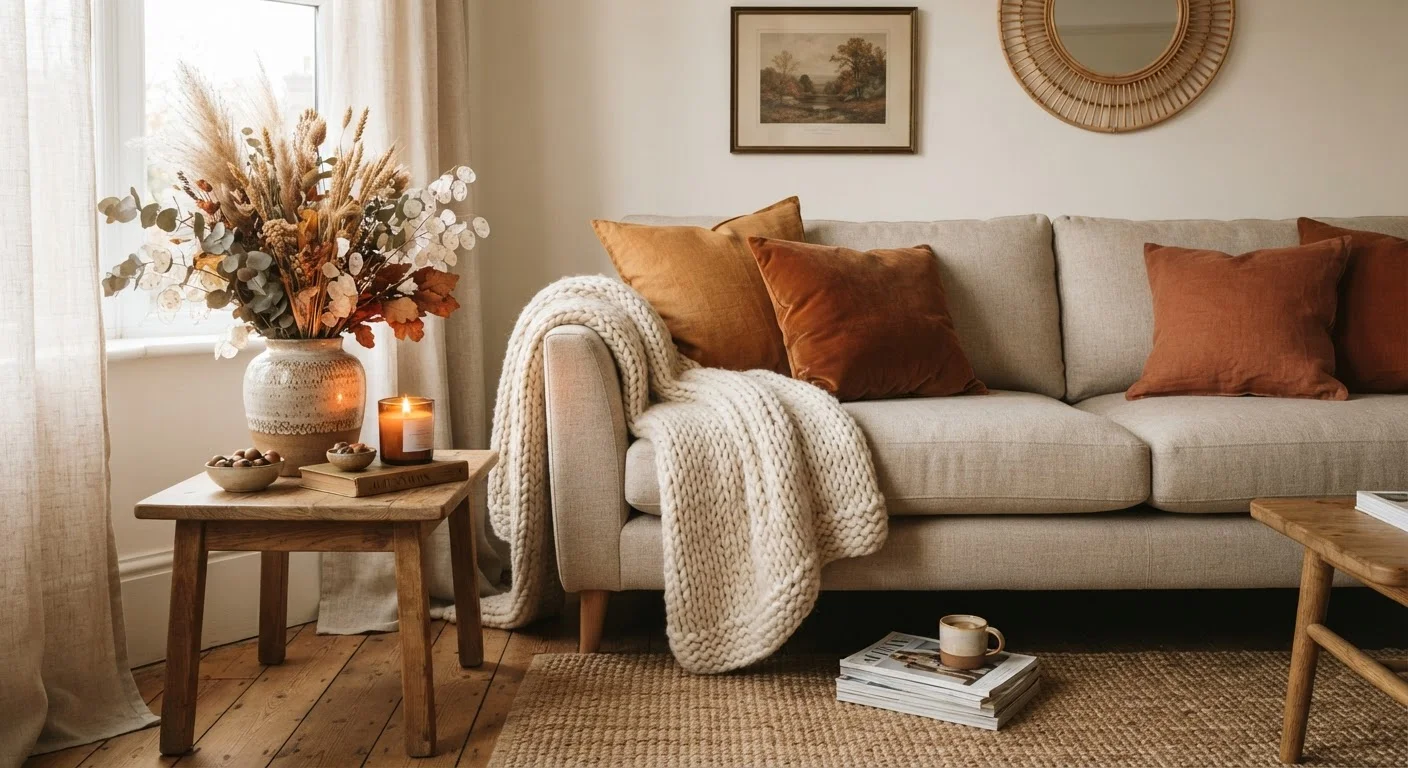
Photo: FaqsBay.com | Trending Blogs, Top Genres editorial
Key Takeaways
- Swapping textiles — pillows, throws, and table linens — is the fastest way to shift a room's seasonal feeling.
- Scent, lighting temperature, and plant choices reinforce visual changes without adding visual clutter.
- Storing off-season décor in labeled bins makes rotating your collection fast and cost-effective.
- You don't need new furniture — strategic object swaps on shelves and surfaces do most of the work.
- Grouping seasonal objects in odd numbers tends to create more visually satisfying arrangements.
Why Seasonal Swaps Work Better Than You'd Expect
Most homeowners assume that changing a room's feel requires repainting walls, buying new furniture, or spending a weekend rearranging everything. In practice, the mood of a room is set by its surface layer — the textiles, objects, lighting, and scent that sit on top of the permanent bones. Swap those elements with the seasons, and the room reads as entirely different without a single structural change.
This approach has two practical advantages. First, it's far more budget-friendly than redecorating. Second, it protects you from décor fatigue — when a look is only meant to last a few months, you can commit to something more distinctive rather than defaulting to the safest possible neutral. If you want a full audit of what your space actually needs before you start swapping anything, the room refresh checklist is a useful starting point.
Below are the swap categories that consistently deliver the most visual payoff for the least effort and expense.
Swap Your Throw Pillows and Blankets
Throw pillows are the single highest-impact swap you can make. A sofa with four to six pillows in a consistent color family reads as a completely different piece of furniture from season to season. In summer, opt for lighter-weight fabrics — linen, cotton, or canvas — in cooler tones. In fall and winter, move to heavier textures: velvet, boucle, or chunky knits in warmer, deeper hues.
The same logic applies to throw blankets. A draped blanket isn't just functional — it adds color, texture, and visual weight. Choose one that contrasts with your sofa rather than matching it, and it will do far more visual work. Store your off-season pillows in vacuum-seal bags to save bin space.
A sofa reads as an entirely different piece of furniture when its pillows change texture and tone.
Rotate Table Linens and Runners
Dining tables and console tables respond dramatically to a simple linen swap. A crisp white or natural linen runner feels appropriately airy in warmer months; a heavier woven runner in rust, forest green, or charcoal carries a room into fall and winter with no other changes required.
Don't overlook placemats and napkins for the dining table — these are inexpensive enough to maintain a full seasonal set, and they communicate intentionality to guests in a way that's disproportionate to their cost. Keep each set rolled together with a rubber band in a single drawer so deployment takes minutes.
A seasonal table runner communicates intentional design to guests at almost no cost.
Change Your Centerpiece Objects and Botanicals
The objects sitting on your coffee table, dining table, or entry console are the room's editorial statement. Swapping them seasonally — dried pampas grass in fall, eucalyptus stems in winter, fresh florals or potted herbs in spring, sculptural branches or air plants in summer — keeps the space feeling current without purchasing furniture.
Dried botanicals are particularly practical because they last across an entire season and often look better as they age. If you're already thinking through how plant placement affects both aesthetics and maintenance, decorating with plants addresses that balance directly.
Dried botanicals earn their keep by lasting an entire season and improving with age.
Adjust Your Lighting Strategy
Light is often the invisible element homeowners overlook. In brighter seasons, maximize natural light and rely on fewer, simpler fixtures. As days shorten, introduce layered light sources — a cluster of candles, a warm-toned table lamp, or a string of Edison-style bulbs — to compensate for lost daylight and add ambiance.
Switching bulbs between cool-white (around 4000K) and warm-white (around 2700K) color temperatures within the same fixture can noticeably shift a room's character. This costs almost nothing if you already own both bulb types, and the effect on perceived warmth is significant, especially in rooms with neutral wall colors.
Switching bulb color temperature is one of the cheapest ways to change a room's seasonal feeling.
Rotate Your Shelf and Surface Objects
Shelves and mantels act as curated galleries, and the objects you choose tell visitors what season it is before they consciously register anything else. Rather than keeping all your decorative objects out all the time, maintain two or three seasonal groupings that rotate in and out.
The key is editing ruthlessly. A shelf with five deliberately chosen objects is more powerful than a shelf with fifteen random ones. Apply this principle seasonally: bring in two or three items that belong to the season and remove an equal number to a storage bin. For guidance on how groupings create visual balance, see our article on the rule of three in home décor. This discipline also prevents décor accumulation — the creeping habit of adding without ever subtracting.
Editing to five well-chosen objects beats fifteen random ones every time.
Use Scent as a Seasonal Signal
Scent is among the most immediate mood-setters in any interior, yet it's rarely discussed as part of seasonal decorating. Candles, diffusers, and simmer pots with season-appropriate fragrances — fresh citrus and herbs in spring, warm spice and woodsmoke in fall, pine and eucalyptus in winter — complete the sensory shift that visual swaps alone can't fully achieve.
Keep scent restrained rather than overwhelming. A single well-placed candle or a subtle diffuser is usually enough. The goal is a background note, not a fragrance store. Rotate your scent choices alongside your visual swaps so that all the senses reinforce the same seasonal message.
Scent completes a seasonal swap — it shifts the room's mood through channels that visual changes alone cannot reach.
Making Your Seasonal Collection Work Year After Year
The practical secret behind a successful seasonal rotation is storage discipline. Invest in a set of clearly labeled, stackable bins — one per season — and return each item to its bin the moment you swap it out. Over two or three years, you'll build a curated collection that costs almost nothing to maintain and feels genuinely fresh each time it returns.
Build Your Rotation System Early
When building your seasonal palette, think in terms of two to three anchor colors per season rather than buying individual items at random. A cohesive palette makes mixing and matching easier, and it prevents the collection from feeling like a jumble. For guidance on how groupings affect visual impact, our piece on the rule of three in home décor explains the principle behind odd-number arrangements that designers rely on.
Renters have particularly strong reasons to lean into seasonal swaps — they're entirely reversible and leave no trace when it's time to move. For more deposit-safe strategies, see decorating a rental without losing your deposit. And if you're curious which widely repeated décor rules are actually worth ignoring, decorating myths that waste money and space covers that ground directly.
The content provided on our blog site traverses numerous categories, offering readers valuable and practical information. Readers can use the editorial team’s research and data to gain more insights into their topics of interest. However, they are requested not to treat the articles as conclusive. The website team cannot be held responsible for differences in data or inaccuracies found across other platforms. Please also note that the site might also miss out on various schemes and offers available that the readers may find more beneficial than the ones we cover.