
Bodyweight Training Explained: What It Can Build and Where It Has Limits

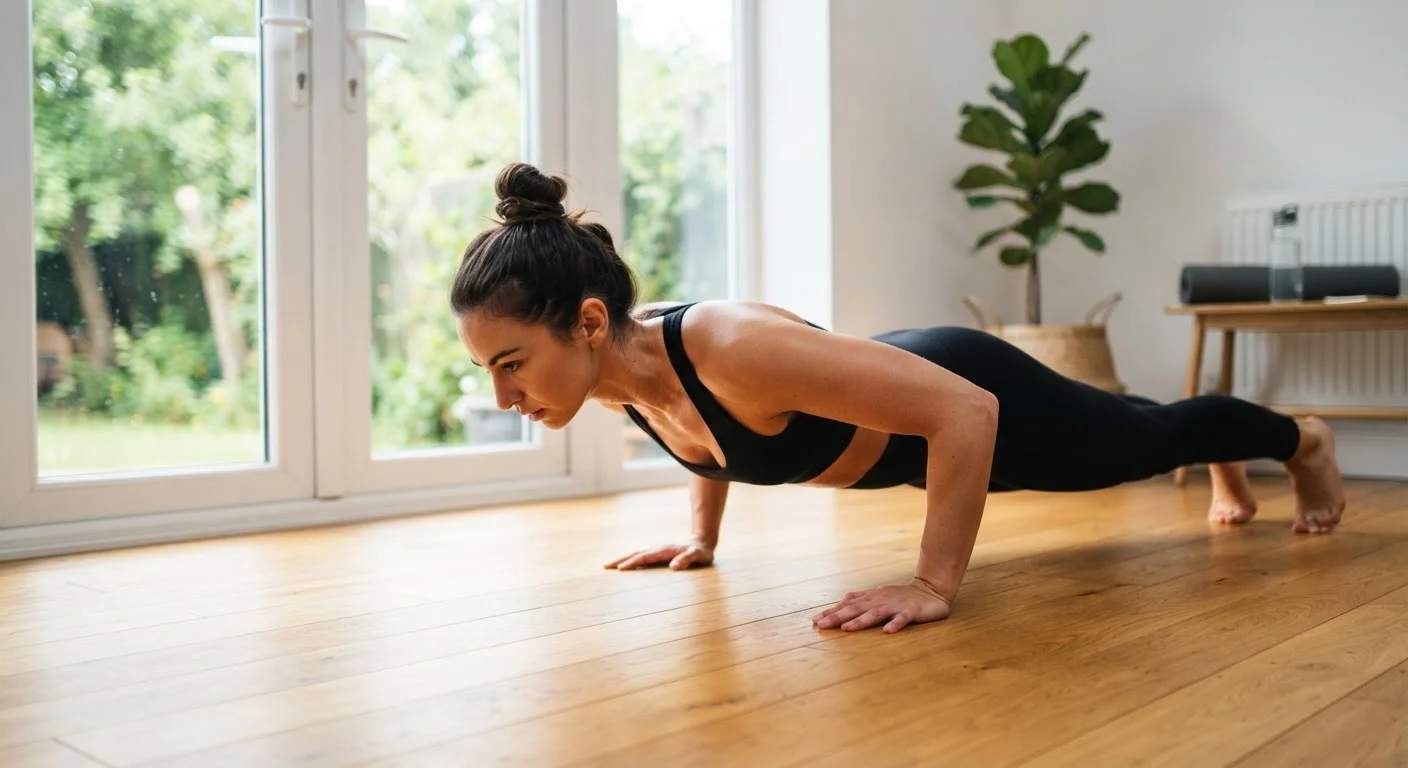
Photo: FaqsBay.com | Trending Blogs, Top Genres editorial
Key Takeaways
- Bodyweight training can build real strength, endurance, and muscle-especially for beginners and intermediates.
- Progressive overload is possible without weights but requires more creativity and planning.
- Advanced strength goals and heavy muscle mass gains have genuine limits without external load.
- Consistency and exercise variety matter more than any single training method.
- Bodyweight training is highly accessible and sustainable for most non-athletes.
No equipment or gym membership required
Bodyweight training can be done anywhere - a living room, hotel room, or backyard - eliminating cost and commute barriers that cause many people to abandon fitness routines.
Effective for building beginner and intermediate strength
Research consistently shows that bodyweight resistance exercises stimulate muscle development in individuals new to structured training, producing strength gains comparable to light-to-moderate weighted exercise at similar effort levels.
Supports functional movement and joint health
Many bodyweight exercises develop coordination, balance, and joint stability in patterns that translate directly to everyday activities, potentially reducing injury risk over time.
Progressive overload is genuinely achievable
By adjusting leverage, tempo, range of motion, and movement complexity, bodyweight training can continue to challenge the body as fitness improves - without adding a single pound of external weight.
Lower injury risk for deconditioned beginners
Using bodyweight alone reduces the risk of technique-related injuries common when beginners handle heavy external loads before developing movement literacy and baseline strength.
Limited stimulus for advanced muscle mass gains
Significant hypertrophy - particularly beyond intermediate levels - generally requires progressively heavier external resistance. Bodyweight alone cannot reliably provide the mechanical tension needed for advanced muscle growth.
Lower body development hits an early ceiling
The legs are proportionally strong relative to bodyweight, meaning squats and lunges become insufficiently challenging for strength development relatively quickly. Single-leg variations extend this range but do not fully compensate.
Harder to measure and track progression
Adding five pounds to a barbell is straightforward; progressing a push-up variation requires more planning and subjective judgment, which can make programming less precise and harder to maintain over time.
Pull-based movements require minimal equipment
Effective horizontal and vertical pulling - essential for balanced upper-body development - typically requires at least a pull-up bar or suspension trainer, making truly equipment-free programming incomplete for some movement patterns.
What Bodyweight Training Actually Is
Bodyweight training uses your own body as resistance - no barbells, dumbbells, or machines required. Exercises like push-ups, squats, lunges, pull-ups, dips, and planks form its foundation. It spans a wide spectrum of difficulty, from beginner wall push-ups to advanced movements like pistol squats and one-arm push-ups.
It isn't a single program or philosophy - it's a broad category of movement that can emphasize strength, endurance, flexibility, or all three depending on how you structure it. That versatility is one of its most underappreciated qualities. For everyday consumers wondering whether it's worth their time, the honest answer is: it depends on what you're trying to build - and how far you want to go.
See our comparison of home and gym training for context on how bodyweight fits into the broader fitness landscape.
What Bodyweight Training Can Build
For most people - particularly those newer to structured exercise - bodyweight training delivers genuine, measurable results across several fitness dimensions.
No equipment or gym membership required
Bodyweight training can be done anywhere - a living room, hotel room, or backyard - eliminating cost and commute barriers that cause many people to abandon fitness routines.
Effective for building beginner and intermediate strength
Research consistently shows that bodyweight resistance exercises stimulate muscle development in individuals new to structured training, producing strength gains comparable to light-to-moderate weighted exercise at similar effort levels.
Supports functional movement and joint health
Many bodyweight exercises develop coordination, balance, and joint stability in patterns that translate directly to everyday activities, potentially reducing injury risk over time.
Progressive overload is genuinely achievable
By adjusting leverage, tempo, range of motion, and movement complexity, bodyweight training can continue to challenge the body as fitness improves - without adding a single pound of external weight.
Lower injury risk for deconditioned beginners
Using bodyweight alone reduces the risk of technique-related injuries common when beginners handle heavy external loads before developing movement literacy and baseline strength.
Muscle development in beginners and intermediates is well-supported by research. Studies published in the Journal of Exercise Science & Fitness have shown that bodyweight resistance exercises can stimulate muscle protein synthesis comparably to light-to-moderate free weight training when volume and effort are matched. The key mechanism is mechanical tension and muscular fatigue - and bodyweight movements can produce both.
Progressive overload is achievable, though it requires deliberate programming. Instead of adding plates to a bar, you increase difficulty by adjusting leverage (elevating feet for push-ups), reducing support (single-leg variations), slowing tempo, adding pauses, or progressing to harder movement patterns. This keeps adaptation happening without a single piece of equipment.
Bodyweight training also develops functional movement quality - the kind of coordination, joint stability, and mobility that translates to daily life and injury resilience. This is often overlooked but is a meaningful health outcome in its own right.
Where Bodyweight Training Has Real Limits
Honest fitness guidance means acknowledging what a method cannot do - and bodyweight training has genuine ceilings that matter to certain goals.
Limited stimulus for advanced muscle mass gains
Significant hypertrophy - particularly beyond intermediate levels - generally requires progressively heavier external resistance. Bodyweight alone cannot reliably provide the mechanical tension needed for advanced muscle growth.
Lower body development hits an early ceiling
The legs are proportionally strong relative to bodyweight, meaning squats and lunges become insufficiently challenging for strength development relatively quickly. Single-leg variations extend this range but do not fully compensate.
Harder to measure and track progression
Adding five pounds to a barbell is straightforward; progressing a push-up variation requires more planning and subjective judgment, which can make programming less precise and harder to maintain over time.
Pull-based movements require minimal equipment
Effective horizontal and vertical pulling - essential for balanced upper-body development - typically requires at least a pull-up bar or suspension trainer, making truly equipment-free programming incomplete for some movement patterns.
The core challenge is the progressive overload ceiling. Once you can perform 30 clean push-ups, continuing to add reps produces diminishing strength returns and shifts the stimulus toward muscular endurance. To keep driving hypertrophy and max strength, you eventually need to increase resistance beyond your bodyweight - which requires external load.
Lower body development is particularly constrained. Your legs are strong relative to your bodyweight by design. A 180-pound person doing squats is lifting roughly half their body weight per leg - an insufficient stimulus for advanced strength development. Single-leg progressions help, but they have limits too.
If your goals include significant muscle mass gains or competitive strength, bodyweight-only training will likely leave you short of your targets. Our breakdown of strength training vs. cardio puts these differences in practical context.
~60-70%
Body weight used during a standard push-up
Biomechanical analyses estimate a standard push-up loads the upper body with roughly 60-70% of total bodyweight, providing a meaningful but fixed resistance stimulus.
8-12 weeks
Typical timeframe for beginner strength gains
Research in exercise physiology generally shows measurable strength improvements within 8-12 weeks of consistent resistance training for untrained individuals, including bodyweight programs.
Making Bodyweight Training Sustainable
The most effective training program is the one you'll actually follow consistently. Bodyweight training's accessibility - no commute, no cost, no equipment - removes many of the friction points that derail gym-based routines.
Structure matters as much as the exercises themselves. A well-designed bodyweight program includes pushing movements (push-ups, dips), pulling movements (rows, pull-ups), hinge patterns (single-leg deadlifts, hip bridges), and core work - mirroring the movement categories of a balanced weight-training plan.
Pay attention to recovery signals too. High-volume bodyweight training can accumulate fatigue just like weighted training. Our article on recognizing overtraining signs is worth reviewing if you're training frequently.
Pairing bodyweight strength work with low-intensity cardiovascular activity - such as walking or Zone 2 cardio - creates a well-rounded, sustainable fitness base for most non-athletes.
A Note on Individual Variation
This article is for general informational purposes only and is not a substitute for personalized fitness or medical advice. Consult a qualified healthcare or fitness professional before starting any new exercise program, particularly if you have existing health conditions or injuries.
The content provided on our blog site traverses numerous categories, offering readers valuable and practical information. Readers can use the editorial team’s research and data to gain more insights into their topics of interest. However, they are requested not to treat the articles as conclusive. The website team cannot be held responsible for differences in data or inaccuracies found across other platforms. Please also note that the site might also miss out on various schemes and offers available that the readers may find more beneficial than the ones we cover.