
Home Workouts vs. Gym Memberships: Weighing What Actually Works for Your Life

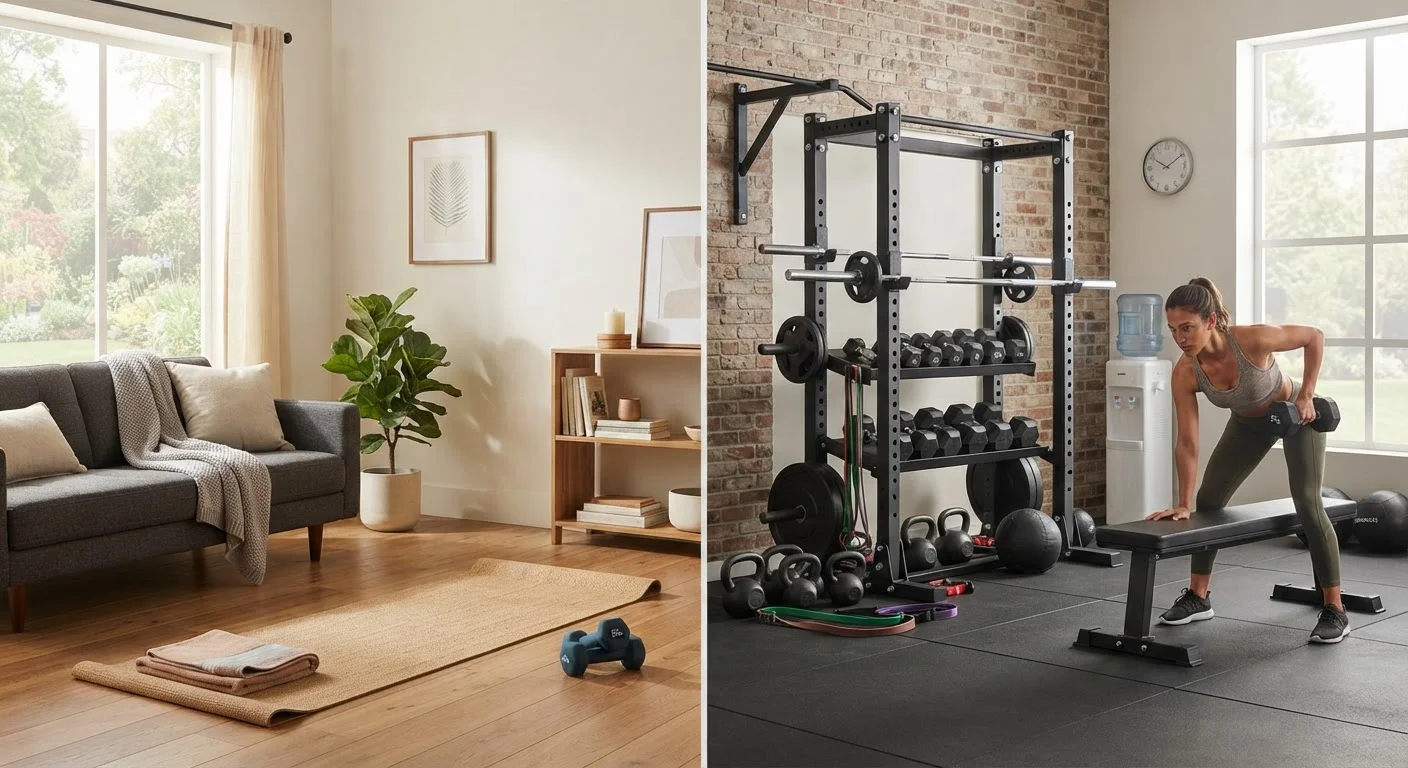
Photo: FaqsBay.com | Trending Blogs, Top Genres editorial
Key Takeaways
- Home workouts eliminate commute time and can be highly effective with minimal equipment.
- Gyms provide access to specialized equipment and a social environment that motivates many people.
- Neither option is universally superior - your lifestyle, goals, and consistency habits determine fit.
- A hybrid approach combining both settings works well for many non-athletes.
- Long-term adherence is the strongest predictor of fitness results regardless of location.
No commute - train on your own schedule
Eliminating travel time removes one of the most common reasons people skip workouts, making it easier to fit sessions into early mornings, lunch breaks, or evenings.
Lower long-term cost once equipment is purchased
A modest home setup - resistance bands, adjustable dumbbells, a pull-up bar - can cost less over two years than an annual gym membership, with no recurring fees.
Private environment reduces social anxiety
For many beginners, working out without an audience lowers the psychological barrier to starting and experimenting with new movements without self-consciousness.
Flexible and consistent across weather and travel
Home workouts are immune to gym closures, bad weather, and holiday schedules - making it easier to maintain consistency across seasons.
Equipment limits progressive overload potential
Building significant strength over time requires progressively heavier loads; most home setups plateau before serious lifters' needs, making strength goals harder to achieve without ongoing equipment investment.
Distractions and interruptions undermine focus
Household demands, family members, and the proximity of screens or chores can fragment sessions or lead to skipping them entirely without a clear boundary between home life and workout time.
Lack of structure may reduce accountability
Without a scheduled class, a trainer, or the social norm of others exercising around you, it can be harder to maintain motivation through low-energy periods.
Technique feedback is limited without a coach
Learning compound movements like squats or deadlifts without in-person guidance increases the risk of developing poor form habits, which can reduce effectiveness and raise injury risk over time.
The Real Question Isn't Which Is Better - It's Which You'll Actually Do
Most fitness debates focus on optimal protocols - but for the majority of non-athletes, the gap between a great workout done occasionally and a modest workout done consistently is enormous. Research consistently links exercise adherence, not exercise intensity, to the most meaningful long-term health outcomes.
That framing reorients the home-vs.-gym debate. Instead of asking which environment produces better athletes, it's more useful to ask: which setting lowers the barriers enough that you show up regularly? If you're returning to fitness after a long break, that question matters even more - routine friction can end a comeback before it begins.
Both environments have genuine strengths and real limitations. Understanding them lets you make a decision grounded in your actual life rather than someone else's ideal routine.
Advantages of Working Out at Home
Home training has moved well beyond bodyweight squats in a cramped bedroom. Adjustable dumbbells, resistance bands, pull-up bars, and streaming workout platforms have made effective home gyms accessible at a range of price points.
No commute - train on your own schedule
Eliminating travel time removes one of the most common reasons people skip workouts, making it easier to fit sessions into early mornings, lunch breaks, or evenings.
Lower long-term cost once equipment is purchased
A modest home setup - resistance bands, adjustable dumbbells, a pull-up bar - can cost less over two years than an annual gym membership, with no recurring fees.
Private environment reduces social anxiety
For many beginners, working out without an audience lowers the psychological barrier to starting and experimenting with new movements without self-consciousness.
Flexible and consistent across weather and travel
Home workouts are immune to gym closures, bad weather, and holiday schedules - making it easier to maintain consistency across seasons.
The convenience factor is particularly meaningful for people with demanding schedules. A 30-minute morning session requires no travel, no parking, and no locker room wait. For a practical look at how to structure sessions around a full-time job, see our guide on building a weekly workout schedule around a full-time job.
For beginners especially, working out at home removes social anxiety from the equation - a barrier that stops many people from starting at all.
Disadvantages of Home Workouts
Home training has real ceilings that become apparent as fitness goals evolve. Progressive overload - the gradual increase in resistance needed to build strength over time - eventually demands heavier equipment than most home setups provide. Bodyweight training can take you surprisingly far, but it has documented limits for maximal strength development.
Equipment limits progressive overload potential
Building significant strength over time requires progressively heavier loads; most home setups plateau before serious lifters' needs, making strength goals harder to achieve without ongoing equipment investment.
Distractions and interruptions undermine focus
Household demands, family members, and the proximity of screens or chores can fragment sessions or lead to skipping them entirely without a clear boundary between home life and workout time.
Lack of structure may reduce accountability
Without a scheduled class, a trainer, or the social norm of others exercising around you, it can be harder to maintain motivation through low-energy periods.
Technique feedback is limited without a coach
Learning compound movements like squats or deadlifts without in-person guidance increases the risk of developing poor form habits, which can reduce effectiveness and raise injury risk over time.
Distraction is an underrated obstacle. Household responsibilities, family members, or simply the pull of familiar comforts can interrupt or shorten sessions. Without a dedicated space and a consistent routine, home workouts often become the first thing dropped when life gets busy.
Advantages of a Gym Membership
A well-equipped gym provides resources that are genuinely difficult to replicate at home without significant expense. Barbells, cable machines, squat racks, cardio equipment, and free weights spanning a wide range of loads are all available under one roof.
80%
Adults who cite convenience as key to exercise consistency
A survey by the American College of Sports Medicine found convenience to be among the top factors influencing whether adults maintain regular exercise habits.
$50+
Average monthly gym membership cost in the US
According to fitness industry data, average monthly fees range from around $30 for basic facilities to over $100 for premium clubs, not including initiation fees.
The social dimension of gyms is also backed by behavioral research - exercising around others tends to increase effort and duration compared to training alone, a phenomenon sometimes called the Köhler effect. For goal-oriented exercisers debating training methods, our breakdown of strength training vs. cardio explores what each approach actually delivers for general health.
A Hybrid Approach Often Works Best
Disadvantages of Gym Memberships
Cost is the most cited barrier. Monthly fees vary widely depending on facility type and location, and those charges accumulate whether you attend or not. For irregular users, the cost-per-session can far exceed the perceived value.
Commute and scheduling constraints add friction that compounds over time. A gym that requires 20 minutes of travel each way effectively adds 40 minutes to every workout - a real obstacle for already-busy schedules. Peak-hour crowding can also limit access to specific equipment and reduce the quality of the session.
Finally, some people find the gym environment discouraging rather than motivating, particularly in early stages of a fitness journey. That psychological friction is valid and worth factoring into any decision. If the environment makes starting harder, its advantages matter less in practice.
For those weighing cardio-focused training, the method choice matters too - our article on HIIT vs. steady-state cardio can help align approach with schedule and goals.
This article is for general informational and educational purposes only and is not a substitute for personalized advice from a qualified fitness or healthcare professional.
The content provided on our blog site traverses numerous categories, offering readers valuable and practical information. Readers can use the editorial team’s research and data to gain more insights into their topics of interest. However, they are requested not to treat the articles as conclusive. The website team cannot be held responsible for differences in data or inaccuracies found across other platforms. Please also note that the site might also miss out on various schemes and offers available that the readers may find more beneficial than the ones we cover.