
Open Shelving vs. Closed Cabinets in Living Spaces

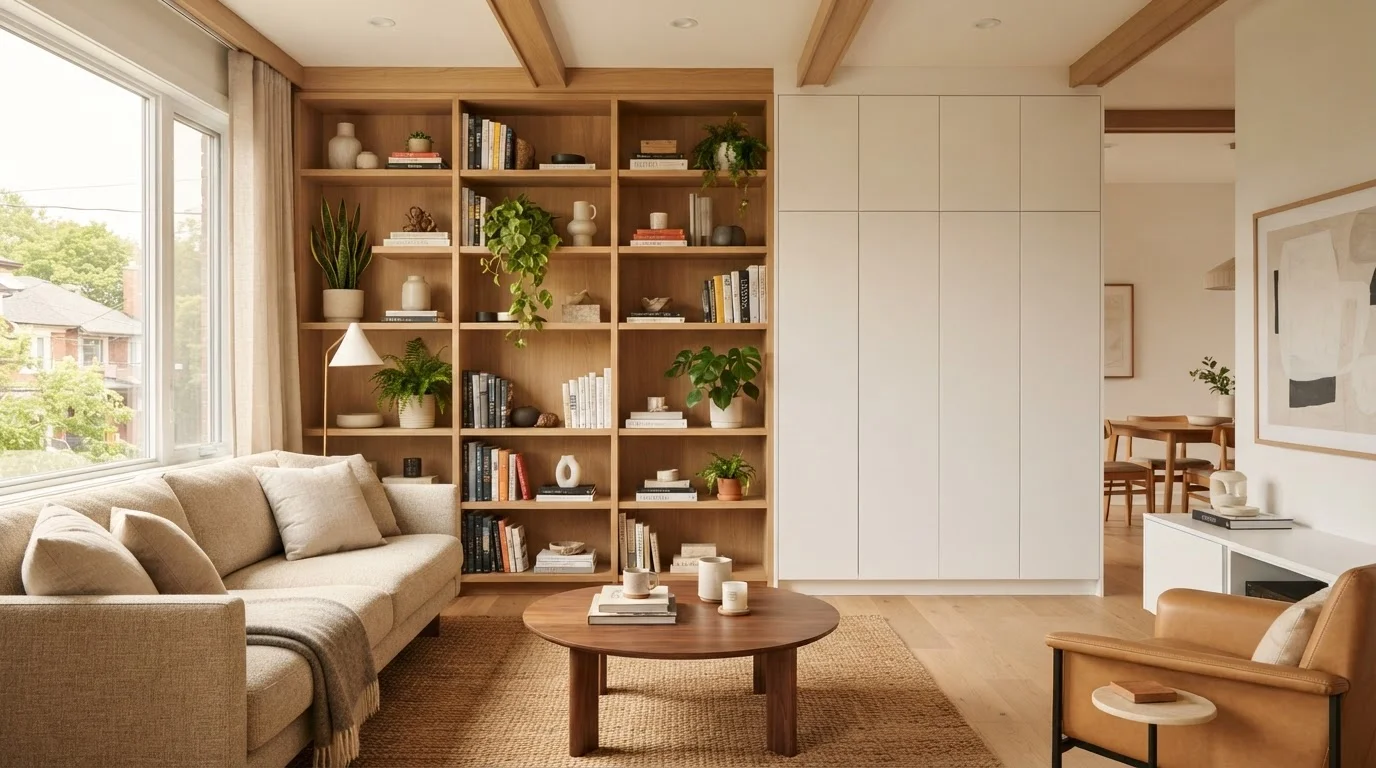
Photo: FaqsBay.com | Trending Blogs, Top Genres editorial
Key Takeaways
- Open shelving adds visual personality but demands regular styling and dusting to stay presentable.
- Closed cabinets hide clutter effectively and reduce maintenance, but can make small rooms feel heavier.
- Your household's cleaning habits and how curated your belongings are should drive the decision.
- Many living spaces benefit from a hybrid approach — open shelving for display, cabinets for practical storage.
- The choice affects long-term costs: open shelves are typically cheaper to install than full cabinetry.
What You're Really Deciding
Choosing between open shelving and closed cabinets isn't simply a style preference — it's a decision about how you want to live with your storage every day. Open shelves put everything on show, which can feel curated and airy or chaotic and dusty, depending entirely on what you keep there and how consistently you tidy. Closed cabinets shift the burden from daily visual management to occasional organization behind doors.
Before settling on either, it helps to be honest about your habits. Do you naturally keep objects organized, or do surfaces tend to collect whatever lands there? How often are you willing to dust individual items? Do you rent or own — and does that affect how permanent the installation can be? These practical factors matter as much as aesthetics. As our Decorating Myths That Waste Money and Space explores, assuming a single style is universally correct often leads to costly or frustrating choices.
| Criterion | Open Shelving | Closed Cabinets |
|---|---|---|
| Visual effect | Airy, expressive, display-forward | Composed, uniform, clutter-free |
| Dusting frequency | High — items exposed to dust | Low — contents protected inside |
| Typical installation cost | Lower — shelves and brackets | Higher — especially custom units |
| Suitability for small rooms | Good — adds visual lightness | Can feel bulky if oversized |
| Clutter management | Requires ongoing curation | Hides clutter behind doors |
| Adaptability | Easy to restyle or relocate | More permanent once installed |
| Best content type | Books, plants, curated objects | Mixed, varied, everyday items |
Maintenance and Upkeep: The Honest Picture
Open shelving has a hidden time cost that many homeowners underestimate. Every object on an open shelf is a surface that collects dust, which means regular cleaning of not just the shelf itself but each individual item. In high-traffic rooms, this can become a weekly task rather than a monthly one. The visual payoff is real, but it comes with ongoing effort.
Closed cabinets require less frequent interior cleaning, but they're not zero-maintenance. Cabinet doors and drawer fronts attract fingerprints and grease — especially in kitchens, but also in media consoles and living room storage. The interior, though, stays cleaner longer, and items stored inside are protected from dust and fading caused by light exposure.
~30%
Estimated cost savings with open shelving vs. cabinetry
Interior design cost guides commonly estimate that open shelf systems cost significantly less per linear foot than comparable closed cabinet installations, though costs vary widely by material and region.
2×
More frequent dusting needed for open versus closed storage
Home organization experts generally recommend dusting open shelves at least twice as often as closed storage surfaces, due to direct dust exposure of displayed items.
In living rooms specifically, open shelving works well for items you actively use and enjoy looking at: books, plants, framed photos, and a few carefully chosen objects. For everything else — cables, remotes, board games, paperwork — closed storage almost always produces a tidier result with less daily effort.
Aesthetics, Space, and the Hybrid Approach
Open shelving creates visual depth and warmth. A well-styled shelf draws the eye, adds personality, and can make a room feel curated rather than furnished. In smaller rooms, open shelves also create a sense of airiness that full cabinetry can't — the eye passes through the shelf rather than stopping at a solid surface. Our Small Space, Big Impact guide covers this principle in more detail for compact apartments.
Closed cabinets offer visual calm. When a room needs to feel settled and uncluttered, floor-to-ceiling or wide cabinetry pulls everything behind a uniform surface. This suits media walls, built-in storage units, and rooms where the goal is a composed, furniture-forward look rather than a display-forward one.
In practice, many living spaces benefit from combining both. A media console with closed lower cabinets and open upper shelves is a common and functional example: practical storage is hidden below, while books, plants, and a few decorative items sit above. This approach lets you control what's visible and what isn't without committing entirely to one philosophy. If you're exploring how plants fit into this kind of layered display strategy, our guide to decorating with plants addresses how placement affects both looks and care.
Cost and Installation Considerations
Open shelving is generally less expensive to install. Floating shelves, bracket systems, and wall-mounted ledges are widely available at a range of price points, and many are straightforward DIY installations — though shelves carrying significant weight should always be anchored properly into wall studs or appropriate anchors, and heavier built-in units may require professional installation. Always verify that any wall modifications comply with your building's rules, particularly in rental properties or older homes where wall construction may differ.
Closed cabinetry carries a higher upfront cost, particularly for custom or semi-custom units. However, it tends to add more functional and perceived value to a room — an important consideration if resale or long-term usability matters to you. For a broader look at how storage decisions connect to home improvement planning, the Home Improvement hub offers practical guidance across room types.
A cost-conscious approach: use open shelving in spaces where you have attractive, organized items to display, and invest in closed cabinetry for storage areas where contents are less curated. That combination generally delivers the best balance of visual appeal, functionality, and budget.
The content provided on our blog site traverses numerous categories, offering readers valuable and practical information. Readers can use the editorial team’s research and data to gain more insights into their topics of interest. However, they are requested not to treat the articles as conclusive. The website team cannot be held responsible for differences in data or inaccuracies found across other platforms. Please also note that the site might also miss out on various schemes and offers available that the readers may find more beneficial than the ones we cover.