
Tire Care from Rotation to Replacement

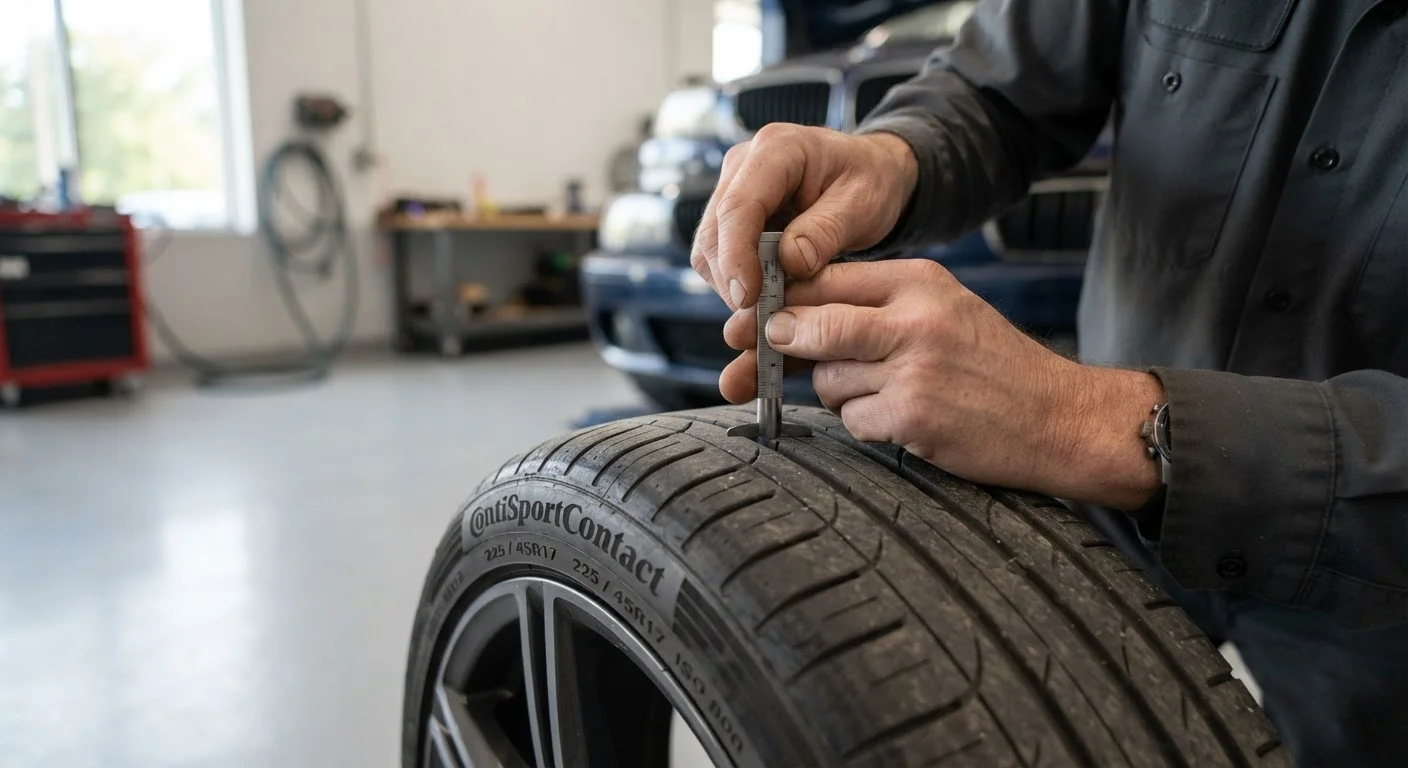
Photo: FaqsBay.com | Trending Blogs, Top Genres editorial
Key Takeaways
- Check tire pressure monthly - temperature swings can drop it by 1 PSI per 10°F change.
- Rotate tires every 5,000-7,500 miles to prevent uneven wear and extend usable life.
- A tread depth below 2/32 of an inch signals a tire that legally and safely needs replacement.
- Uneven wear patterns often point to alignment or inflation problems - not just old tires.
- Tires age chemically even when they look fine; most manufacturers recommend replacement after 6-10 years.
- Proper tire maintenance improves fuel economy, handling, and braking distances.
Why Tire Care Matters More Than Most Drivers Realize
Tires are the only part of your vehicle actually touching the road. Everything - braking, steering, acceleration, fuel efficiency - flows through four palm-sized contact patches. Despite that, tires are among the most routinely ignored maintenance items on a car.
Neglecting tire care doesn't just shorten tire life; it raises real safety risks. Under-inflated tires run hotter, increasing blowout potential. Worn tread dramatically extends stopping distances, especially on wet pavement. And uneven wear can mask alignment problems that affect the entire vehicle's handling.
This guide covers the full picture: pressure, rotation, tread evaluation, and knowing when replacement is genuinely necessary - not just convenient. For a broader look at what else drivers overlook, see overlooked maintenance tasks that quietly shorten a car's life.
Getting Tire Pressure Right
Tire pressure is measured in PSI. The correct pressure for your vehicle is listed on a sticker inside the driver's door jamb - not on the tire sidewall, which shows the maximum allowable pressure, not the target.
Check pressure when tires are cold, meaning the car has been parked for at least three hours or driven fewer than a mile. Driving heats the air inside, artificially inflating readings by several PSI.
Always Check Pressure When Tires Are Cold
A few practical rules to follow:
- Check monthly. Tires naturally lose 1-2 PSI per month under normal conditions.
- Account for temperature. For every 10°F drop in outside temperature, tire pressure falls roughly 1 PSI. A properly inflated tire in summer may be significantly under-inflated by midwinter.
- Don't over-inflate. Higher pressure reduces the contact patch, worsening traction and creating a harsher, less controlled ride.
A quality digital gauge costs only a few dollars and gives far more reliable readings than the stick gauges at gas stations. Keep one in the glove box.
Rotation Schedules: When and Why
Tires wear at different rates depending on their position. On a front-wheel-drive vehicle, the front tires handle steering, acceleration, and much of the braking load - so they wear faster. Rear-wheel-drive vehicles have the opposite imbalance. Even all-wheel-drive systems distribute torque unevenly in everyday use.
Rotation moves each tire to a different position, spreading wear more evenly across all four. The general guidance is every 5,000 to 7,500 miles, which often aligns conveniently with oil change intervals. Check your owner's manual for the manufacturer's specific recommendation - a resource explained in detail in how to use your owner's manual maintenance schedule.
Common rotation patterns include front-to-rear, cross-rotation, and - for directional tires, which are designed to roll only one way - a straight front-to-rear swap on the same side. A qualified technician will know which pattern applies to your setup.
When you bring your car in for an oil change, ask the technician to perform the rotation at the same visit. Most shops accommodate this without a separate appointment, and it keeps your intervals aligned without requiring extra calendar management.
Mark each tire's position with chalk or a tire crayon before rotation, so you can track wear patterns over multiple cycles. If one position consistently wears faster, that's a clue to investigate alignment or suspension.
Reading Tread Wear Like a Pro
Tread depth is measured in 32nds of an inch. New tires typically start at 10/32" to 11/32". The legal minimum in most U.S. states is 2/32", and most safety organizations recommend replacing tires at 4/32" for meaningful wet-weather performance.
A quick test: insert a quarter upside down into a tread groove. If you can see the top of Washington's head, you're at or below 4/32" - time to plan for replacement. The classic penny test (Lincoln's head fully visible = 2/32") shows legal minimum, not safe minimum.
Equally important is where tires wear:
- Center wear: Tires have been chronically over-inflated.
- Edge wear: Chronic under-inflation causes the sidewalls to flex and the edges to carry more load.
- One-sided wear: Usually signals a wheel alignment problem.
- Cupping or scalloping: Worn shocks or struts cause tires to bounce unevenly on the road surface.
Uneven patterns are your tires communicating a deeper issue - one that new tires alone won't fix.
When It's Actually Time for New Tires
Several clear signals indicate replacement, not just rotation or inflation adjustments:
- Tread depth at or below 4/32" - especially if you drive in rain or snow.
- Visible damage: Bulges or bubbles in the sidewall indicate internal structural failure. These tires are at blowout risk and should be replaced immediately. Cracks in the sidewall suggest rubber degradation.
- Age: Rubber degrades chemically over time even when tread looks adequate. Most manufacturers recommend replacing tires after six years regardless of appearance, and nearly all consider ten years an absolute maximum. Check the DOT code on the sidewall - the last four digits indicate the week and year of manufacture (e.g., "2319" means the 23rd week of 2019).
- Persistent vibration or pulling that persists after rotation and alignment checks.
Sidewall Bulges Are an Emergency, Not a Suggestion
When replacing tires, it's generally advisable to replace in pairs (both fronts or both rears) at minimum, and ideally all four, to maintain consistent handling. Consult a qualified technician about what's appropriate for your drivetrain. Pairing a brand-new tire with a heavily worn one on the same axle can create handling imbalances.
For high-mileage vehicles, tire condition deserves extra scrutiny - see strategies for keeping a high-mileage car reliable for guidance on where aging tires fit into the broader picture.
Tire Care as Part of Your Broader Maintenance Routine
Tires don't exist in isolation. Their condition is linked to wheel alignment, suspension health, and braking systems. If your tire wear is uneven, a brake inspection often makes sense at the same visit - brake wear patterns share some of the same diagnostic logic.
Building tire checks into a seasonal rhythm helps catch problems before they become expensive. Our seasonal car maintenance checklist includes tire pressure and tread checks as part of each season's review - a practical cadence for drivers who want to stay ahead of repairs rather than react to them.
If you're newer to car ownership and want a foundational overview of what routine care involves, a first-timer's guide to car maintenance provides useful context for where tires fit in the full picture.
The bottom line: consistent attention to pressure, rotation, and tread condition is among the highest-return maintenance habits a driver can develop. It costs little time, supports fuel efficiency, and - most importantly - keeps the vehicle predictable and controllable when it matters most.
The content provided on our blog site traverses numerous categories, offering readers valuable and practical information. Readers can use the editorial team’s research and data to gain more insights into their topics of interest. However, they are requested not to treat the articles as conclusive. The website team cannot be held responsible for differences in data or inaccuracies found across other platforms. Please also note that the site might also miss out on various schemes and offers available that the readers may find more beneficial than the ones we cover.