
Brake Maintenance: What the Squeal, Grind, and Pull Are Telling You

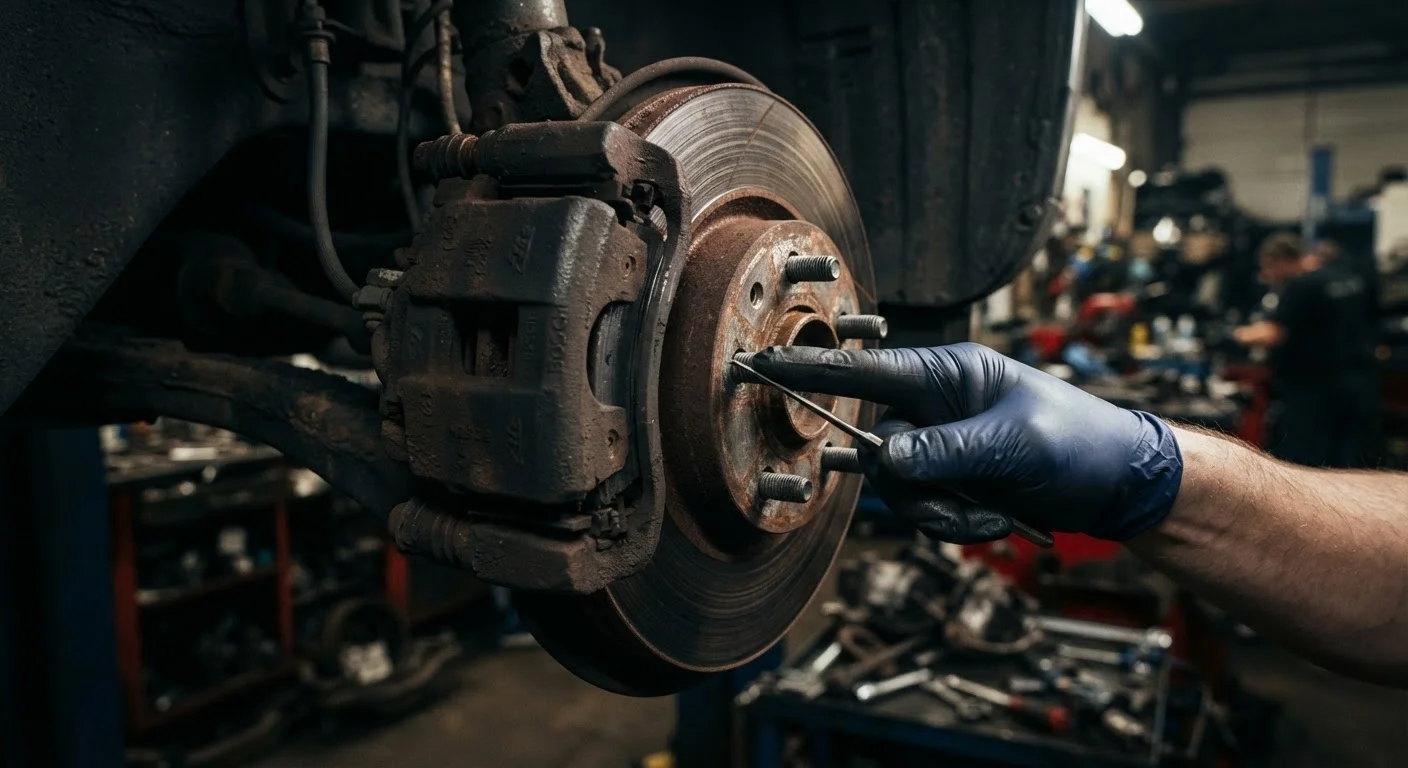
Photo: FaqsBay.com | Trending Blogs, Top Genres editorial
Key Takeaways
- Squealing brakes are often an early warning from built-in wear indicators - don't ignore them.
- Grinding usually means metal-on-metal contact; continued driving can damage the rotor.
- A vehicle that pulls to one side during braking may have a sticking caliper or uneven pad wear.
- A soft or spongy brake pedal often points to air in the brake lines or low brake fluid.
- Brake inspections typically cover pads, rotors, calipers, brake fluid, and brake lines.
- Most manufacturers recommend brake inspections at least once a year or every 12,000 miles.
The Squeal: Your Brakes' Built-In Early Warning
That high-pitched whine when you slow for a stop sign is rarely random. Most disc brake systems - the type found on the front wheels of virtually every modern car and on all four corners of many - include small metal tabs called wear indicators. When your brake pads wear down to a threshold thickness (typically around 2-3mm of friction material remaining), these tabs begin contacting the spinning rotor and emit a deliberate squeal. Think of it as the brake system flagging you for service before a real problem develops.
Not every squeal is a wear indicator, however. A light surface rust layer can form on rotors overnight or after rain, producing a brief scrubbing sound on the first few stops. That typically clears up within a mile. Morning squeals that disappear quickly are usually harmless. Persistent squealing - at any speed, on every stop - is the version that needs attention. The difference matters: one is a natural surface condition, the other is hardware telling you its working life is nearly over.
See our guide to brake fluid and other vital fluid checks for context on how the hydraulic side of your brake system works alongside the mechanical components.
The Grind: When Metal Meets Metal
If squealing is an early warning, grinding is the alarm going off. A metallic grinding or growling sound during braking - or sometimes even while just rolling - typically means the brake pad friction material has worn away entirely, leaving the metal backing plate in direct contact with the rotor. That contact damages the rotor surface with each stop, turning what might have been a straightforward pad replacement into a more involved and more expensive repair.
Grinding can also indicate a small stone or road debris trapped between the pad and rotor, which can usually be cleared on its own but warrants a quick check. Less commonly, a seized brake caliper - the hydraulic clamp that squeezes the pads against the rotor - can cause continuous contact and a grinding sensation even when you're not pressing the pedal. In any case, persistent grinding is a signal to stop driving and get the vehicle inspected promptly. Continuing to drive on metal-to-metal brakes is unsafe and escalates repair costs.
Use Tire Rotations as a Brake Check Opportunity
The Pull and the Pedal: Subtler Signals Worth Knowing
Brake problems don't always announce themselves with noise. Two other common signals are brake pull and pedal feel changes - both worth understanding.
Brake pull is when the vehicle drifts noticeably to one side during braking. Because braking force should be applied evenly across both sides of an axle, uneven force causes the car to track toward whichever side is braking harder. Common causes include a seized caliper (stuck in a partially applied position), uneven pad wear, a collapsed flexible brake hose that restricts fluid flow on one side, or debris on a rotor surface. While mild pull can occasionally stem from tire pressure differences or suspension issues, consistent pull specifically during braking points squarely at the brake system.
Pedal feel is another reliable diagnostic tool. A brake pedal that slowly sinks toward the floor under steady pressure, or one that feels soft and spongy rather than firm, often indicates air in the brake lines or a low or contaminated brake fluid reservoir. Brake fluid is hygroscopic - meaning it gradually absorbs moisture from the air over time - which lowers its boiling point and can introduce compressibility into the system. Most manufacturers recommend replacing brake fluid every two to three years regardless of mileage. You can find the recommendation for your specific vehicle in the owner's manual.
For a broader look at the dashboard signals that accompany brake system problems, see our guide to warning lights and what they mean.
~$300-$800
Typical cost to replace pads and rotors (per axle)
Repair costs vary widely by vehicle make, region, and whether rotors need replacement alongside pads - addressing wear early generally keeps costs lower.
2-3mm
Brake pad thickness at which replacement is typically recommended
Most manufacturers and mechanics use this threshold as the service point; many wear indicators are engineered to alert drivers at this measurement.
2-3 years
Recommended brake fluid replacement interval
Brake fluid absorbs moisture over time, lowering its boiling point; most manufacturers specify a replacement interval in the vehicle owner's manual regardless of mileage.
What a Mechanic Actually Inspects
When you bring a vehicle in for a brake inspection, a qualified technician will typically evaluate several components - not just the pads. Understanding what they're checking helps you ask informed questions and evaluate what you're being told.
- Pad thickness: Measured with a gauge. Most pads start at around 10-12mm; replacement is typically recommended at or before 2-3mm.
- Rotor condition: Mechanics check for thickness (rotors wear down over time and can't be machined indefinitely), scoring or grooves, warping, and surface rust. A warped rotor often produces a pulsating or vibrating sensation through the pedal.
- Caliper function: Calipers should compress and release cleanly. A sticky caliper causes uneven pad wear and can generate heat that accelerates other brake wear.
- Brake fluid level and condition: Dark, cloudy fluid is a sign it has absorbed moisture and should be replaced. The reservoir is checked visually during most inspections.
- Brake lines and hoses: Inspectors look for leaks, cracks, and corrosion, particularly on older vehicles or those in regions where road salt is common.
This is general educational information about how brake inspections work - your mechanic will advise on the specific condition of your vehicle's system. For a broader understanding of routine maintenance tasks, our first-timer's guide to car maintenance covers the full picture in plain English.
Frequently Asked Questions
The content provided on our blog site traverses numerous categories, offering readers valuable and practical information. Readers can use the editorial team’s research and data to gain more insights into their topics of interest. However, they are requested not to treat the articles as conclusive. The website team cannot be held responsible for differences in data or inaccuracies found across other platforms. Please also note that the site might also miss out on various schemes and offers available that the readers may find more beneficial than the ones we cover.