
Fluid Checks Every Car Owner Should Do Regularly

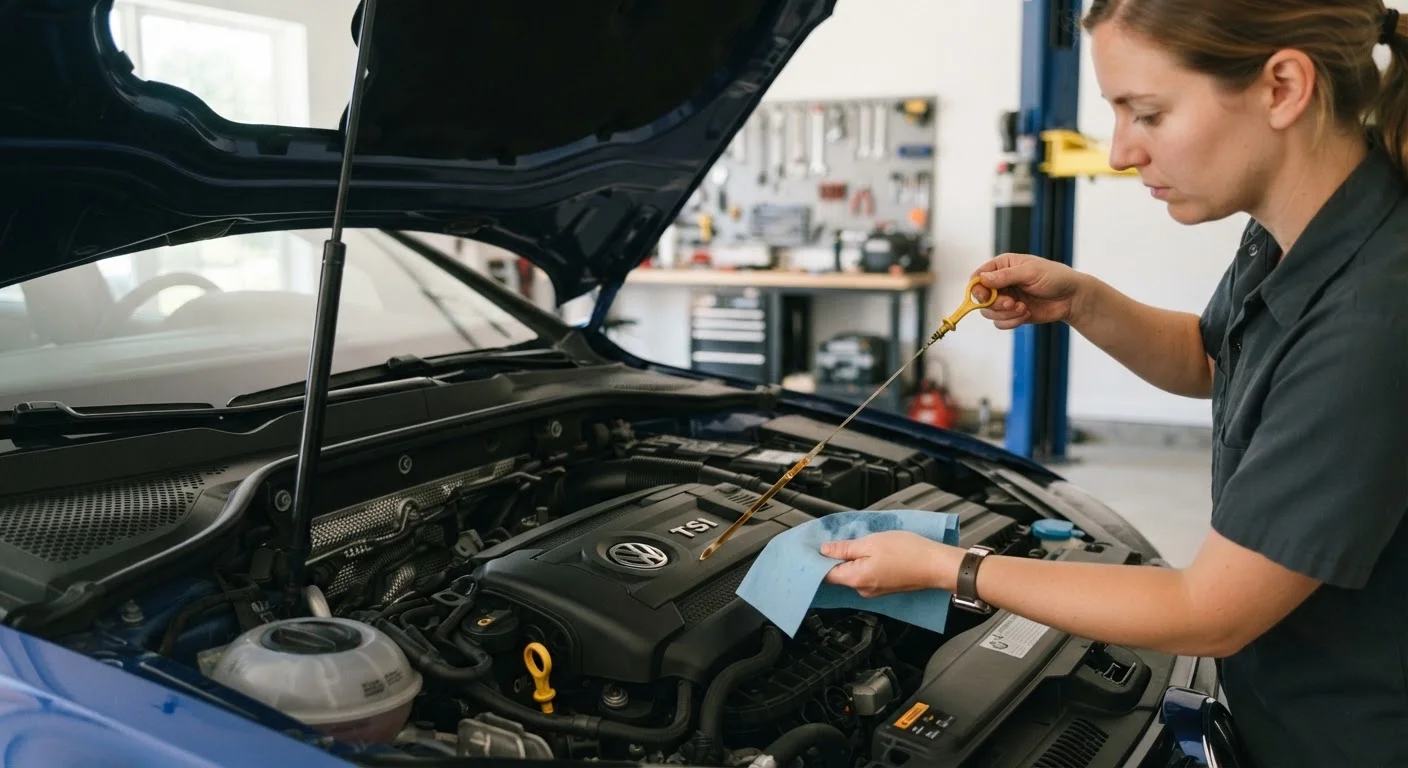
Photo: FaqsBay.com | Trending Blogs, Top Genres editorial
Why Fluid Checks Matter
Your car relies on a handful of fluids to keep its systems running safely. When any one of them drops too low, becomes contaminated, or degrades, the consequences range from reduced performance to catastrophic component failure. The good news: checking most fluids takes less than ten minutes and requires no special tools.
This guide covers the six fluids every driver should monitor, what each one does, and what warning signs to watch for. For a broader foundation, see our first-timer's guide to car maintenance.
| Number of essential fluids to monitor | 6 |
| Recommended oil check frequency | Every few weeks or before long trips (General industry guidance; consult your owner's manual) |
| Brake fluid characteristic to watch | Dark color or low level warrants mechanic inspection |
| Coolant check precaution | Never open radiator cap on a hot engine (Safety standard - pressurized coolant can cause burns) |
| Best source for fluid service intervals | Your vehicle's owner's manual |
The Six Essential Fluids
1. Engine Oil
Engine oil lubricates moving metal parts, reduces heat from friction, and helps carry away contaminants. Check it with the dipstick - engine off, vehicle on level ground, wait a few minutes after driving. Wipe the stick clean, reinsert fully, then pull it out again. The oil film should fall between the two marks. Healthy oil ranges from amber to light brown; black, gritty, or milky oil signals a problem. For guidance on oil types, see synthetic vs. conventional motor oil.
2. Coolant (Antifreeze)
Coolant regulates engine temperature and prevents both overheating and freeze-up. Check the translucent overflow reservoir - never open the radiator cap on a hot engine, as pressurized coolant can cause serious burns. The level should sit between the MIN and MAX lines. Coolant is typically green, orange, or pink depending on the formulation; if it looks rusty or oily, have a mechanic inspect it. Learn more in our article on why your car's cooling system matters.
3. Brake Fluid
Brake fluid transmits the force from your pedal through hydraulic lines to the brakes themselves. Locate the small reservoir under the hood (usually near the firewall on the driver's side) and check the level against the MIN/MAX markings on the side. Brake fluid absorbs moisture over time, which lowers its boiling point and can compromise braking. If the level is noticeably low or the fluid looks very dark, consult a mechanic. For related context, see what brake sounds and sensations signal.
4. Transmission Fluid
Automatic transmissions depend on clean fluid for smooth gear changes and to prevent internal wear. Many vehicles have a dedicated dipstick (check your owner's manual - some newer models require a shop inspection). The fluid should be pinkish-red and slightly transparent; brown or burnt-smelling fluid warrants professional attention.
5. Power Steering Fluid
This fluid allows you to turn the wheel with minimal effort. Note that many newer vehicles use electric power steering and have no fluid to check. If your car does have a hydraulic system, find the reservoir (often marked with a steering wheel icon), check the level, and look for a clear or slightly yellow fluid. Foamy or dark fluid can indicate a leak or contamination.
6. Windshield Washer Fluid
While not a mechanical necessity, running out mid-drive - especially in winter - is a safety hazard. This reservoir is easy to spot and straightforward to refill with a store-bought washer solution. Do not substitute plain water, which can freeze and may not clean effectively.
Dipstick
A long, thin metal rod inserted into the engine to measure oil level. It has two marks indicating the acceptable minimum and maximum range.
Coolant (Antifreeze)
A liquid circulated through the engine and radiator to regulate temperature. It prevents both overheating in summer and freezing in winter.
Hydraulic brake system
A braking system that uses pressurized fluid to transfer force from the brake pedal to the brake components at each wheel.
Firewall
The metal barrier between the engine compartment and the passenger cabin. Several reservoirs - including brake fluid - are often mounted near it.
Transmission fluid
A specialized oil that lubricates and cools the internal components of an automatic or manual transmission, enabling smooth gear changes.
How Often to Check Each Fluid
Frequency varies by fluid and driving conditions. Engine oil is generally worth a quick check every few weeks or before long trips. Coolant, brake fluid, and transmission fluid are more stable but should be inspected at least every few months or at each oil change visit. Washer fluid can be topped as needed.
Your owner's manual specifies service intervals for each fluid specific to your vehicle - following it is the most reliable approach. Our article on using your owner's manual maintenance schedule explains how to read and act on that guidance. Be wary of blanket rules that override manufacturer recommendations - see common car maintenance myths for why that matters.
If you find yourself topping up any fluid frequently, treat that as a signal to have a mechanic investigate for leaks rather than simply continuing to add more. Fluid loss is rarely normal and can indicate a problem that will worsen without attention.
This article is for general informational purposes only. For tasks involving safety-critical systems such as brakes, consult a qualified mechanic. Always follow the guidance in your vehicle's owner's manual.
The content provided on our blog site traverses numerous categories, offering readers valuable and practical information. Readers can use the editorial team’s research and data to gain more insights into their topics of interest. However, they are requested not to treat the articles as conclusive. The website team cannot be held responsible for differences in data or inaccuracies found across other platforms. Please also note that the site might also miss out on various schemes and offers available that the readers may find more beneficial than the ones we cover.