
Car Maintenance

Neglected Maintenance Tasks That Quietly Shorten a Car's Life

Neglected Maintenance Tasks That Quietly Shorten a Car's Life

Photo: FaqsBay.com | Trending Blogs, Top Genres editorial

Cabin air filters, serpentine belts, spark plugs—discover the overlooked jobs that mechanics see drivers skip too often.

Key Takeaways

  • Skipping cabin air filter changes can reduce HVAC efficiency and worsen air quality inside the vehicle.
  • A worn serpentine belt can fail without warning, leaving you stranded and risking serious engine damage.
  • Spark plugs and coolant have service intervals many drivers miss entirely, accelerating engine wear.
  • Your owner's manual is the most reliable guide to which services are due and when.

Why These Jobs Get Skipped

Oil changes get attention because they're marketed heavily and performed at quick-lube shops on nearly every corner. But a vehicle has dozens of systems that need periodic service — and most of them don't have reminder stickers on the windshield. The result is a predictable pattern: drivers stay on top of high-visibility tasks while invisible or unfamiliar ones quietly go undone.

That gap tends to close at the worst possible moment — an unexpected breakdown, a failed inspection, or a repair estimate that dwarfs what prevention would have cost. Understanding which tasks get neglected most often, and why, is the first step toward avoiding that outcome. For a broader look at how skipping service intervals adds up financially, see the real trade-offs of deferred maintenance.

1

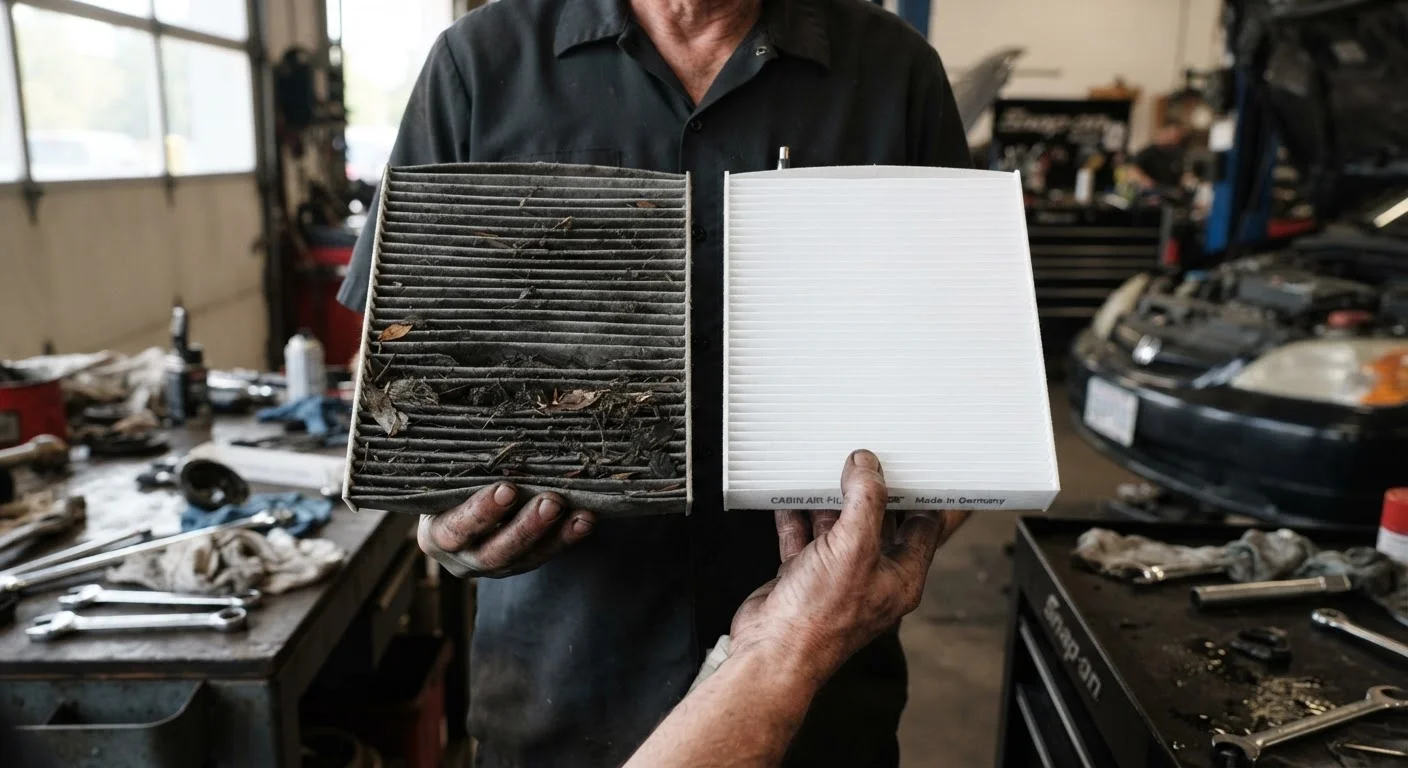
Skipping cabin air filter replacements.

Why it happens: The cabin air filter is tucked behind the glove box and completely out of sight, so most drivers don't know it exists until a mechanic mentions it.
How to avoid: Most manufacturers recommend replacing the cabin air filter every 15,000 to 25,000 miles, though dusty or high-pollen environments may warrant more frequent changes. Check your owner's manual for the specific interval. For more on what this filter actually does, see why cabin filters and small parts matter.
2

Ignoring the serpentine belt until it breaks.

Why it happens: The serpentine belt — the single continuous belt that drives the alternator, power steering pump, and air conditioning compressor — rarely shows obvious symptoms before failure. Drivers simply don't think about it.
How to avoid: Inspect the belt visually for fraying, cracking, or glazing at every major service. Most vehicles call for replacement between 60,000 and 100,000 miles, but consult your manual. A snapped belt will typically leave you unable to drive and can cause secondary damage to other components.
3

Letting spark plugs go far past their service interval.

Why it happens: Modern iridium and platinum spark plugs last much longer than older copper plugs — sometimes 60,000 to 100,000 miles — so drivers assume they never need attention. That longevity can create a false sense of security.
How to avoid: Check your owner's manual for the recommended spark plug interval specific to your engine. Worn plugs cause misfires, reduced fuel efficiency, and harder starts. This overlaps with broader tune-up questions — what a modern tune-up actually covers explains what today's service includes.
4

Never flushing or replacing engine coolant.

Why it happens: Coolant (also called antifreeze) looks fine in the reservoir long after its corrosion inhibitors have broken down, so there's no visible warning sign prompting action.
How to avoid: Degraded coolant becomes acidic and can corrode your radiator, water pump, and heater core from the inside. Most manufacturers recommend a coolant flush every 30,000 to 50,000 miles, or every few years. Our article on why the cooling system deserves more attention covers the full picture.
5

Treating brake fluid as a set-and-forget fluid.

Why it happens: Unlike engine oil, brake fluid doesn't visibly darken in a way most drivers notice, and it's rarely discussed at routine service appointments.
How to avoid: Brake fluid is hygroscopic — meaning it absorbs moisture from the air over time — which lowers its boiling point and can cause spongy pedal feel or brake fade. Most manufacturers recommend replacing it every two years or per mileage interval. Check brake system basics alongside this: reading the warning signs of worn brakes.

How to Build a More Complete Maintenance Habit

The single most reliable tool you have is your owner's manual. It lists every fluid, filter, belt, and component that needs attention, along with the mileage or time interval for each. Most drivers have never read it cover to cover — and most shops don't prompt you to check everything it covers. Our guide on using your owner's manual effectively explains exactly how to turn those pages into a workable service plan.

A simple habit helps: at each oil change, ask your technician to check or note the status of your cabin air filter, serpentine belt, spark plugs, and coolant. Not all shops volunteer that information unless asked. Drivers approaching 100,000 miles or beyond face an elevated risk from neglected items — strategies for keeping high-mileage vehicles reliable addresses those specific concerns.

Don't Rely on Visual Checks Alone

Fluids like coolant and brake fluid can appear clean and full while their protective properties are already compromised. Interval-based replacement — not appearance — is the standard mechanics and manufacturers rely on. When in doubt, have a qualified technician test the fluid rather than judge it by color alone.

Finally, don't assume that a clean-looking part is a functioning one. Coolant can look fine while its protective additives are depleted. A serpentine belt may show no visible cracking until it's already compromised internally. Visual checks are a starting point, not a substitute for interval-based replacement.

This article is for general informational purposes only. Always consult a qualified mechanic for guidance specific to your vehicle's make, model, and condition.

Automotive Editorial Team

FaqsBay.com | Trending Blogs, Top Genres

Automotive Editorial Team is the collective byline for our editorial team and contributor network. Articles published under this byline or an editorial pen name are researched, written, and reviewed according to our editorial standards for clarity, consistency, and independence before publication.

Car MaintenanceBuying & SellingCar Insurance
View author profile

The content provided on our blog site traverses numerous categories, offering readers valuable and practical information. Readers can use the editorial team’s research and data to gain more insights into their topics of interest. However, they are requested not to treat the articles as conclusive. The website team cannot be held responsible for differences in data or inaccuracies found across other platforms. Please also note that the site might also miss out on various schemes and offers available that the readers may find more beneficial than the ones we cover.