
National Parks by Car: How the US Road Trip and Park System Were Built for Each Other

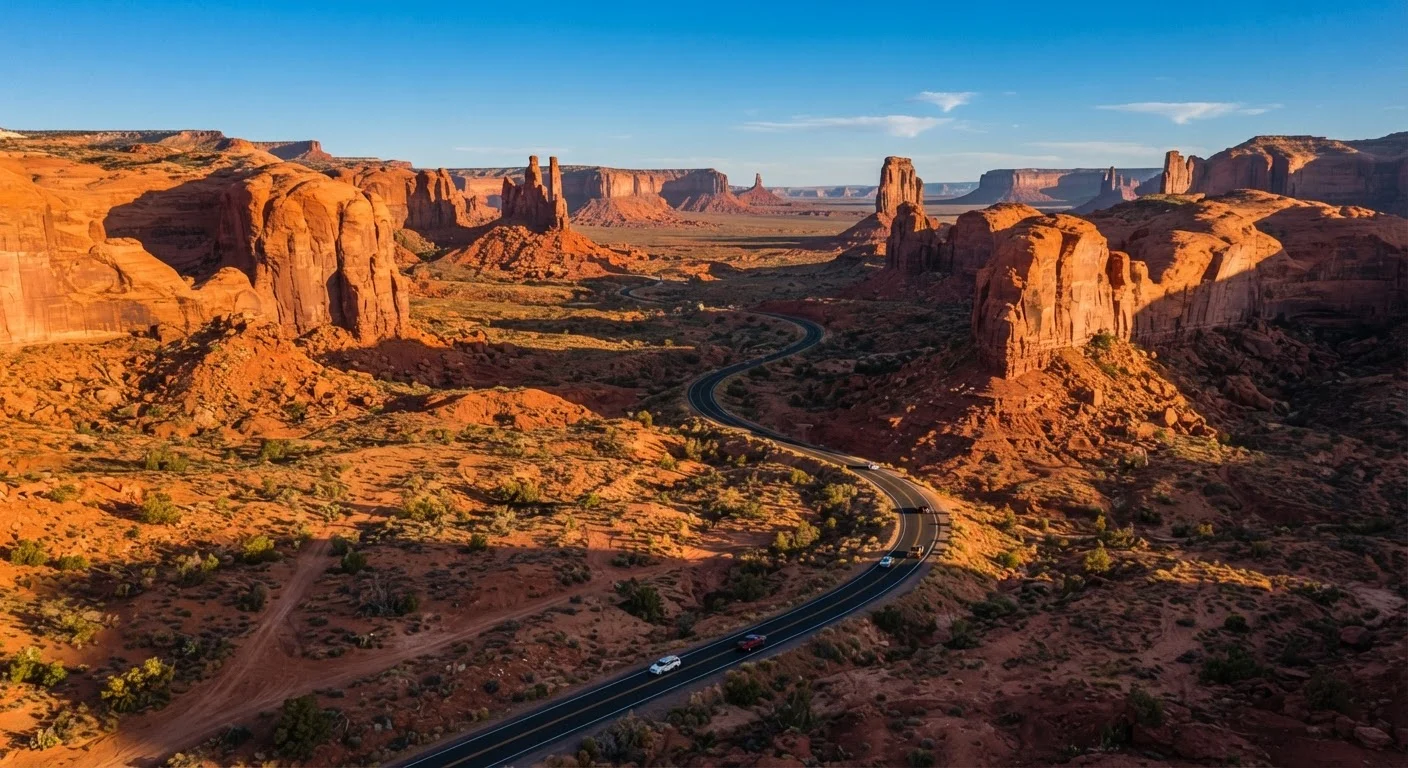
Photo: FaqsBay.com | Trending Blogs, Top Genres editorial
Key Takeaways
- The US highway system and national park network were deliberately developed in tandem during the early 20th century.
- A single annual pass covers entrance fees at most NPS sites, making multi-park road trips cost-effective.
- Park-focused itineraries require more planning than standard road trips due to entrance reservations, timed permits, and seasonal road closures.
- Many iconic parks are clustered geographically, enabling efficient multi-park loops rather than point-to-point drives.
- Shoulder-season driving often means fewer crowds, lower lodging costs, and equally spectacular scenery.
Why the Car and the National Park Were Made for Each Other
It wasn't a coincidence that America's national park attendance exploded in the 1920s and 1930s — it tracked almost perfectly with the spread of affordable automobiles and the paving of cross-country highways. When the NPS was established in 1916, its early directors actively partnered with road-building advocates, understanding that accessibility by car was the fastest path to broad public support for park preservation. Stephen Mather, the NPS's first director, famously championed road improvements inside parks as a strategy for making wilderness legible to everyday Americans — not just the wealthy tourists who had arrived by train.
That design philosophy is still baked into the system today. Most major parks were built around scenic drives: Going-to-the-Sun Road in Glacier, Rim Drive at Crater Lake, the parkway through Shenandoah. These routes aren't just access corridors — they're curated experiences, putting the landscape on display through the windshield before you ever step out of the car.
See our guide to what makes a scenic drive genuinely memorable to understand the design principles behind routes like these.
How a Park-Focused Itinerary Differs From a Standard Road Trip
On a typical road trip, the drive itself is the attraction — the rhythm of the highway, small towns, roadside diners. A national park itinerary flips that logic: the road is infrastructure, and the parks are the destination. That shift has real planning consequences.
- Pacing is park-driven, not mileage-driven. You'll budget days per park, not miles per day. A single park like Grand Canyon or Olympic can easily absorb three or four days of exploration.
- Reservations matter far more. Entrance reservations, timed permits, and campground bookings at high-demand parks can sell out months in advance. Unlike booking a hotel in a city, you often can't just show up.
- Gas and services can be scarce. Fuel stations inside parks are rare; stretches between parks in the Southwest or Rockies can run 60–100 miles between services. Plan accordingly.
- Seasonal road closures are real constraints. High-elevation park roads — including Going-to-the-Sun and Trail Ridge Road in Rocky Mountain — may close as late as June and as early as October. Your route needs to account for these windows.
For travelers new to long-distance driving, our first-timer's complete road trip overview covers the foundational logistics that apply to any extended journey.
Build Buffer Days Into Park Itineraries
Geographic Clusters: The Secret to Efficient Multi-Park Loops
One of the most underappreciated features of the US park system is how geographically concentrated many of its crown jewels are. Understanding these clusters transforms a vague "see some parks" idea into a tight, drivable circuit.
400+
NPS units across all 50 states
The National Park Service manages more than 400 sites, the majority of which are accessible by personal vehicle, according to nps.gov.
~90%
Park visitors who arrive by personal vehicle
NPS visitor use statistics consistently show that personal vehicles account for the overwhelming majority of park arrivals at most land-based sites.
5
Major Utah parks in one drivable loop
Zion, Bryce Canyon, Capitol Reef, Canyonlands, and Arches — known as the Mighty Five — can be linked in a single driving circuit of roughly 500 miles.
The Southwest cluster — Utah's Mighty Five (Zion, Bryce Canyon, Capitol Reef, Canyonlands, Arches), plus Grand Canyon, Monument Valley, and the Nevada corridor — sits within a roughly 500-mile radius and can be looped in 10–14 days. Our Southwest loop planning guide breaks this down step by step.
The Pacific Northwest cluster links Crater Lake, Olympic, and North Cascades within Washington and Oregon, with Mount Rainier as a central anchor. The Southern Appalachians connect Great Smoky Mountains, Shenandoah, and the Blue Ridge Parkway along a north–south corridor perfect for a two-week traverse. Choosing a cluster rather than trying to hopscotch across regions is the move that separates a memorable park road trip from an exhausting one.
If you're weighing a coastal drive against a parkway experience, our PCH vs. Blue Ridge Parkway comparison puts two of the most beloved American drives side by side.
Planning Realities: Passes, Permits, and Timing
The America the Beautiful Annual Pass is the single most useful financial tool for a multi-park road trip. Sold at a flat fee per vehicle, it covers entrance at nearly all NPS fee-charging sites for 12 months. On an itinerary hitting five or more fee-charging parks, the pass typically pays for itself within the first two or three stops.
Beyond the pass, the most important planning step is researching each park's specific reservation requirements — these vary widely and change year to year. Some parks require timed entry reservations for the entire park; others only for specific corridors or campgrounds. Recreation.gov is the primary federal booking platform, and popular slots disappear quickly after windows open.
Timing affects everything from crowd density to road access to wildlife visibility. Comparing fall and summer national park routes reveals how much season shapes the experience — and the logistics.
“The parks do not belong to one state or to one section. The Yosemite, the Yellowstone, the Grand Canyon are national properties in which every citizen has a vested interest.”
— Theodore Roosevelt, 26th President of the United States, key figure in early American conservation policy
For a full framework covering every stage of road trip planning, from route selection to returning home, see The American Road Trip: A Complete End-to-End Planning Resource.
Frequently Asked Questions
The content provided on our blog site traverses numerous categories, offering readers valuable and practical information. Readers can use the editorial team’s research and data to gain more insights into their topics of interest. However, they are requested not to treat the articles as conclusive. The website team cannot be held responsible for differences in data or inaccuracies found across other platforms. Please also note that the site might also miss out on various schemes and offers available that the readers may find more beneficial than the ones we cover.