
Pacific Coast Highway vs. Blue Ridge Parkway: Two Iconic American Drives Compared

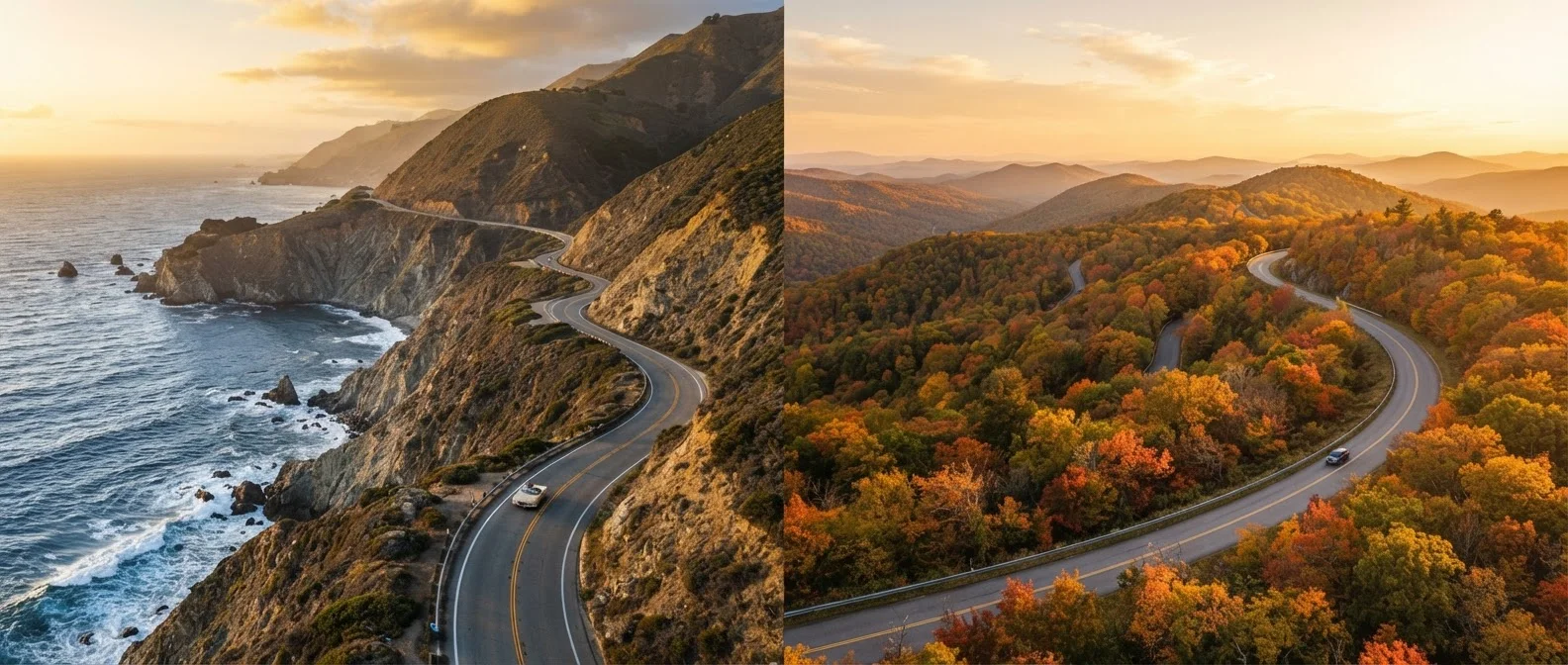
Photo: FaqsBay.com | Trending Blogs, Top Genres editorial
Key Takeaways
- The PCH offers dramatic ocean cliffs and coastal towns; the Blue Ridge Parkway delivers forested ridgelines and Appalachian heritage.
- The Blue Ridge Parkway has no commercial traffic or trucks — a genuinely relaxed, low-stress drive by design.
- PCH driving is faster-paced with more urban pit stops; Blue Ridge encourages slower, nature-immersed travel.
- Fall is peak season for Blue Ridge; spring through fall suits PCH, with summer being the busiest stretch.
- Both routes reward flexible itineraries — attempting either in a single day misses most of what makes them special.
The Scenery: Ocean Drama vs. Mountain Serenity
The Pacific Coast Highway — most commonly driven along California's Highway 1 — delivers scenery that feels almost exaggerated in its beauty. Sheer cliffs drop into churning Pacific surf, sea otters bob in kelp forests, and the road itself clings to precipitous bluffs through Big Sur. It's a drive that demands your attention, and rewards it generously.
The Blue Ridge Parkway operates on an entirely different visual frequency. Stretching 469 miles through the Appalachian highlands from Shenandoah National Park in Virginia to Great Smoky Mountains National Park in North Carolina, it unfolds gradually — layered ridgelines receding into blue haze, dense hardwood canopies, and wildflower meadows. Rather than a single wow moment, it offers a sustained, meditative beauty. For tips on what truly separates these experiences from ordinary drives, see our guide to America's most scenic drives.
| Criterion | Pacific Coast Highway | Blue Ridge Parkway |
|---|---|---|
| Total length | ~650 miles (CA Highway 1) | 469 miles (VA to NC) |
| Primary scenery | Ocean cliffs, beaches, coves | Forested ridgelines, valleys |
| Traffic character | Shared public highway | No commercial traffic allowed |
| Speed limit | Varies; up to 65 mph | 45 mph maximum |
| Best season | Spring–Fall (year-round possible) | Fall foliage; summer also popular |
| Services on route | Frequent towns, restaurants, hotels | Sparse; plan fuel stops off-route |
| Nearest major cities | Los Angeles, San Francisco | Asheville, Roanoke, Charlotte |
| Driving difficulty | Moderate (winding cliffside sections) | Easy to moderate (low-speed curves) |
Pace, Planning, and Practical Realities
Driving the PCH means engaging with real-world California traffic — especially near Los Angeles, San Francisco, and Monterey. Sections of Highway 1 can close after winter storms or wildfires, so checking Caltrans conditions before departure is essential. Fuel, lodging, and food are readily available along the coast, but popular spots like Big Sur book out weeks in advance during summer.
The Blue Ridge Parkway was intentionally designed to exclude commercial trucks and through-traffic, which means the pace is gentler and the ambiance far quieter. Speed limits top out at 45 mph. Services along the Parkway itself are sparse — gas stations and lodges are limited and may be seasonal — so planning fuel stops in nearby towns is part of the preparation. If you're new to long-distance road trips generally, our first-timer's overview of driving across America covers logistics that apply to both routes.
469 miles
Blue Ridge Parkway total length
The National Park Service administers the Blue Ridge Parkway as America's longest linear parkway, connecting two major national parks.
~9 million
Annual Blue Ridge Parkway visitors
The Blue Ridge Parkway consistently ranks among the most visited units in the entire National Park System, according to NPS visitation data.
45 mph
Maximum speed on Blue Ridge Parkway
The Parkway's speed limit is intentionally low to encourage leisurely sightseeing and protect wildlife and pedestrians along the corridor.
Seasons, Crowds, and Timing Your Drive
The PCH is driveable year-round, though summer — particularly July and August — brings the heaviest crowds to coastal towns and state parks. Spring (April–May) offers blooming wildflowers and manageable crowds. Winter driving is possible but some Highway 1 segments occasionally close after heavy rain; always verify current road status before setting out.
The Blue Ridge Parkway has a clear seasonal star: fall. Mid-October to early November transforms the Appalachian canopy into one of the most photographed foliage displays in the country. Summer is also beautiful and relatively crowd-free compared to national parks, but high-elevation sections can close due to ice from late autumn through early spring. If you're weighing a fall leaf-peeping trip against a summer park circuit, our dedicated comparison of fall foliage drives vs. summer national park routes can help you decide.
Culture, Stops, and What You'll Encounter Along the Way
The PCH anchors itself to California coastal culture — seafood shacks in Morro Bay, art galleries in Carmel, elephant seal colonies at Piedras Blancas, and the dramatic span of Bixby Creek Bridge. Urban bookends (LA and San Francisco) mean you can combine the drive with major city time. The national parks by car guide explains how the PCH corridor connects well with California's protected coastal lands.
The Blue Ridge Parkway leans into Appalachian heritage — folk craft centers, historic homesteads, and traditional music venues punctuate the route. Towns like Asheville, NC and Floyd, VA sit just off the Parkway and offer genuine regional culture without feeling touristy. The Parkway's 26 tunnels and numerous viaducts are engineering achievements in their own right, and its overlooks are numbered by milepost so you can plan stops with precision. For those curious what comparable but lesser-known American drives look like, underestimated regional US drives rounds up worthy alternatives.
The content provided on our blog site traverses numerous categories, offering readers valuable and practical information. Readers can use the editorial team’s research and data to gain more insights into their topics of interest. However, they are requested not to treat the articles as conclusive. The website team cannot be held responsible for differences in data or inaccuracies found across other platforms. Please also note that the site might also miss out on various schemes and offers available that the readers may find more beneficial than the ones we cover.