
America's Most Scenic Drives: What Makes a Road Trip Route Worth Taking

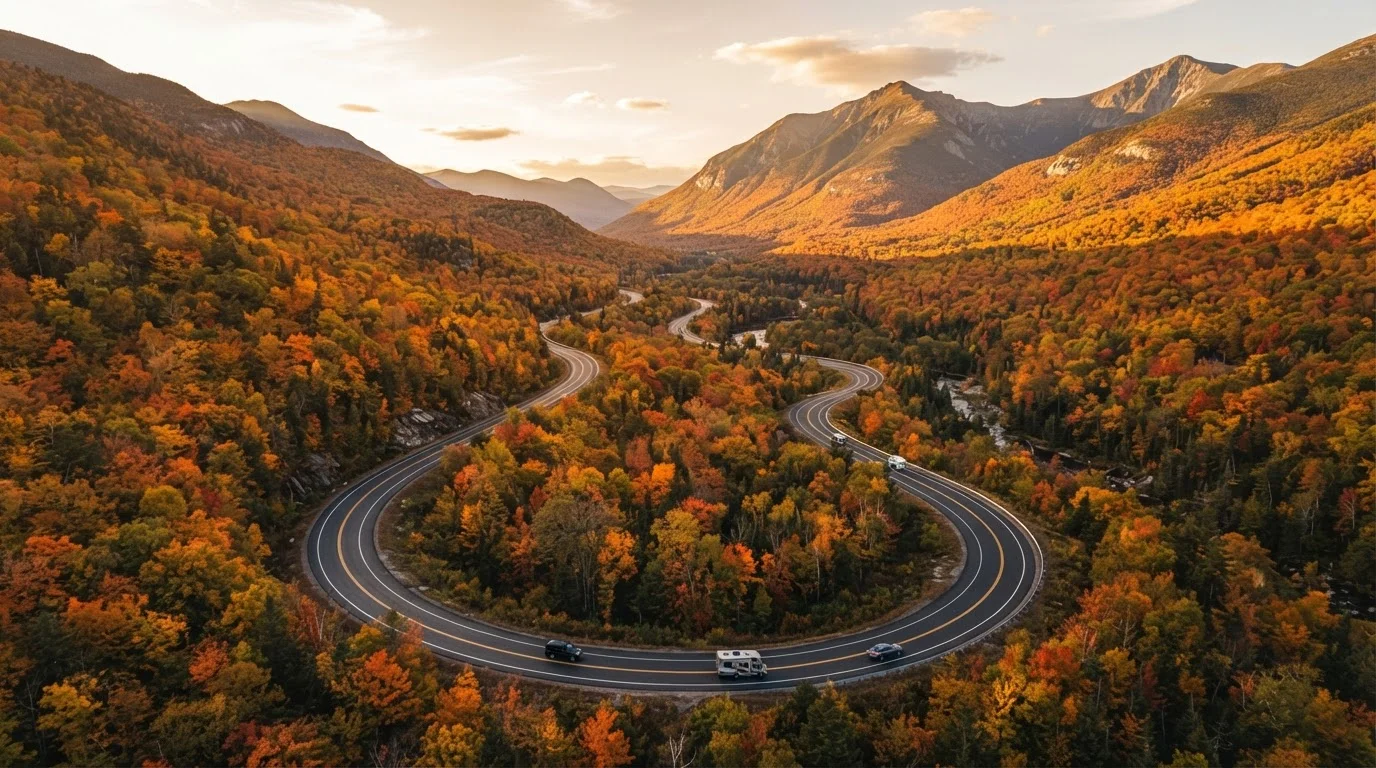
Photo: FaqsBay.com | Trending Blogs, Top Genres editorial
Key Takeaways
- A great scenic drive rewards the journey itself, not just the destination at the end.
- Visual variety — changing terrain, light, and vegetation — is a key marker of a memorable route.
- Access to pullouts, towns, and points of interest along the way transforms a drive into an experience.
- Seasonality and time of day dramatically affect the quality of any scenic road.
- Lesser-known routes often rival famous ones in beauty while offering far less traffic.
The Difference Between a Drive and an Experience
Most road trips involve driving. A scenic road trip is something else entirely — it's a journey where the route itself earns its place in the itinerary. The distinction matters because it changes how you plan, how you pace yourself, and what you walk away remembering.
A forgettable drive gets you there. A memorable one gives you something to talk about long after you're home. The difference usually comes down to a handful of qualities that consistently separate routes worth taking from miles worth skipping.
If you're new to planning longer drives, our first-timer's complete overview of driving across America covers the fundamentals of route selection, pacing, and what to realistically expect on the road.
What Actually Defines a Scenic Route
Landscape variety is the most reliable indicator of a route worth driving. Roads that move through multiple terrain types — say, high desert giving way to pine forest and then canyon country — hold attention in a way that a single sustained environment rarely does. The eye, and the mind, stays engaged when the scenery keeps shifting.
Beyond visuals, the best scenic drives have rhythm: a pace of interesting stops, overlooks, small towns, or natural features spaced in a way that rewards drivers who pull over rather than push through. A road with no pullouts, no towns, and no reason to slow down is just a commute in a pretty setting.
Cultural and historical layering adds another dimension. Routes that pass through landscapes tied to Indigenous history, westward migration, or industrial heritage give travelers context that deepens what they're seeing. The view becomes a story.
150+
Federally designated scenic byways in the US
The America's Byways program, administered by the Federal Highway Administration, recognizes routes with outstanding scenic, cultural, natural, historic, or recreational qualities.
~3,000
Miles of the Blue Ridge Parkway corridor
The Parkway itself spans about 469 miles, but the broader Appalachian corridor it anchors connects hundreds of additional roads and destinations across multiple states.
47%
Of US adults who took a road trip in the prior 12 months
According to a travel sentiment survey cited by the American Automobile Association, road trips consistently rank among the most popular vacation formats for US travelers.
The Role of Light, Season, and Time of Day
The same road can feel transcendent at dawn and unremarkable at noon. Serious road trip planners think about the direction they're driving relative to the sun — a westward drive in the late afternoon puts the sun in your eyes and flattens the landscape. Drive that same stretch east in the morning golden hour and the canyon walls or fields practically glow.
Seasonality is equally transformative. The Blue Ridge Parkway in mid-October, draped in peak fall color, is one of the most visually arresting drives in the country. That same road in February, gray and bare, is a completely different experience. Desert routes in the Southwest peak during spring wildflower bloom. Coastal routes along the Pacific Northwest are dramatically more atmospheric under fog than under flat summer sun.
This is why the question "when should I go?" is just as important as "where should I go?" for any road trip worth planning.
Drive the Golden Hour When You Can
Famous Routes vs. Hidden Gems
Routes like California's Pacific Coast Highway and the Going-to-the-Sun Road in Glacier National Park are celebrated for good reason — they deliver extraordinary scenery reliably and with well-developed visitor infrastructure. But their fame comes with trade-offs: summer congestion, packed overlooks, and the low-grade pressure of feeling like you're checking a box.
Lesser-known alternatives often provide comparable landscape quality with a fraction of the crowd. The regional drives that rarely make the highlight reels are worth serious attention for anyone who's already done the iconic routes or simply wants more breathing room.
For drivers oriented around national parks, understanding how the park road network connects is its own planning discipline. The relationship between national parks and road trips reveals how a park-centered itinerary differs from a point-to-point drive in useful ways.
How to Evaluate a Route Before You Drive It
Before committing to any scenic route, it helps to run it through a quick mental checklist. Ask yourself: Does this road pass through varied terrain, or is it mostly one landscape type? Are there natural or cultural stopping points distributed along the length of the route, or concentrated only at the beginning and end? Is the road itself in good condition and accessible by the vehicle you're driving?
Practical logistics shape the experience too. Gas station spacing, cell coverage gaps, and overnight lodging options along the route all affect how freely you can explore versus how carefully you need to manage the drive. A spectacular road with a 150-mile gap between fuel stops requires a different kind of planning than a coastal highway lined with small towns every 20 minutes.
For a comprehensive planning framework covering everything from route selection to arriving home, the complete end-to-end American road trip planning resource is an excellent next step once you've identified your route.
Frequently Asked Questions
The content provided on our blog site traverses numerous categories, offering readers valuable and practical information. Readers can use the editorial team’s research and data to gain more insights into their topics of interest. However, they are requested not to treat the articles as conclusive. The website team cannot be held responsible for differences in data or inaccuracies found across other platforms. Please also note that the site might also miss out on various schemes and offers available that the readers may find more beneficial than the ones we cover.