
What Pet Food Labels Are Actually Telling You

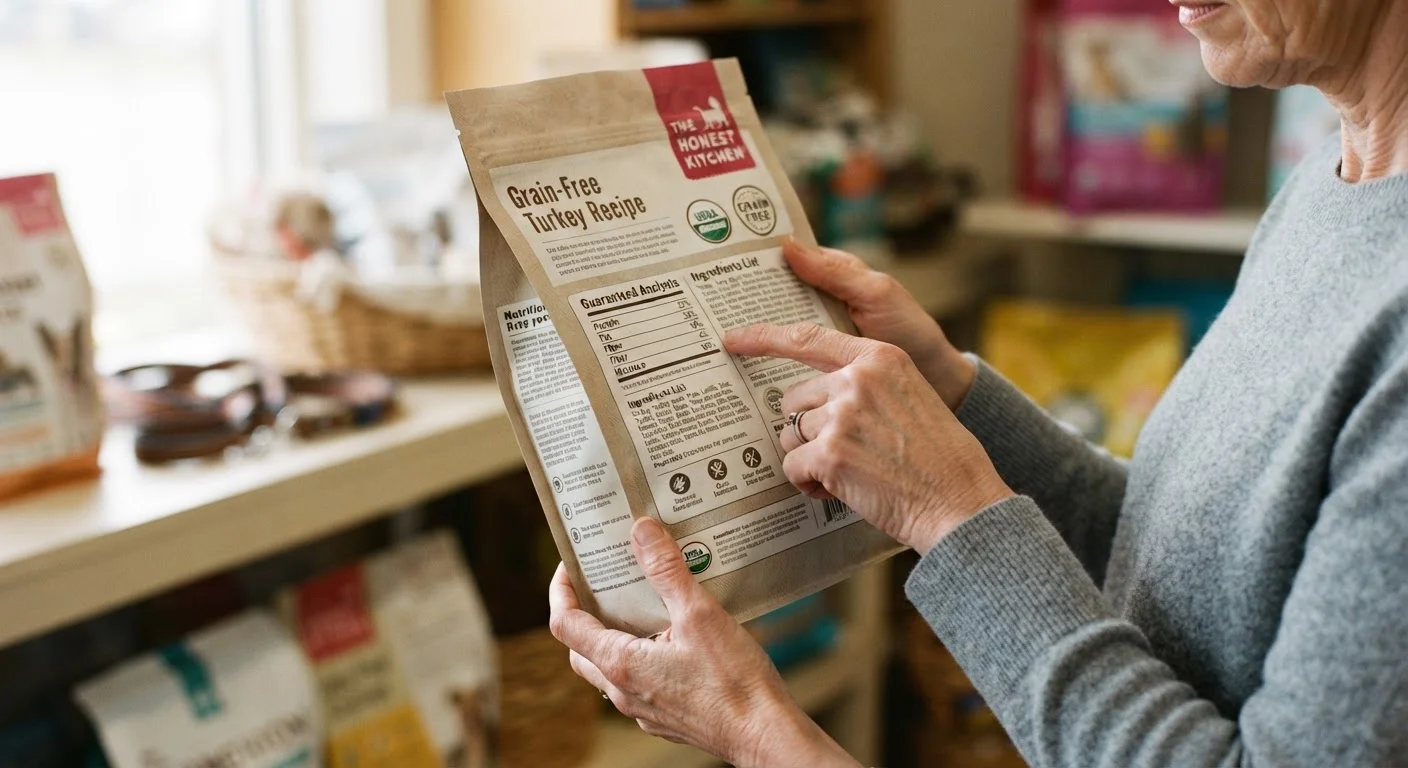
Photo: FaqsBay.com | Trending Blogs, Top Genres editorial
Key Takeaways
- The ingredient list is ordered by weight before cooking, which can make meat appear more prominent than it actually is.
- The guaranteed analysis shows minimum or maximum nutrient percentages — not exact amounts — and must be compared on a dry-matter basis.
- AAFCO nutritional adequacy statements indicate whether a food is formulated for a specific life stage or tested through feeding trials.
- Marketing terms like 'natural,' 'holistic,' and 'premium' have limited or no regulatory definition on pet food labels.
- The named protein rule means a food labeled 'Chicken Dog Food' must contain at least 95% chicken by weight, excluding water.
- Always consult your veterinarian when evaluating whether a pet food is appropriate for your individual pet's health needs.
The Eight Required Elements on Every Pet Food Label
Federal and state regulations require that every commercially sold pet food label in the US include eight core pieces of information: the product name, the species for which the food is intended, the net weight, the manufacturer's name and address, a guaranteed analysis, an ingredient list, a nutritional adequacy statement, and feeding directions. Each element is governed by specific rules — and understanding those rules changes how you read the package.
The product name alone carries strict regulatory weight. Under AAFCO's naming guidelines, a food called "Salmon Cat Food" must contain at least 95% salmon (excluding water). Add the word "dinner," "entrée," or "formula," and that threshold drops to just 25%. A label that says "with salmon" requires only 3% salmon content. These distinctions are not marketing choices — they are defined thresholds that directly reflect what's inside the can or bag.
For a deeper look at how ingredient lists can be structured to mislead, see our guide on reading a pet food ingredient list without getting misled.
Understanding the Guaranteed Analysis
The guaranteed analysis panel lists minimum percentages of crude protein and crude fat, and maximum percentages of crude fiber and moisture. These are not precise measurements — they are regulatory thresholds, and the actual amounts in any given batch may vary. The word "crude" refers to the measurement method, not quality.
The most important skill when reading this panel is dry-matter conversion. Because wet food contains significantly more moisture than dry food (often 75–85% vs. 10%), direct comparisons are meaningless without accounting for water content. To convert: subtract the moisture percentage from 100, then divide the nutrient percentage by that number. A wet food showing 8% protein with 80% moisture actually contains 40% protein on a dry-matter basis — far higher than it appears.
95%
Minimum named ingredient for single-protein label
Under AAFCO naming rules, a product named 'Chicken Dog Food' must contain at least 95% chicken by dry weight, excluding water added in processing.
3%
Minimum ingredient for 'with' label claim
A pet food labeled 'with beef' or 'with tuna' is only required to contain 3% of that ingredient by weight under AAFCO guidelines.
25%
Minimum for 'dinner,' 'entrée,' or 'formula' labels
When qualifying words like 'dinner' or 'recipe' appear in the product name, AAFCO requires only 25% of the named ingredient — far less than the 95% single-name rule.
For full guidance on what AAFCO nutritional standards actually guarantee — and where their limits are — see AAFCO nutritional standards explained.
What the Nutritional Adequacy Statement Really Means
The AAFCO nutritional adequacy statement is one of the most informative — and most misunderstood — parts of a pet food label. It appears in two forms: formulated to meet the nutrient levels established by AAFCO, or animal feeding tests using AAFCO procedures. The distinction matters.
A formulated food has been calculated on paper to meet nutrient profiles. A feeding trial-tested food has been given to actual animals and shown to sustain them through the trial period. Neither is a guarantee of long-term health outcomes, but feeding-trial validation provides an additional layer of real-world evidence.
The statement also specifies a life stage: growth, adult maintenance, reproduction, or "all life stages." A food labeled only for adult maintenance is not formulated for puppies or kittens, whose nutritional demands differ significantly. "All life stages" foods must meet the higher requirements set for growth and reproduction — which means they can exceed adult requirements, sometimes substantially.
Check the Life Stage Before You Buy
Marketing Language vs. Regulated Terms
Pet food packaging is dense with language designed to appeal to owners, not inform them. Words like "holistic," "premium," "artisan," and "human-grade" carry no binding regulatory definition in pet food labeling. They are marketing descriptors that manufacturers use freely without meeting any specific standard.
"Natural" has a loose AAFCO definition — ingredients not chemically synthesized — but it does not mean organic, free of preservatives, or nutritionally superior. "Grain-free" describes what a food excludes, not what it contains. Our article on the truth behind grain-free pet food examines what veterinary nutrition research actually shows about these diets.
When evaluating supplements listed on labels — omega-3s, probiotics, glucosamine — it's worth knowing which have meaningful evidence behind them. See supplements in pet food: when they help and when they're hype for a research-grounded breakdown.
Putting It Together: Reading a Label Critically
No single section of a pet food label tells the whole story. A protein-first ingredient list may hide moisture-heavy fresh meat. A high guaranteed protein percentage may look different once converted to dry matter. A compelling AAFCO statement may reflect only a formulation calculation. Reading labels effectively means cross-referencing all sections together.
Start with the AAFCO statement to confirm the food is appropriate for your pet's life stage. Check the ingredient list for the named protein within the first few ingredients, and watch for splitting of lower-quality fillers. Convert the guaranteed analysis to dry-matter basis if comparing across wet and dry formats. Then look at the manufacturer information — companies that invest in nutritional research and employ board-certified veterinary nutritionists tend to be more transparent about their formulation processes.
For comprehensive guidance on each label section, reading pet food labels without the guesswork offers a practical walkthrough. And when in doubt about what a food means for your specific pet's health, a conversation with your veterinarian or a board-certified veterinary nutritionist is always the most reliable next step.
This article is for general informational and educational purposes only and does not constitute veterinary or nutritional advice. Always consult a qualified veterinarian before making significant changes to your pet's diet.
Frequently Asked Questions
The content provided on our blog site traverses numerous categories, offering readers valuable and practical information. Readers can use the editorial team’s research and data to gain more insights into their topics of interest. However, they are requested not to treat the articles as conclusive. The website team cannot be held responsible for differences in data or inaccuracies found across other platforms. Please also note that the site might also miss out on various schemes and offers available that the readers may find more beneficial than the ones we cover.