
Reading a Pet Food Ingredient List Without Getting Misled

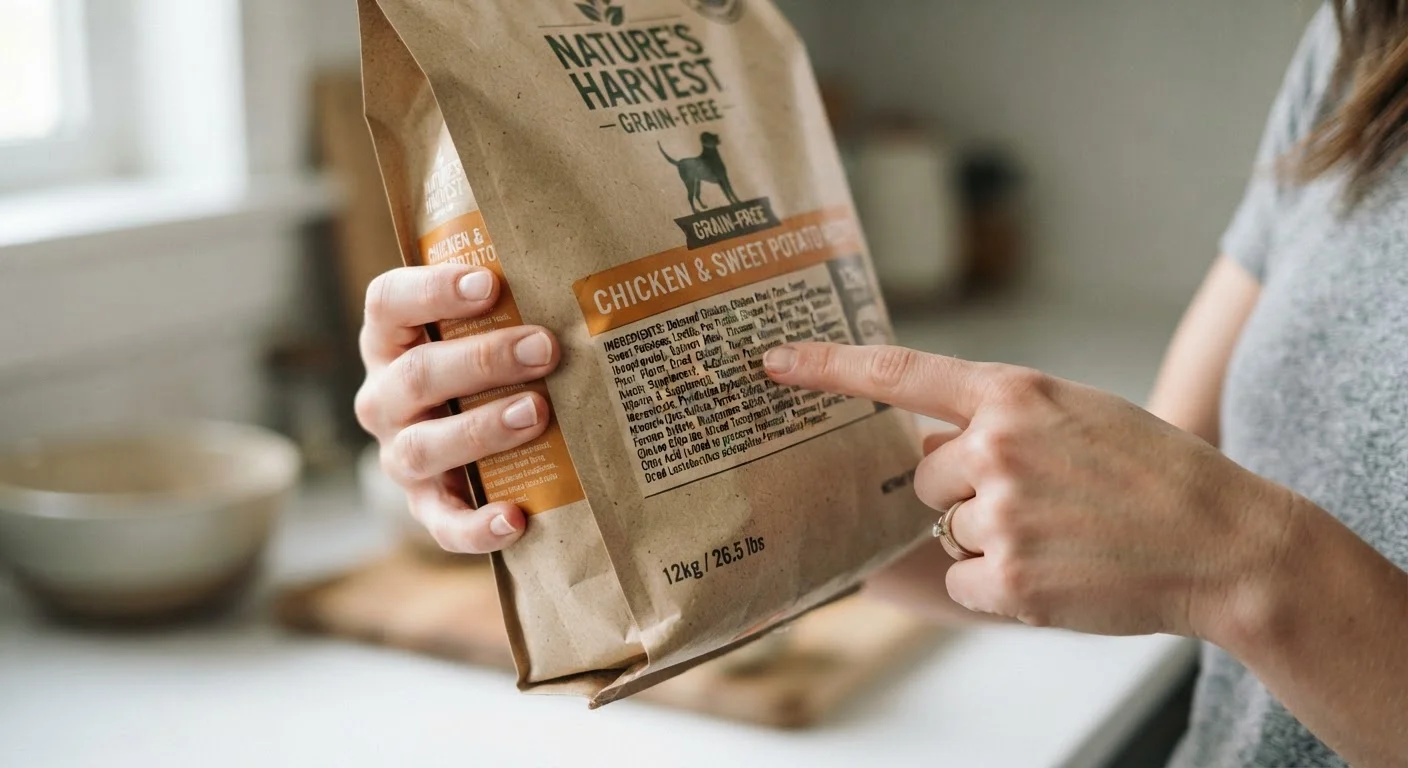
Photo: FaqsBay.com | Trending Blogs, Top Genres editorial
Key Takeaways
- Ingredients are listed by pre-cooking weight, which can significantly inflate the apparent rank of moisture-heavy whole meats.
- Ingredient splitting is a documented tactic that artificially moves less desirable components lower on the list.
- Terms like 'byproduct' and 'meal' have regulated definitions and are not automatically inferior ingredients.
- No single ingredient signals quality; the complete guaranteed analysis and AAFCO statement matter more.
- Always verify nutritional adequacy through the AAFCO statement, not ingredient names alone.
Why Pet Food Ingredient Lists Are Harder to Read Than They Look
Pet food ingredient lists are governed by the Association of American Feed Control Officials (AAFCO) and follow specific labeling rules — but those rules don't prevent manufacturers from using them strategically. The result is a list that looks straightforward but rewards careful, informed reading.
The most important baseline fact: ingredients are listed in descending order by pre-cooking weight, not by the weight of nutrients they actually deliver to your pet. A whole chicken breast contains roughly 65–70% water. After cooking, it shrinks dramatically. A chicken meal — which is already dried and concentrated — may deliver more actual protein per gram than the "chicken" listed above it. Understanding this distinction prevents you from over-valuing a first ingredient simply because of its familiar name. For a deeper look at how individual protein sources compare nutritionally, see our field guide to protein sources in pet food.
Label literacy also matters because the ingredient list is only one section of a pet food label. The guaranteed analysis (which shows minimum protein and fat percentages) and the AAFCO nutritional adequacy statement are equally important. Our overview of what pet food labels are actually telling you covers those sections in detail.
Common Tactics That Can Mislead Owners
Before walking through how to read an ingredient list critically, it helps to recognize the patterns that can make a list look better than it is.
Ingredient splitting is the practice of dividing a single ingredient into multiple forms so that each appears lower on the list individually. For example, a food where corn is a primary ingredient might list it as "ground corn," "corn gluten meal," and "corn bran" as three separate entries. Each sits lower than it would if combined — making another ingredient appear to lead the list. This is a real and well-documented labeling practice.
Vague "natural flavor" and "broth" additions may suggest a protein source without meaningfully contributing to its quantity in the food.
Byproduct stigma is often unearned. AAFCO defines poultry byproduct meal as rendered parts such as necks, feet, undeveloped eggs, and intestines — organs that can be nutritionally dense sources of protein and micronutrients. They are not the same as feathers or beaks, which are regulated separately. Dismissing byproducts entirely based on the name alone may cause owners to overlook nutritionally sound foods.
Ingredient Names Don't Equal Nutritional Quality
Similarly, "grain-free" is a marketing category, not a nutritional guarantee. Whether grains are appropriate for your pet depends on their individual health profile, not a general label claim. Our article on the truth behind grain-free pet food examines what the research actually shows.
How to Read an Ingredient List Step by Step
What you will need
Locate the AAFCO Nutritional Adequacy Statement First
Before reading a single ingredient, find the AAFCO statement — usually near the ingredient list or on the bottom panel. Confirm the food is "complete and balanced" for your pet's life stage (puppy/kitten, adult, senior, or all life stages). If this statement is absent or says "for intermittent or supplemental feeding only," the ingredient list quality is a secondary concern — the food is not designed to be a complete diet.
Identify the First Five Ingredients and Their Forms
The first five ingredients typically make up the bulk of the formula. Note whether named proteins (chicken, salmon, beef) are listed as whole ingredients or as "meal" (e.g., chicken meal). Whole named meats are not automatically superior — remember that pre-cooking weight inflates their apparent rank. A food listing "chicken, chicken meal" in the first two slots generally delivers a strong combined protein contribution.
Check for Ingredient Splitting
Scan the full list for the same base ingredient appearing in multiple forms. If you see corn listed as "ground corn," "corn gluten meal," and "corn bran" — or peas appearing as "peas," "pea protein," and "pea fiber" — combine their ranks mentally. If grouped together they would move significantly higher on the list, that ingredient is likely a primary component of the formula, not a minor addition.
Evaluate Preservatives and Additives
Preservatives are necessary in dry and semi-moist pet foods to prevent spoilage and rancidity. AAFCO-permitted synthetic preservatives such as mixed tocopherols (vitamin E) are commonly used and considered safe at regulated levels. "Natural" preservatives like rosemary extract are also used, though their long-term efficacy in dry foods is less studied. What to avoid: vague terms like "artificial colors" added for aesthetics, which serve the owner's perception, not the pet's nutrition.
Cross-Reference the Guaranteed Analysis
The guaranteed analysis shows minimum crude protein, minimum crude fat, maximum crude fiber, and maximum moisture as percentages. Use this alongside the ingredient list to verify that the protein sources you identified actually translate to meaningful protein content. For a meaningful comparison between foods with different moisture levels, convert all values to a dry-matter basis by dividing each nutrient percentage by (100 minus the moisture percentage) and multiplying by 100.
Look Up Any Unfamiliar Ingredient Names
If you encounter an ingredient you don't recognize, check AAFCO's official feed ingredient definitions rather than relying on consumer advocacy sites, which may use inaccurate or alarmist framing. Terms like "hydrolyzed protein," "menadione sodium bisulfite complex" (a vitamin K source), or "calcium pantothenate" (vitamin B5) are regulated ingredients with specific definitions — not signs of poor quality. For supplements listed in the ingredient panel, our article on supplements in pet food explains which have meaningful evidence behind them.
What the Ingredient List Cannot Tell You
Even a well-read ingredient list has limits. It doesn't show you the proportion of each ingredient — only its relative rank. A food with chicken listed first and pea protein listed eighth could contain nearly equal amounts of both if their weights are close.
The ingredient list also says nothing about manufacturing quality, sourcing consistency, or whether the food has undergone feeding trials. The AAFCO statement on the label is your primary indicator of nutritional completeness: look for wording that confirms the food is "complete and balanced" for your pet's life stage based on AAFCO nutrient profiles — or, more rigorously, that it has been substantiated by feeding trials.
If your pet has a specific health condition, ingredient label reading is a starting point, not a substitute for veterinary guidance. Some feeding habits that seem harmless can also carry unrecognized nutritional risks — our article on common feeding habits that quietly harm pet health covers those patterns worth knowing. For owners considering preparing meals at home, home-cooked pet meals: what works and what falls short outlines where nutritional gaps most commonly appear.
This article is for general informational and educational purposes only. For dietary guidance specific to your pet's health needs, consult a licensed veterinarian or board-certified veterinary nutritionist.
The content provided on our blog site traverses numerous categories, offering readers valuable and practical information. Readers can use the editorial team’s research and data to gain more insights into their topics of interest. However, they are requested not to treat the articles as conclusive. The website team cannot be held responsible for differences in data or inaccuracies found across other platforms. Please also note that the site might also miss out on various schemes and offers available that the readers may find more beneficial than the ones we cover.