
The Truth Behind 'Grain-Free' Pet Food

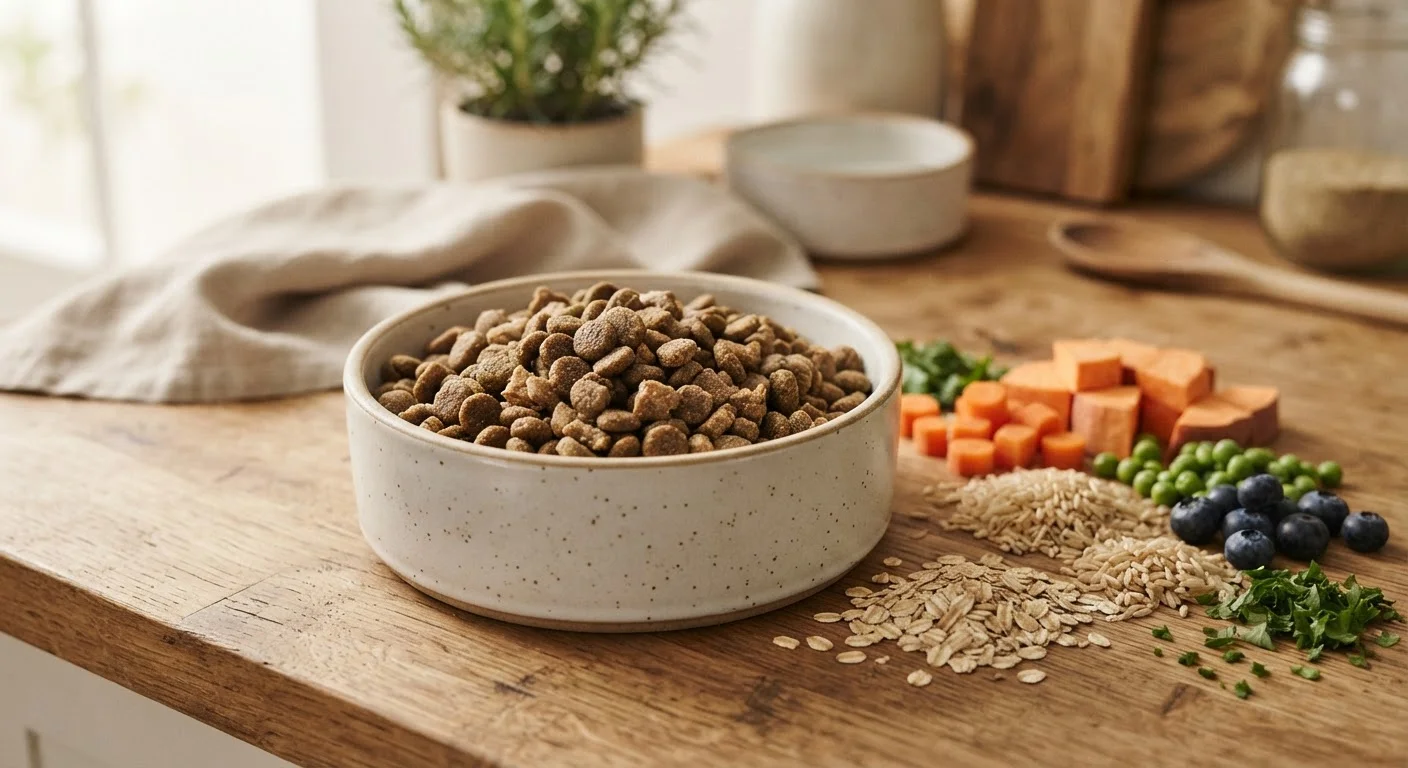
Photo: FaqsBay.com | Trending Blogs, Top Genres editorial
Key Takeaways
- Grain-free pet food is not nutritionally superior for most healthy dogs and cats.
- The FDA has investigated a possible link between grain-free diets and dilated cardiomyopathy in dogs.
- Grains are not a common cause of true food allergies in pets — proteins are far more likely culprits.
- Grain-free foods often substitute grains with legumes or potatoes, which carry their own considerations.
- Always consult a veterinarian or veterinary nutritionist before making major dietary changes for your pet.
Why Grain-Free Became a Pet Food Phenomenon
Walk into any pet supply store and grain-free options dominate the shelves. The premise sounds intuitively appealing: dogs and cats are descended from wild carnivores, so grain-heavy diets must be unnatural — and grain-free must be healthier. That reasoning helped fuel a dramatic shift in the pet food market over the past two decades.
But consumer preference and nutritional science don't always move in the same direction. The grain-free trend was largely driven by marketing that borrowed ideas from human low-carb and gluten-free dietary movements, not from peer-reviewed veterinary research. Understanding what the evidence actually says requires separating compelling storytelling from rigorous science.
For a deeper look at how pet food labels frame these claims, see our guide on what pet food labels are actually telling you.
Myth
Dogs and cats can't properly digest grains, so grain-free diets are more natural and healthier.
Fact
Domestic dogs have evolved specific genetic adaptations — including increased copies of the amylase gene — that allow them to digest starch efficiently. Cats can also digest grains when properly processed.
The idea that grains are biologically inappropriate for pets oversimplifies thousands of years of co-evolution between dogs and humans. Research published in Nature identified that domesticated dogs developed multiple copies of the AMY2B gene compared to wolves, enabling substantially greater starch digestion. While cats are obligate carnivores with different nutritional requirements, cooked grains in moderate amounts are digestible and can serve as an energy source. The key word is cooked — properly processed grains in commercial pet food present no digestive barrier for the vast majority of healthy pets.
Myth
Grain-free pet food is the right choice for pets with food allergies.
Fact
True food allergies in pets are far more commonly triggered by animal proteins — such as beef, chicken, dairy, or eggs — than by grains like wheat or corn.
Veterinary dermatology research consistently shows that the most frequent food allergens for dogs are beef, dairy, chicken, and wheat — in roughly that order. For cats, beef, fish, and chicken top the list. Grain sensitivities do exist, but they are uncommon compared to protein-source reactions. Switching to a grain-free food often means switching protein sources simultaneously, which can make it difficult to identify the actual trigger. A proper food elimination trial, conducted under veterinary supervision using a novel protein or hydrolyzed protein diet, is the appropriate diagnostic approach — not a switch to any trending food category.
Myth
Grain-free automatically means lower carbohydrate content.
Fact
Many grain-free pet foods replace grains with high-carbohydrate ingredients like peas, lentils, potatoes, or tapioca, resulting in carbohydrate levels similar to or higher than grain-inclusive foods.
This is one of the most consequential misunderstandings in the grain-free debate. Kibble manufacturing requires a binding agent to hold the pieces together, so some source of starch is almost always present. When grains are removed, formulators typically substitute legumes or root vegetables. These ingredients can have comparable — or even higher — glycemic impact than grains like oats or barley. Owners choosing grain-free to reduce carbohydrates for a diabetic or overweight pet should compare the actual guaranteed analysis panels and consult their veterinarian rather than relying on the label category alone.
Myth
Grain-free diets are more protein-rich and therefore nutritionally superior.
Fact
The absence of grains does not guarantee higher protein content. Overall protein percentage depends on the full formulation, not on whether grains are present.
It's easy to assume that removing grains leaves more room for meat, but grain-free formulas often fill that space with other plant-based ingredients rather than additional animal protein. A food's crude protein percentage is listed in the guaranteed analysis on the label, and that figure is what matters nutritionally — not the grain-free designation. Additionally, protein quality and digestibility (measured by amino acid profile and bioavailability) matter as much as the raw percentage. For a full breakdown of how to read those figures, reading pet food labels without the guesswork explains what each section of a label actually reveals.
Myth
If a pet food is popular and grain-free, it must be nutritionally complete and thoroughly tested.
Fact
Market popularity and grain-free status do not indicate that a food has undergone rigorous feeding trials to verify nutritional adequacy.
Under AAFCO (Association of American Feed Control Officials) guidelines, a pet food can claim nutritional adequacy either through feeding trials or by meeting a nutrient profile on paper. Foods that passed actual feeding trials say so explicitly on the label. Many grain-free products — including well-marketed ones — meet nutrient profiles by formulation only, without long-term feeding data. Checking the AAFCO statement on the packaging and looking for evidence of feeding trials is a more reliable quality indicator than ingredient trends or brand reputation alone.
The FDA Signal and What It Actually Means
In 2018, the U.S. Food and Drug Administration (FDA) announced it was investigating a potential association between certain grain-free diets and dilated cardiomyopathy (DCM), a serious heart condition, in dogs. The diets flagged were those high in legumes — such as peas, lentils, and chickpeas — or potatoes as primary ingredients, often used as grain substitutes in grain-free formulations.
It's important to be precise about what this investigation means and what it doesn't. The FDA identified a signal worth studying, not a confirmed causal link. Research is ongoing, and scientists are still working to understand whether the association involves taurine metabolism, ingredient interactions, or other factors. DCM has historically occurred in breeds with a known genetic predisposition, but cases were appearing in breeds not typically at risk.
Don't Switch Diets Without Veterinary Input
This does not mean every grain-free food is dangerous, or that all grain-containing foods are automatically safe. What it does mean is that the nutritional trade-offs in grain-free formulations deserve careful scrutiny rather than assumption. To understand what nutritional adequacy statements on labels actually guarantee, our article on AAFCO nutritional standards provides important context.
77%
Of reported DCM cases involved grain-free diets
According to FDA data published in its 2019 update on the DCM investigation, the large majority of canine DCM cases reported to the agency involved dogs eating grain-free diets high in legumes or potatoes.
#1
Most common food allergen in dogs
Beef is consistently identified as the most frequent food allergen in dogs across multiple veterinary dermatology studies, ahead of grains.
Making a Smarter Choice for Your Pet
Choosing a pet food isn't about finding the most natural-sounding label — it's about finding a diet that delivers complete and balanced nutrition for your specific animal's age, size, and health status. A food labeled grain-free isn't inherently better or worse than one containing grains; what matters is the overall nutritional profile, ingredient quality, and whether the formula has been validated through feeding trials.
If your pet has a diagnosed food sensitivity, work with your veterinarian to identify the specific trigger through an elimination diet — don't assume grains are the cause before testing. If you're curious about ingredient lists more broadly, our article on reading a pet food ingredient list without getting misled walks through common labeling tactics that obscure rather than inform.
For pet owners considering alternatives like home-cooked meals, understand that nutritional gaps are a real and documented risk — see our overview of home-cooked pet meals. Whatever dietary path you choose, a conversation with a board-certified veterinary nutritionist is the most reliable way to ensure your pet's needs are genuinely met.
This article is for general informational purposes only and does not constitute veterinary or medical advice. Always consult a licensed veterinarian before making significant changes to your pet's diet.
The content provided on our blog site traverses numerous categories, offering readers valuable and practical information. Readers can use the editorial team’s research and data to gain more insights into their topics of interest. However, they are requested not to treat the articles as conclusive. The website team cannot be held responsible for differences in data or inaccuracies found across other platforms. Please also note that the site might also miss out on various schemes and offers available that the readers may find more beneficial than the ones we cover.