
Supplements in Pet Food: When They Help and When They're Hype

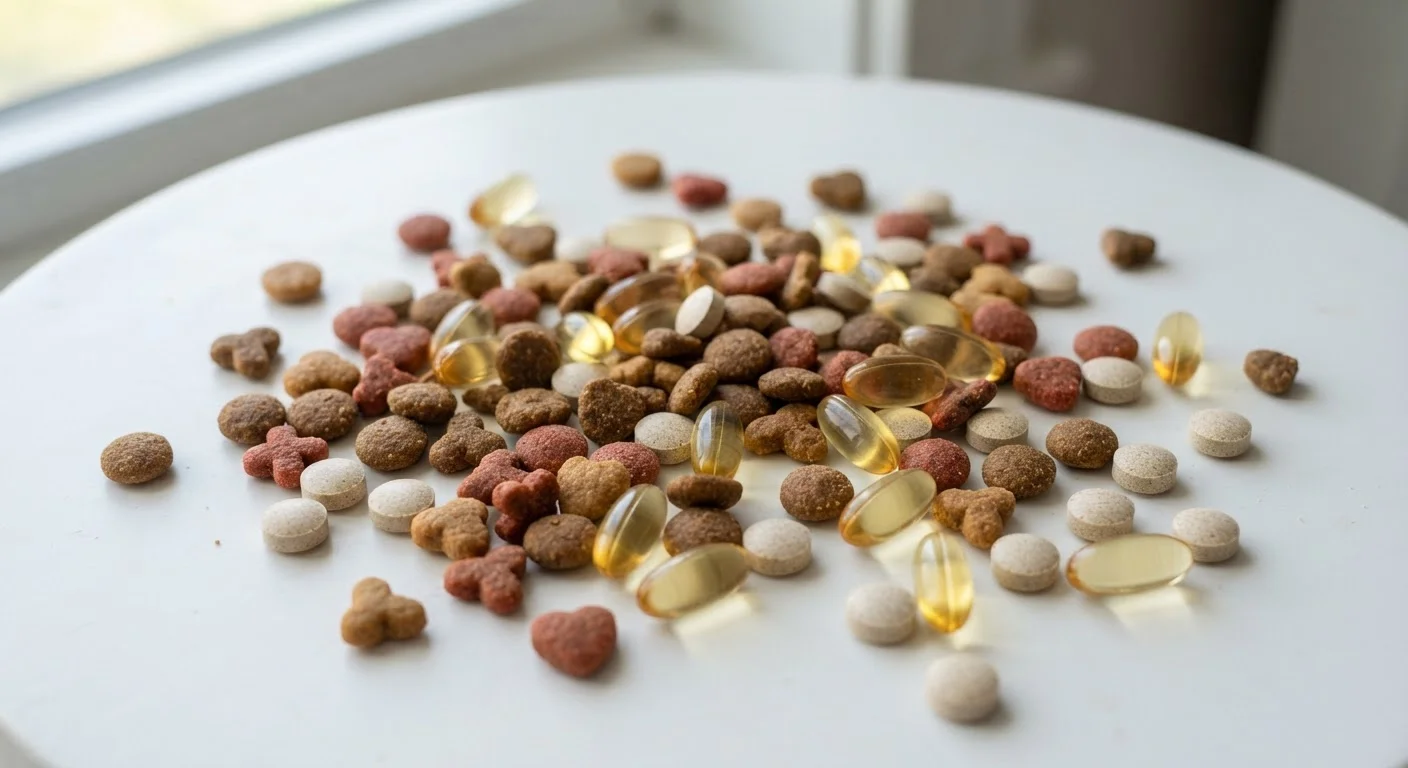
Photo: FaqsBay.com | Trending Blogs, Top Genres editorial
Key Takeaways
- Omega-3 fatty acids have strong evidence supporting anti-inflammatory benefits in pets.
- Probiotics can help during and after digestive disruptions, but strain and dose matter enormously.
- Glucosamine and chondroitin show modest joint-support evidence, primarily in dogs with osteoarthritis.
- Many supplement additions on pet food labels appear in quantities too small to produce meaningful effects.
- Always consult your veterinarian before adding standalone supplements to your pet's diet.
Why Supplements Keep Appearing on Pet Food Labels
Walk down any pet food aisle and you'll encounter labels crowded with added ingredients — omega-3s, probiotics, antioxidants, glucosamine, digestive enzymes. Manufacturers add these to signal premium quality and meet consumer expectations shaped by human supplement culture. But marketing intent and nutritional reality are not always the same thing.
The core question isn't whether an ingredient has any research behind it — many do. The real question is whether the quantity present in a given food is sufficient to deliver that effect, and whether your pet actually needs it. Understanding those distinctions is what separates informed decisions from label-driven ones. For a broader look at how pet food packaging communicates nutrition, see our guide to what pet food labels are actually telling you.
Myth
If a supplement is listed on the pet food label, it's present in an effective amount.
Fact
Regulatory labeling rules require only that an ingredient is present — not that it appears at a clinically meaningful dose.
Manufacturers can legally list an ingredient even if it's included in trace quantities. Glucosamine, for instance, is often added to kibble at levels far below those used in clinical studies demonstrating joint benefits. This practice, sometimes called "label dressing," lets a food claim a functional ingredient without delivering its documented effect. When a specific supplement is therapeutically important for your pet, a standalone veterinary-grade product with a verified dose is generally more reliable than food-form inclusion.
Myth
Antioxidant supplements like vitamin E and vitamin C always provide extra health benefits beyond a balanced diet.
Fact
Pets eating a complete and balanced diet already receive adequate antioxidants; excess supplementation can occasionally cause harm rather than benefit.
Vitamins E and C do play legitimate roles in immune function and cellular protection, and reputable pet foods formulated to AAFCO standards include them at appropriate levels. Adding more does not necessarily amplify those benefits — and fat-soluble vitamins like E can accumulate to toxic levels with chronic oversupplementation. The "more is better" logic that drives human supplement culture does not translate reliably to companion animal nutrition.
Myth
Probiotics in pet food work the same way as probiotic supplements.
Fact
Processing temperatures used in kibble manufacturing can destroy live bacterial cultures, making food-form probiotics largely inactive.
Most probiotic bacteria are heat-sensitive. The extrusion process used to produce dry kibble involves temperatures that typically eliminate viable colony counts. Some manufacturers apply probiotic coatings after cooking, which preserves more cultures, but third-party verification of survival rates is uncommon. If a probiotic is genuinely needed — for example, during antibiotic treatment or a digestive flare — a refrigerated standalone product with a confirmed CFU (colony-forming unit) count at time of use is a more predictable choice. Discuss appropriate strains and timing with your veterinarian.
Myth
"Natural" supplements added to pet food are always safe because they come from whole-food sources.
Fact
Natural origin does not determine safety; dose, purity, and interaction with medications all influence whether an ingredient is safe for a specific animal.
Botanical additives such as turmeric, green-lipped mussel, and various herbal extracts are often marketed as natural and therefore implicitly safe. But "natural" is a source descriptor, not a safety rating. Some botanicals contain compounds that interact with liver enzymes or clotting pathways. Purity and contamination are also concerns with less-regulated ingredients. An honest evidence review shows that many plant-based additives popular in premium pet foods have limited high-quality studies in companion animals specifically — promising in vitro or rodent data does not automatically translate to dogs and cats.
Myth
Every dog or cat benefits equally from omega-3 supplementation.
Fact
Omega-3 needs vary by health status, existing diet composition, and species — cats, for example, cannot efficiently convert plant-based ALA to the active EPA and DHA forms.
Omega-3 fatty acids exist in multiple forms: ALA (found in flaxseed), and EPA and DHA (found in marine sources). Dogs can partially convert ALA to EPA and DHA, but the conversion rate is low. Cats have very limited conversion capacity and depend almost entirely on direct dietary sources of EPA and DHA. This means flaxseed oil listed as an omega-3 source on a cat food label provides far less functional benefit than fish or algae oil. Additionally, pets with clotting disorders or those taking certain medications may need adjusted intake — underscoring why supplementation decisions belong in a veterinary conversation.
The Supplements With Meaningful Evidence
A handful of additives have accumulated enough peer-reviewed research to warrant genuine consideration — though even these come with important caveats about dose, form, and individual need.
< 50%
Probiotic survival rate through kibble extrusion
Research published in veterinary nutrition journals indicates most live cultures do not survive the high-heat processing used in dry pet food manufacturing.
~30%
Dog foods with joint supplements at therapeutic doses
Veterinary nutrition analyses suggest only a minority of commercial foods listing glucosamine contain it at levels used in controlled clinical trials.
Omega-3 fatty acids (EPA and DHA) from marine sources — fish oil or algae oil — are among the best-supported supplements in veterinary nutrition. They carry documented anti-inflammatory effects relevant to skin conditions, coat quality, kidney disease management, and joint health. The key caveat is source and freshness: omega-3s oxidize easily, meaning poorly stored products may deliver rancid lipids rather than functional ones.
Probiotics show credible benefit for acute diarrhea, antibiotic-associated gut disruption, and some inflammatory bowel conditions — but strain specificity matters. Lactobacillus and Bifidobacterium strains studied in dogs and cats are not interchangeable with human formulations. Proprietary blends with undisclosed strains are difficult to evaluate.
Glucosamine and chondroitin have a mixed but leaning-positive evidence base for dogs with osteoarthritis. Studies suggest modest improvements in mobility scores for some animals, though results are not universal. Evidence in cats is less robust. Therapeutic doses used in clinical studies are often higher than amounts found in food formulations — making standalone veterinary-grade supplements more reliable than food-form additions for joint conditions.
If you're navigating pet food costs while trying to prioritize genuinely useful ingredients, our article on feeding your pet well on a budget offers evidence-based guidance.
When to Talk to Your Veterinarian
No supplement — however well-researched — should be selected without considering your individual pet's health status, existing diet, and any medications they take. Some supplements interact with drugs: fish oil can affect platelet function; certain antioxidants may interfere with chemotherapy protocols. Others are genuinely unnecessary for healthy animals eating a complete and balanced diet.
Supplements Can Interact With Medications
The AAFCO (Association of American Feed Control Officials) "complete and balanced" standard already requires foods to meet established nutrient minimums. A healthy adult pet eating such a diet may not need supplementation at all. Supplementation is most defensible when addressing a confirmed deficiency, managing a diagnosed condition, or supporting recovery — all scenarios where veterinary guidance should drive the decision.
Understanding what goes into your pet's bowl at the ingredient level helps you have better conversations with your vet. Our guide to reading ingredient lists without being misled can help you decode what's actually present before a supplement question even arises.
This article is for general informational purposes only and does not constitute veterinary advice. Always consult a licensed veterinarian regarding your pet's specific nutritional needs and health conditions.
The content provided on our blog site traverses numerous categories, offering readers valuable and practical information. Readers can use the editorial team’s research and data to gain more insights into their topics of interest. However, they are requested not to treat the articles as conclusive. The website team cannot be held responsible for differences in data or inaccuracies found across other platforms. Please also note that the site might also miss out on various schemes and offers available that the readers may find more beneficial than the ones we cover.