
Mixing Wood Tones Throughout a Home

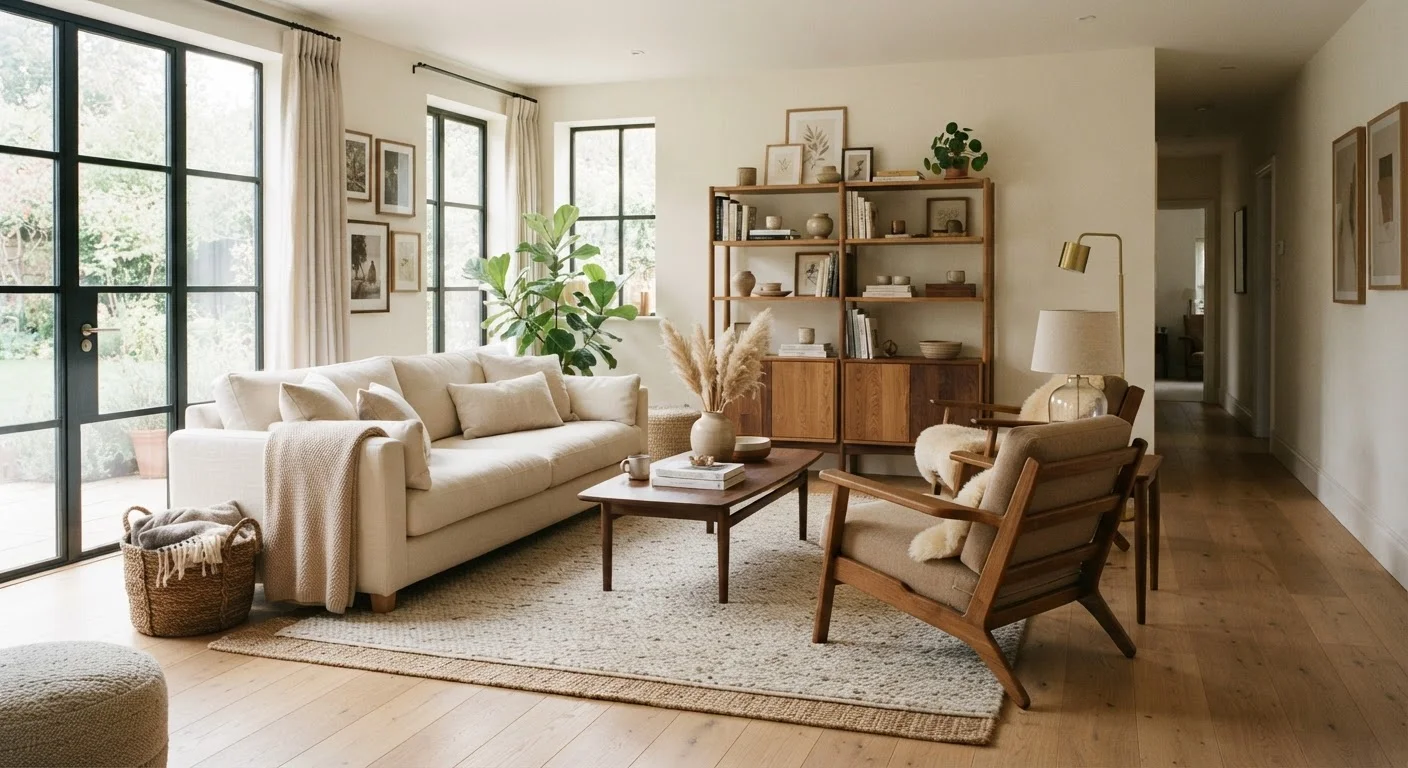
Photo: FaqsBay.com | Trending Blogs, Top Genres editorial
Key Takeaways
- Mixing wood tones is intentional design — not a decorating mistake to avoid.
- Anchor the room with one dominant wood tone, then layer one or two supporting tones.
- Warm and cool wood tones can coexist when tied together with consistent undertones or shared finishes.
- Scale, texture, and distribution all influence whether mixed woods feel curated or chaotic.
- Existing fixed elements like flooring should guide every wood choice that follows.
Why Perfect Wood Matching Works Against You
Decorating rules once demanded that every wood piece in a room match — same species, same stain, same sheen. In practice, that approach tends to produce rooms that feel flat and overly composed, as if the space was furnished in a single afternoon from one catalog. Real homes accumulate pieces over time, and that accumulation is part of what gives them life.
Interior designers widely recognize that mixing wood tones adds visual depth and warmth that matchy-matchy rooms simply lack. The goal isn't randomness — it's deliberate contrast. Understanding why certain wood combinations work helps you make confident choices rather than anxious compromises.
If your room already feels a little off and you can't identify why, diagnosing what's not working is a useful first step before introducing any new pieces.
Start With Your Fixed Elements
Before you make any wood decisions, take stock of what you can't change: hardwood flooring, built-in shelving, wood trim, window casings. These are your anchors. Every movable wood piece — furniture, frames, decorative objects — should respond to these fixed tones rather than compete with them.
If your floors are a warm medium-brown oak, you have natural flexibility to add lighter pieces (like a bleached ash side table) or darker ones (like an espresso-stained dresser). What you want to avoid is introducing a tone that's almost — but not quite — the same as your floor. Near-matches read as mistakes. Deliberate contrast reads as design.
For a deeper look at flooring materials and their tonal characteristics, see our guide on hardwood versus engineered wood.
The Principles That Keep Mixed Woods Cohesive
Successfully mixing wood tones comes down to a handful of reliable principles. Apply them consistently and the room will hold together even with significant tonal variation.
3
Maximum distinct wood tones recommended per room
Interior design guidance consistently suggests limiting wood tone variety to two or three to maintain visual cohesion without sacrificing interest.
2×
Minimum repetitions per supporting wood tone
Repeating a secondary or accent wood tone at least twice in a room helps the eye read it as an intentional design choice rather than a mismatch.
One of the most useful is the concept of undertone harmony. Woods that share a similar undertone — both leaning amber, or both leaning gray-green — tend to coexist comfortably even when their depths differ considerably. Conflict usually arises when warm-undertone woods are placed directly beside cool-undertone ones without any transitional element to bridge them.
Distribution matters just as much as selection. Repeating a wood tone in at least two spots in a room — a chair and a frame, for example — gives the eye a visual path to follow. Isolated tones read as afterthoughts.
Lighting plays a significant role in how wood tones appear at different times of day. A piece that looks warm and honeyed in afternoon sun may read cooler under artificial light in the evening. See our guide on building a layered lighting plan to understand how light quality shifts perception of color and tone.
Quick Ways to Start Mixing With Confidence
You don't need to redesign an entire room to begin applying these principles. Small, targeted additions can test the approach before you commit to larger pieces.
Grouping objects by visual weight and scale also helps mixed woods feel organized. This is closely related to the concept explored in the rule of three in home décor — odd-numbered groupings of varied-tone wood objects on a shelf or mantel tend to look more considered than symmetrical even pairs.
The content provided on our blog site traverses numerous categories, offering readers valuable and practical information. Readers can use the editorial team’s research and data to gain more insights into their topics of interest. However, they are requested not to treat the articles as conclusive. The website team cannot be held responsible for differences in data or inaccuracies found across other platforms. Please also note that the site might also miss out on various schemes and offers available that the readers may find more beneficial than the ones we cover.