
Layering Light: How to Move Beyond the Single Overhead Fixture

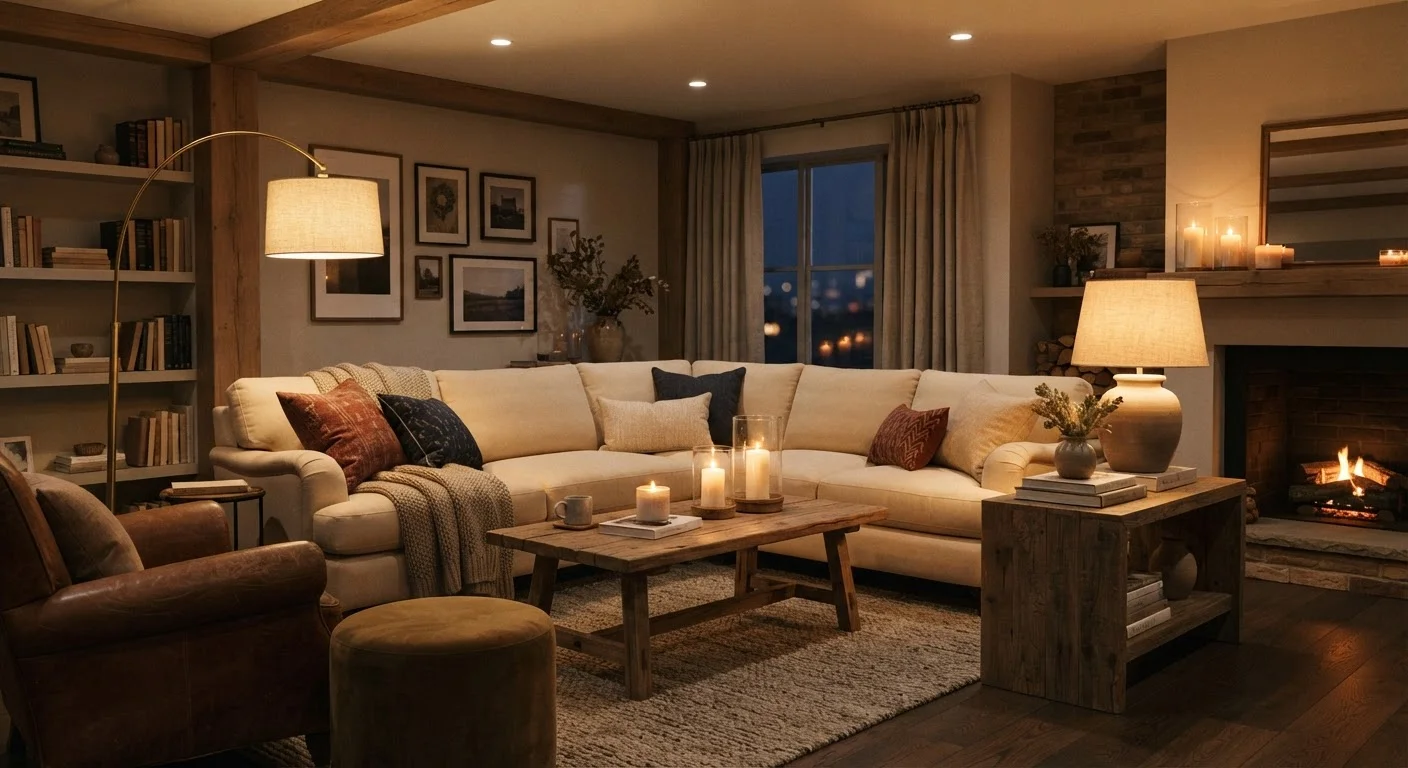
Photo: FaqsBay.com | Trending Blogs, Top Genres editorial
Key Takeaways
- Layering ambient, task, and accent lighting makes any room feel more intentional and livable.
- You don't need to rewire anything — plug-in lamps and dimmers are accessible starting points.
- Warm-toned bulbs (2700–3000K) work well in living spaces; cooler tones suit task areas.
- Varying light heights — floor, table, and ceiling level — creates visual depth and comfort.
- Dimmer switches give you one fixture's worth of flexibility at very low cost.
Why One Light Source Isn't Enough
Most rooms in US homes are wired with a single ceiling fixture — a practical choice during construction, but one that imposes real limitations on how a room can look and feel. A central overhead light casts illumination downward across an entire space evenly, which sounds useful but actually creates a flat, shadowless environment that tends to feel either too bright or too dim depending on where you're standing.
Shadow, contrast, and variation in light intensity are what give a room visual depth. They're also what make spaces feel comfortable rather than clinical. A well-lit room isn't necessarily a brightly lit one — it's one where light is distributed thoughtfully across several sources at different heights and intensities. This approach, called layered lighting, is the foundation of most professional interior lighting plans, and it's far more accessible to everyday homeowners than it might seem. Just as accent walls reshape a room's perceived proportions, strategic light placement fundamentally changes how a space reads.
The Three Layers of Light
Ambient lighting
The base layer of light in a room that provides general, overall illumination — it's the light that lets you see and move around comfortably.
Task lighting
Focused light directed at a specific area where an activity happens, such as reading, cooking, or working at a desk.
Accent lighting
Decorative, directional light used to highlight a particular object or feature — such as artwork, a plant, or a bookshelf — rather than to illuminate a whole room.
Color temperature (Kelvin)
A scale that describes how warm or cool a light source appears. Lower Kelvin numbers (2700K) produce warm, yellowish light; higher numbers (5000K+) produce cool, bluish-white light.
Dimmer switch
A wall switch that lets you adjust a fixture's brightness level, giving a single light source more flexibility across different times of day or activities.
Torchière lamp
A tall floor lamp with a bowl-shaped shade that faces upward, bouncing light off the ceiling to create soft, diffuse ambient illumination.
Every effective lighting plan draws from three functional categories. Understanding what each one does — and doesn't do — makes it much easier to identify what your room is missing.
Ambient Light
Ambient light is the base layer: the general illumination that lets you move safely through a room and see its contents. In most homes, this is what the ceiling fixture provides. It doesn't need to be harsh — a dimmer switch on a ceiling fixture, or a large floor lamp with an upward-facing shade, can supply plenty of ambient light while keeping the atmosphere soft.
Task Light
Task lighting is directed and purposeful. It targets a specific activity area — a desk, a kitchen counter, a reading chair — with enough focused light to work comfortably without straining your eyes. A desk lamp, under-cabinet kitchen lighting, or a swing-arm floor lamp beside a chair all qualify. Task light should be brighter than your ambient layer in its zone without flooding the rest of the room.
Accent Light
Accent lighting is decorative and directional. Its job is to draw attention to something worth highlighting — a piece of art, a bookshelf, an architectural feature, or a plant. Picture lights, small directional spotlights, LED strip lighting on shelving, and candles all fall into this category. Accent light adds the layer of visual interest that makes a room feel designed rather than just furnished.
Start with Warm Bulbs as Your Default
Building a Lighting Plan Room by Room
Different rooms have different demands, and the right balance of the three layers shifts accordingly.
Living Room
This is the room that benefits most from layering. Aim for ambient light from a central fixture or large floor lamp, task light near any reading or work areas, and at least one accent source — a table lamp on a console, picture lights above art, or LED strips behind a media unit. Varying the height of your sources (floor lamp at low level, table lamp at mid, ceiling at high) creates the most dynamic effect. This principle pairs well with the visual layering described in our guide to mixing wood tones throughout a home.
Kitchen
Kitchens need strong task lighting above prep surfaces — overhead ambient alone leaves counters in shadow. Under-cabinet LED strips are a practical, low-cost addition. Pendant lights above an island add accent interest while supplementing task light in that zone.
Bedroom
Overhead bedroom light is often too stimulating for winding down. Bedside lamps provide targeted task light for reading, while a dimmable overhead or a lamp on a lower setting supplies ambient. For a small apartment bedroom, wall-mounted swing-arm sconces preserve nightstand space while delivering both function and style.
Practical Steps to Get Started
You don't need a full renovation to begin layering light. Here's a straightforward approach that works even on a modest budget.
- Audit what you have. Walk each room and count your current light sources. Note which layer each one serves — or if it serves none at all.
- Identify the gap. Most rooms are missing either task or accent light. That's usually the easiest fix.
- Add one plug-in lamp. A floor lamp or table lamp requires no wiring and immediately changes the feel of a space. Position it in a corner or beside seating to add warmth and depth.
- Install a dimmer switch. For an existing overhead fixture, swapping to a dimmer is a low-cost upgrade that lets you shift from bright working light to softer ambient. Consult local codes or a licensed electrician if you're unsure about the installation.
- Choose consistent bulb tones. Mixing a 2700K lamp with a 5000K overhead creates visual dissonance. Decide on a temperature range for the room and stick with it.
- Think about height and direction. Light that bounces off a ceiling or wall reads as softer and more spacious than downward-directed light. Upward-facing shades, wall sconces, and torchière-style lamps all work this way.
Layered lighting is one of the highest-impact, lowest-disruption changes you can make to a room. Much like thoughtful plant placement, it shapes both the aesthetics and the daily livability of your home without requiring structural changes. Start with one room, make intentional additions, and let the difference guide your next step.
Frequently Asked Questions
The content provided on our blog site traverses numerous categories, offering readers valuable and practical information. Readers can use the editorial team’s research and data to gain more insights into their topics of interest. However, they are requested not to treat the articles as conclusive. The website team cannot be held responsible for differences in data or inaccuracies found across other platforms. Please also note that the site might also miss out on various schemes and offers available that the readers may find more beneficial than the ones we cover.