
Home Décor

Why Your Room Feels Off Even Though Everything Looks Fine

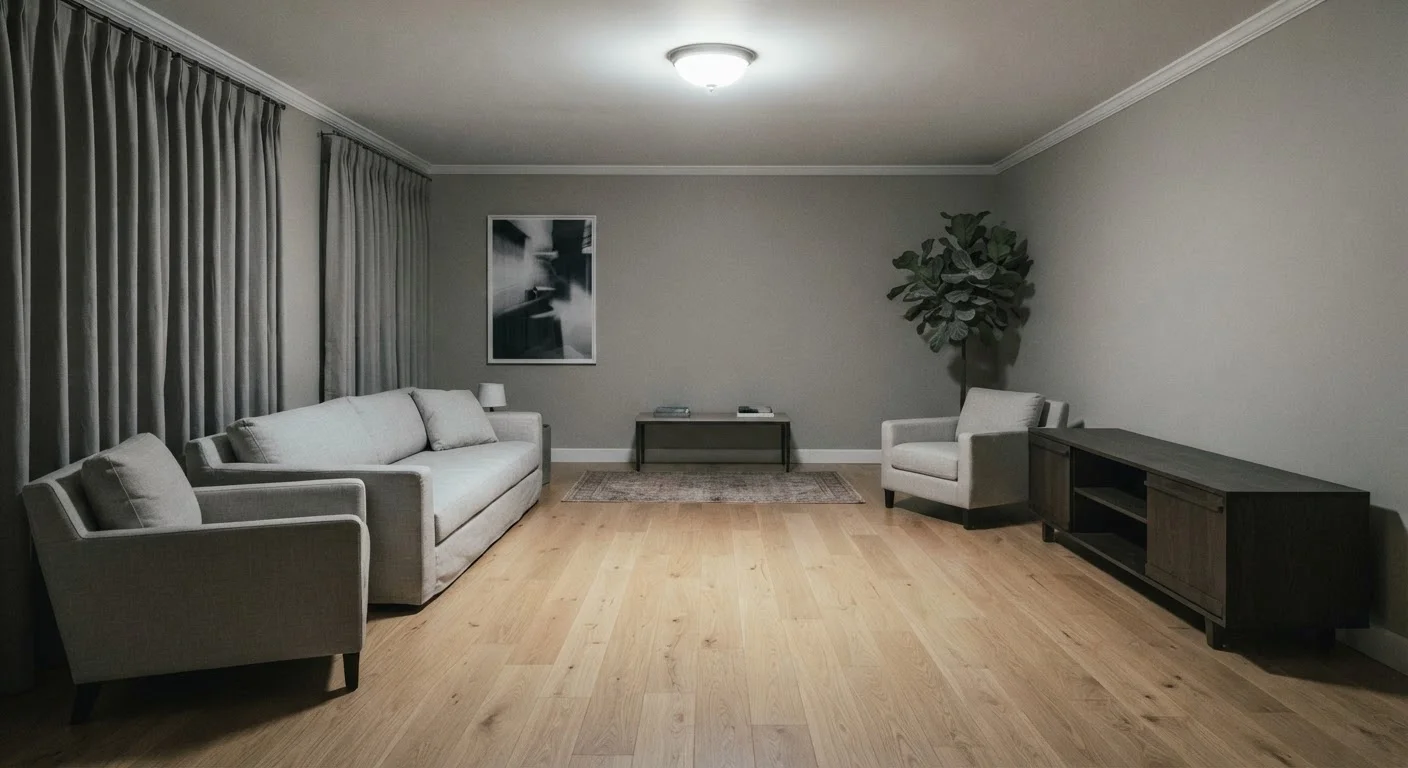
Why Your Room Feels Off Even Though Everything Looks Fine

Photo: FaqsBay.com | Trending Blogs, Top Genres editorial

Scale mismatches, poor traffic flow, and lighting gaps are invisible until you know what to look for. Here's how to diagnose a room that's not quite working.

Key Takeaways

  • Scale mismatches between furniture and rugs are one of the most common — and fixable — room problems.
  • Traffic flow issues make a room feel cramped or awkward even when it's not overcrowded.
  • Single overhead lighting flattens a room's atmosphere; layered lighting dramatically improves how a space feels.
  • Pushing furniture against walls usually makes a room feel less comfortable, not more spacious.
  • Visual balance — not symmetry — is what gives a room a sense of calm and intention.

Why Rooms Feel Wrong Even When Nothing Is Obviously Broken

You've arranged and rearranged. Everything in the room matches, nothing is broken, and objectively it looks fine in photos — yet every time you sit in it, something feels slightly off. This experience is more common than most homeowners expect, and it almost always has a diagnosable cause.

The culprits are rarely about what you own. They're about proportion, flow, and light — the invisible structure underneath the décor. Once you know what to look for, these problems become straightforward to fix, often without buying a single new thing. Before making any changes, it's worth working through a structured room assessment to pinpoint exactly what your space needs.

1

Pushing all furniture against the walls in an attempt to maximize open floor space.

Why it happens: It feels logical — more floor space should mean more room. But the result is a seating arrangement that feels disconnected and cold, like a waiting room.
How to avoid: Float furniture toward the center of the room, creating a defined conversation zone. Leaving a modest gap between sofas and walls actually makes a space feel larger and more intentional.
2

Using a rug that is too small for the seating group it anchors.

Why it happens: Smaller rugs cost less and seem like a safe choice, but they fail to visually unify the furniture around them, making the arrangement look scattered.
How to avoid: Choose a rug large enough for at least the front legs of all seating pieces to rest on it. In a living room, an 8×10 or 9×12 rug is almost always more effective than a 5×8.
3

Relying on a single overhead light fixture as the room's only light source.

Why it happens: Overhead lighting comes with most homes and feels sufficient because it illuminates the whole space. In practice, it casts flat, shadowless light that removes warmth and dimension.
How to avoid: Build a layered lighting plan using ambient, task, and accent sources. Adding floor lamps and table lamps at different heights changes the feel of a room more dramatically than most furniture updates.
4

Ignoring traffic flow when placing furniture, blocking natural pathways through the room.

Why it happens: Furniture placement decisions are often made one piece at a time, without mapping how people actually move through the space day to day.
How to avoid: Before finalizing any layout, walk every path you use — from door to sofa, sofa to kitchen, bedroom to bathroom. Ensure main pathways have at least 18 to 24 inches of clearance. Use painter's tape on the floor to test layouts before committing.
5

Creating an unbalanced visual weight distribution — clustering all heavy or dark pieces on one side of the room.

Why it happens: Shoppers often buy and place pieces as they acquire them rather than thinking about the room as a whole. A heavy dark bookcase on one wall with nothing to counterbalance it creates visual tension readers can feel but struggle to name.
How to avoid: Step back and squint at your room to see the overall visual weight. Distribute large, dark, or visually heavy pieces across the space. You don't need perfect symmetry — grouping elements thoughtfully is more effective than mirroring everything.

How to Start Fixing It Without Starting Over

Most of these mistakes share a common thread: they stem from making decisions in isolation rather than viewing the room as an interconnected system. A rug that works fine as an object fails in context. A lamp that seems redundant becomes essential once the overhead fixture is dimmed.

Diagnose Before You Buy Anything New

Most rooms that feel off don't need more furniture or décor — they need a layout or lighting adjustment. Before spending money, walk through each mistake below and assess your space honestly. A simple furniture rearrangement or a new lamp often does more than an entirely new purchase.

It also helps to question inherited assumptions about decorating. Common beliefs — like matching every wood tone exactly, or always choosing small furniture for small rooms — can quietly steer you toward choices that make a space feel more awkward. Some widely repeated décor rules do more harm than good, and knowing which ones to ignore is just as valuable as knowing what to add.

Rugs That Are Too Small Shrink Every Room

A rug that only fits under the coffee table — with sofa legs floating on bare floor — visually fragments the seating area into unrelated pieces. This is one of the most budget-draining mistakes because people often buy a second rug rather than replacing the first. Measure your seating group before purchasing: front legs of all major seating should rest on the rug.

Work through one issue at a time. Rearrange furniture first — it costs nothing. Then address lighting before considering any new purchases. The room you already have may be closer to working than you think.

Home & Garden Editorial Team

FaqsBay.com | Trending Blogs, Top Genres

Home & Garden Editorial Team is the collective byline for our editorial team and contributor network. Articles published under this byline or an editorial pen name are researched, written, and reviewed according to our editorial standards for clarity, consistency, and independence before publication.

Home ImprovementLawn & GardenHome Décor
View author profile

The content provided on our blog site traverses numerous categories, offering readers valuable and practical information. Readers can use the editorial team’s research and data to gain more insights into their topics of interest. However, they are requested not to treat the articles as conclusive. The website team cannot be held responsible for differences in data or inaccuracies found across other platforms. Please also note that the site might also miss out on various schemes and offers available that the readers may find more beneficial than the ones we cover.