
DIY Car Maintenance vs. Taking It to a Shop

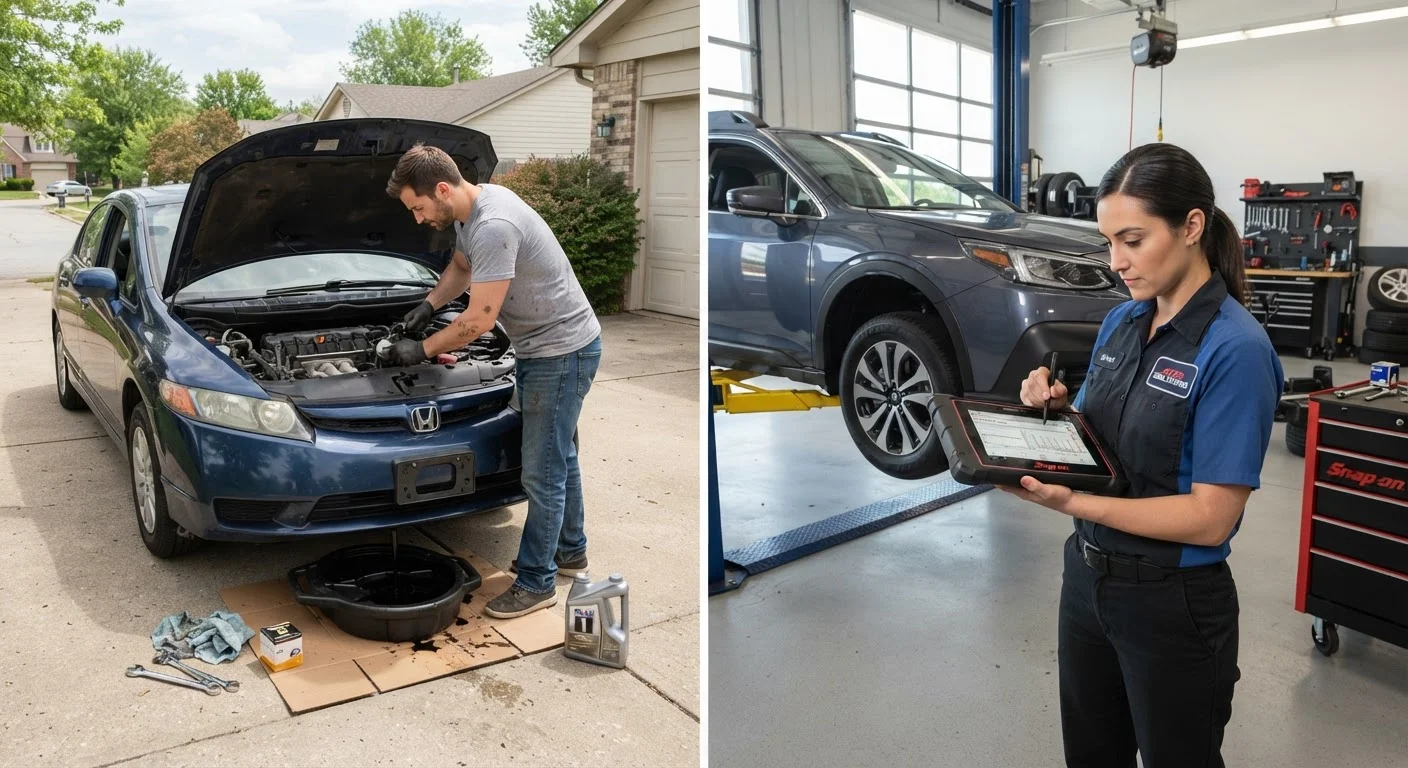
Photo: FaqsBay.com | Trending Blogs, Top Genres editorial
Key Takeaways
- Simple maintenance tasks like air filter swaps and wiper replacements are genuinely manageable for most drivers with basic tools.
- Brake system work, suspension repairs, and anything involving airbags or advanced electronics should go to a qualified mechanic.
- DIY saves money on labor but carries real risks if a job is done incorrectly - factor in safety, not just cost.
- Your owner's manual is the most reliable guide for service intervals and recommended tasks for your specific vehicle.
- Misdiagnosed repairs can cost more than a professional visit would have from the start.
Why This Decision Matters More Than You Think
Every car owner eventually faces the question: handle this myself, or call a shop? The answer shapes your budget, your schedule - and sometimes your safety. A poorly installed brake pad or an over-tightened drain plug can cause real harm. Yet plenty of drivers pay shop labor rates for tasks they could confidently handle in an afternoon.
The goal here isn't to push you toward either option. It's to give you a clear framework for deciding, task by task, where your limits are. For a plain-English overview of what regular upkeep involves, see our first-timer's guide to car maintenance.
Tasks That Are Genuinely DIY-Friendly
These jobs share common traits: they require few specialized tools, mistakes are usually visible before you drive away, and the consequences of minor errors are low.
- Engine air filter replacement: Typically a tool-free swap taking under 10 minutes. Your owner's manual specifies the correct filter and interval.
- Windshield wiper blades: Straightforward clip-on replacement; instructions are often printed on the packaging.
- Cabin air filter: Usually accessible behind the glove box. A commonly skipped job - see our piece on neglected maintenance tasks for why it matters.
- Oil and filter change: Doable for many drivers, though it requires the correct oil grade, a drain pan, and torque awareness. Consult your manual - not online shortcuts.
- Battery terminal cleaning: Corrosion buildup can be safely removed with a wire brush and baking soda solution with the battery disconnected.
- Exterior bulb replacement: Many headlight and taillight bulbs are accessible without disassembly, though some modern vehicles require partial bumper removal - check first.
Start With Your Owner's Manual
Jobs That Belong in a Shop
Some repairs look approachable on video but carry serious risk when performed without professional equipment, calibration tools, or structural knowledge.
Don't Underestimate Safety-Critical Repairs
- Brake system work: Pad replacement may seem straightforward, but rotor condition, caliper compression, and brake fluid hygiene all affect stopping distance. Errors here are dangerous.
- Suspension and steering components: Worn ball joints, tie rods, or control arms require precise torque specs and alignment afterward. Improper installation affects vehicle handling at speed.
- Timing belt or chain service: Misfires or engine damage can result from incorrect installation. Many modern engines are interference engines, meaning a timing error causes internal damage.
- Airbag system components: These systems involve explosive charges. Any work near airbag modules or wiring should only be handled by certified technicians.
- Transmission service beyond fluid changes: Internal transmission work requires specialized equipment and expertise.
- Check engine light diagnosis: A scan tool can pull a code, but accurate diagnosis requires experience and often additional testing. Replacing parts based on a code alone frequently fails to solve the root problem.
Also worth noting: if your vehicle is under a factory or extended warranty, DIY repairs that aren't performed to manufacturer standards could affect your coverage. Verify the terms of your warranty before proceeding.
How to Compare the Real Costs
Labor charges at independent shops generally run lower than dealership rates, but both include professional accountability and the right tools. DIY eliminates labor costs but introduces time investment, tool purchases, and the risk of a repeat repair if something goes wrong.
| DIY Maintenance | Professional Shop | |
|---|---|---|
| Labor cost | None (your time only) | Charged at shop hourly rate |
| Tool requirements | Basic hand tools for simple jobs | Specialized equipment available |
| Diagnostic accuracy | Limited without professional training | Higher with proper equipment and experience |
| Safety for critical systems | High risk without expertise | Professionally accountable |
| Warranty impact | Possible risk if not to spec | Generally warranty-safe |
| Best suited for | Filters, fluids, wipers, bulbs | Brakes, suspension, electronics, diagnosis |
One often-overlooked cost: misdiagnosis. Replacing a part that wasn't actually the problem wastes both money and time. Our article on car maintenance myths covers how faulty assumptions lead to unnecessary spending. And for context on what deferred maintenance actually costs over time, see the honest trade-offs of skipping scheduled maintenance.
Making the Call: A Practical Framework
Before starting any job, ask yourself four questions:
- Do I have the right tools? Some repairs require torque wrenches, specialty sockets, or diagnostic scanners. Renting is an option for one-time needs.
- Is this safety-critical? Brakes, steering, suspension, and restraint systems fall into this category. When in doubt, defer to a professional.
- Can I verify my work before driving? A leaking drain plug or a loose lug nut is dangerous. Only proceed if you can inspect your results confidently.
- What does my owner's manual say? The manual is vehicle-specific and more reliable than generalized advice online.
If a task crosses more than one of these caution points, a qualified shop is the right call. The same logic applies in other areas of home upkeep - our related piece on when DIY becomes a liability explores that parallel well.
This article is for general informational purposes only. Always consult your vehicle's owner's manual and a qualified mechanic before performing any repair you are uncertain about.
The content provided on our blog site traverses numerous categories, offering readers valuable and practical information. Readers can use the editorial team’s research and data to gain more insights into their topics of interest. However, they are requested not to treat the articles as conclusive. The website team cannot be held responsible for differences in data or inaccuracies found across other platforms. Please also note that the site might also miss out on various schemes and offers available that the readers may find more beneficial than the ones we cover.