
Feeding a Dog vs. Feeding a Cat: Why the Differences Matter

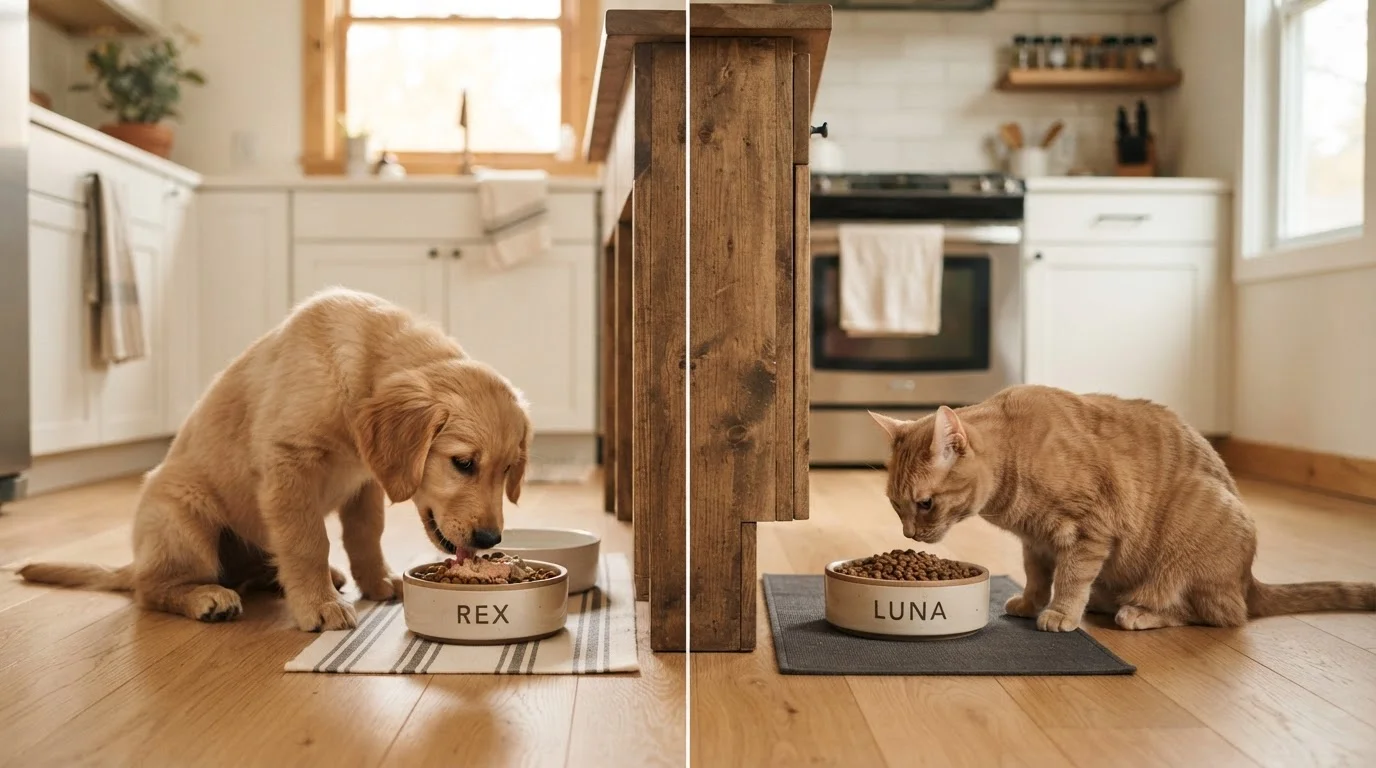
Photo: FaqsBay.com | Trending Blogs, Top Genres editorial
Key Takeaways
- Cats are obligate carnivores requiring nutrients found only in animal tissue; dogs are omnivores with broader dietary flexibility.
- Feeding a cat dog food — even occasionally — can cause serious nutritional deficiencies over time.
- Taurine, arachidonic acid, and preformed vitamin A are non-negotiable for cats and must come from meat sources.
- Dogs can synthesize several nutrients cats cannot, making cat food dangerously high in protein and fat for many dogs.
- Species-appropriate labeling from AAFCO is a reliable starting point, but understanding the why behind it helps owners make smarter choices.
Carnivore vs. Omnivore: The Biological Starting Point
The most consequential difference between dogs and cats sits at the level of evolutionary biology. Cats are obligate carnivores — meaning their bodies are hardwired to derive energy and essential nutrients exclusively from animal tissue. Dogs, by contrast, are omnivores: they evolved alongside humans scavenging a wide range of foods and can extract nutrition from both animal and plant sources.
This isn't a subtle distinction. A cat's liver lacks key enzymes that most mammals use to convert plant-derived precursors into usable nutrients. For example, cats cannot convert beta-carotene from plants into vitamin A — they require preformed vitamin A sourced directly from animal liver or organ meat. Dogs handle that conversion without difficulty.
The practical consequence: a food designed for one species can be genuinely dangerous for the other, even when it looks similar on the label. Understanding this helps pet owners look past marketing language and focus on what's metabolically relevant for each animal.
Nutrients Cats Cannot Live Without (That Dogs Largely Manage on Their Own)
Several nutrients illustrate the cat-specific metabolic gaps that make species-appropriate feeding so important:
- Taurine: An amino acid cats cannot synthesize at adequate levels. Dogs produce enough endogenously. Cats must consume it through meat. Taurine deficiency in cats is linked to dilated cardiomyopathy and retinal degeneration — both serious, progressive conditions.
- Arachidonic acid: An omega-6 fatty acid that dogs can synthesize from linoleic acid. Cats lack the enzyme to do this and must get it from animal fat.
- Niacin: Dogs (and most mammals) convert the amino acid tryptophan into niacin. Cats do this so inefficiently they essentially depend on dietary niacin from meat.
- Preformed vitamin A: As noted above, cats need it from animal sources, not plant precursors.
Dog food is not formulated to supply these nutrients at levels sufficient for cats. Feeding a cat dog food consistently — even a high-quality one — sets up long-term deficiency. Nutritional needs shift across life stages, so the risks compound as cats age.
Check the AAFCO Statement First
Why Cat Food Is Problematic for Dogs
The reverse scenario — dogs eating cat food — carries its own risks, though for different reasons. Cat food is formulated to be calorie-dense, very high in protein, and rich in fat to meet feline metabolic demands. For most dogs, especially those that are sedentary, middle-aged, or prone to weight gain, eating cat food regularly can contribute to obesity and gastrointestinal upset.
More significantly, dogs with kidney disease, liver conditions, or pancreatitis can be seriously harmed by the elevated protein and fat levels in cat food. The excess nutritional load stresses organs that are already compromised.
In multi-pet households, accidental food-sharing is common. Feeding in separate rooms or removing bowls after meals closes the opportunity. See our guide to feeding habits that quietly harm pet health for practical strategies on managing this at home.
| Nutritional Factor | Dogs | Cats | |
|---|---|---|---|
| Dietary classification | Omnivore | Obligate carnivore | |
| Taurine synthesis | Adequate endogenous production | Insufficient — must come from diet | |
| Vitamin A source | Can convert beta-carotene (plant) | Requires preformed (animal) source | |
| Arachidonic acid | Synthesized from linoleic acid | Must be obtained from animal fat | |
| Protein requirement (dry matter) | ~18–25% (adult maintenance) | ~30%+ (adult maintenance) | |
| Carbohydrate tolerance | Moderate tolerance | Low tolerance; limited digestive enzymes | |
| Risk from eating the other's food | Excess protein/fat; organ strain | Deficiency in taurine, vitamin A, arachidonic acid |
Reading Labels Through the Right Lens
The Association of American Feed Control Officials (AAFCO) sets nutrient profiles for dog and cat foods separately. A label stating a food is "complete and balanced" for cats means it meets minimums for taurine, arachidonic acid, and preformed vitamin A — thresholds that don't apply to dog food standards.
When evaluating any pet food label, the key questions differ by species:
- For cats: Is the primary protein source an identified animal ingredient? Is taurine listed explicitly? Does the guaranteed analysis show protein at or above 30% on a dry matter basis?
- For dogs: Does the ingredient list reflect the dog's size, age, and activity level? Is the fat content appropriate for the dog's health status? Are plant-based ingredients used purposefully, not as cheap filler?
For a deeper look at how format affects these numbers, dry kibble and wet food carry different nutritional trade-offs worth understanding before choosing between formats. And if you're considering cooking for your pet, home-cooked meals carry real risks of nutritional gaps that differ substantially between dogs and cats.
This article is for general informational and educational purposes only. Consult a licensed veterinarian or board-certified veterinary nutritionist before making significant changes to your pet's diet, especially if your pet has an existing health condition.
The content provided on our blog site traverses numerous categories, offering readers valuable and practical information. Readers can use the editorial team’s research and data to gain more insights into their topics of interest. However, they are requested not to treat the articles as conclusive. The website team cannot be held responsible for differences in data or inaccuracies found across other platforms. Please also note that the site might also miss out on various schemes and offers available that the readers may find more beneficial than the ones we cover.