
Dry Kibble vs. Wet Food: Nutritional Trade-Offs for Dogs and Cats

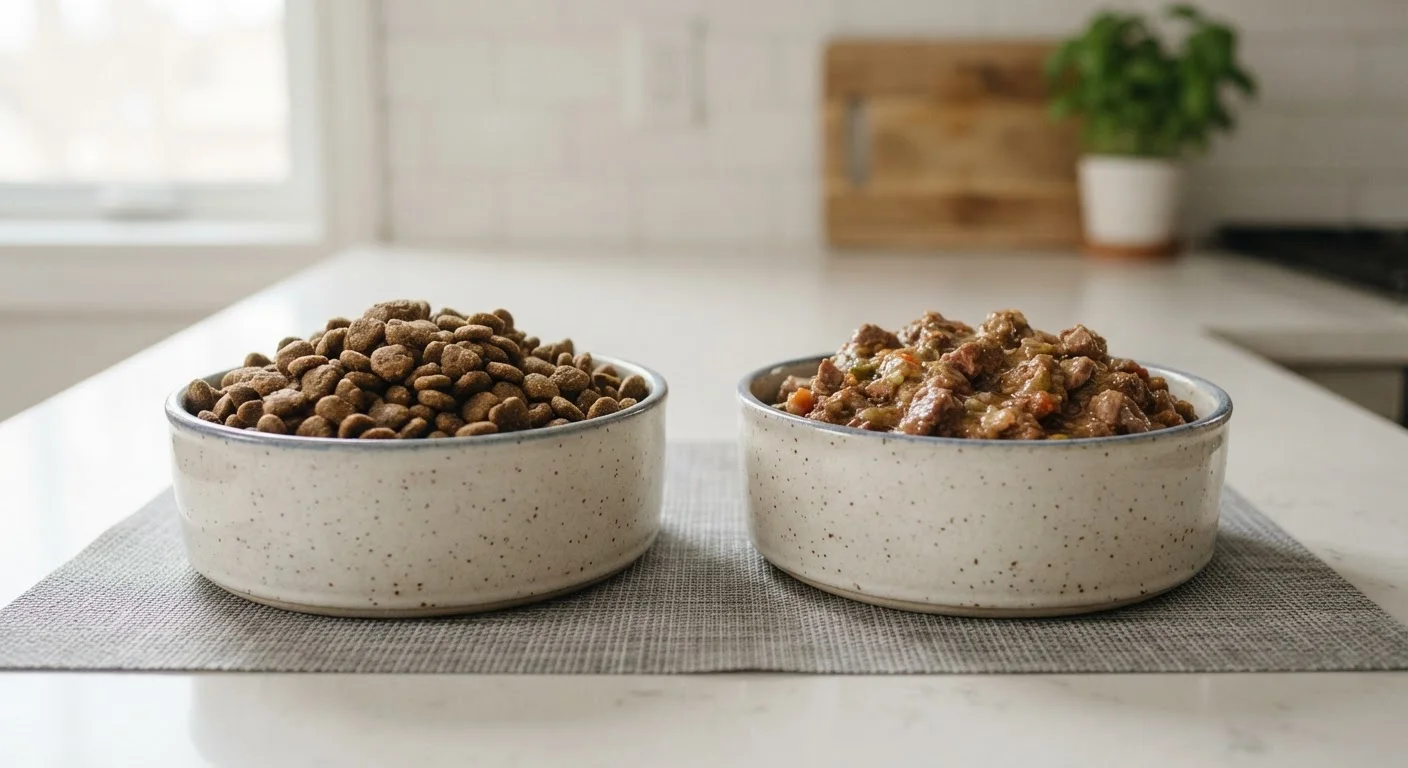
Photo: FaqsBay.com | Trending Blogs, Top Genres editorial
Key Takeaways
- Wet food contains roughly 70–80% moisture versus 8–12% in dry kibble, making it a meaningful hydration source.
- Calorie-for-calorie comparisons require converting both formats to a dry-matter basis — raw label numbers mislead.
- Neither format is universally superior; the right choice depends on the individual animal's health, life stage, and owner lifestyle.
- Mixing formats is a practical, vet-accepted strategy that can capture benefits of both.
- Always verify that any food carries an AAFCO nutritional adequacy statement appropriate for your pet's life stage.
The Moisture Gap: Why It Matters More Than You Think
The single most dramatic difference between dry and wet pet food is water content. Kibble typically contains 8–12% moisture, while canned food sits at 70–80%. For cats — obligate carnivores who evolved getting much of their water from prey — this gap has real physiological consequences.
Cats have a low thirst drive relative to their needs. Research published in veterinary nutrition literature has consistently noted that cats fed exclusively dry diets often consume less total water than those on wet diets, even when fresh water is freely available. Chronic mild dehydration is linked to increased risk of feline idiopathic cystitis and kidney disease progression.
Dogs are more flexible drinkers and can compensate more readily with a water bowl, but high-moisture food still benefits dogs with urinary tract disease, kidney disease, or conditions that reduce thirst signaling. For most healthy adult dogs, though, adequate water access alongside kibble is generally sufficient.
Dental Health Claims Deserve Scrutiny
Decoding the Label: Dry Matter Basis Is the Only Fair Comparison
Comparing protein or fat percentages straight off the label is misleading because wet food's high water content dilutes all other nutrients. The correct approach is dry matter basis (DMB) — a calculation that strips out moisture and compares nutrients pound-for-pound.
To convert: subtract the moisture percentage from 100 to get the dry matter percentage, then divide the nutrient percentage by that number and multiply by 100. A wet food showing 10% protein with 78% moisture actually delivers ~45% protein on a dry matter basis — competitive with many premium kibbles.
| Criterion | Dry Kibble | Wet / Canned Food |
|---|---|---|
| Moisture content | 8–12% | 70–80% |
| Typical carbohydrate level (DMB) | 30–60% | 5–20% |
| Cost per calorie | Generally lower | Generally higher |
| Shelf life (unopened) | 12–18 months | 2–5 years |
| Once opened | Weeks (airtight container) | Refrigerate; use within 48 hrs |
| Palatability for picky eaters | Moderate | High |
| Suitable for dental health | Some mechanical benefit | Minimal mechanical benefit |
| AAFCO complete diets available | Yes | Yes |
This calculation matters most when you're comparing protein quality, fat levels, and fiber content across formats. For a deeper look at how these needs shift across a pet's life, see our guide on nutritional needs from puppyhood to senior years.
Protein, Carbohydrates, and the Processing Question
High-temperature extrusion — the process used to make most kibble — can degrade some heat-sensitive amino acids and vitamins, which is why reputable manufacturers add synthetic nutrient supplements after processing. This doesn't make kibble nutritionally deficient; AAFCO feeding trials and formulation standards account for these losses. However, it does mean ingredients alone don't tell the full nutritional story.
Kibble also tends to carry a higher carbohydrate load (often 30–60% on a dry matter basis) because starch is needed to bind the pellet during extrusion. Canned food can be formulated with far fewer carbohydrates, which is particularly relevant for cats, whose metabolism is not optimized for high starch intake. Dogs tolerate dietary carbohydrates more readily, though the long-term implications of high-starch diets are still studied.
Wet food's softer texture and higher moisture also mean it spoils faster — an open can should be refrigerated and used within 48 hours. Kibble's low moisture gives it a clear shelf-life advantage. Understanding how these differences map onto your specific pet's species is essential; our article on feeding dogs versus cats explains why species-specific metabolism shapes these choices so significantly.
~70–80%
Moisture in typical canned pet food
Compared to 8–12% in dry kibble, this gap is the primary reason wet food supports hydration more directly, per veterinary nutrition references.
45%+
Protein in wet food on dry matter basis
A wet food listing 10% protein at 78% moisture can yield over 45% protein on a dry matter basis — rivaling many high-protein kibbles.
30–60%
Carbohydrate range in dry kibble (DMB)
Starch is required to bind kibble during extrusion, resulting in carbohydrate levels that may be nutritionally significant for cats in particular.
Cost, Practicality, and Mixing Strategies
On a pure cost-per-calorie basis, dry kibble is almost always less expensive than wet food of comparable quality. Wet food's high water content means you're partly paying for moisture, and the packaging cost per serving is higher. For owners managing multiple pets or tight budgets, this difference is meaningful over months and years.
That said, mixing formats is a widely accepted strategy. Adding a small amount of wet food to kibble can increase palatability, boost moisture intake, and add dietary variety without the full expense of an all-wet diet. Many veterinarians recommend this approach for cats in particular. The key is maintaining consistent total calorie targets so you don't inadvertently overfeed.
If you're curious how home-prepared meals fit into this landscape, our balanced overview of home-cooked pet meals covers the real nutritional risks and rewards of cooking for your pet.
This article provides general nutritional information for educational purposes only and is not a substitute for personalized veterinary advice. Always consult a licensed veterinarian before making significant changes to your pet's diet, especially if your pet has an existing health condition.
The content provided on our blog site traverses numerous categories, offering readers valuable and practical information. Readers can use the editorial team’s research and data to gain more insights into their topics of interest. However, they are requested not to treat the articles as conclusive. The website team cannot be held responsible for differences in data or inaccuracies found across other platforms. Please also note that the site might also miss out on various schemes and offers available that the readers may find more beneficial than the ones we cover.