
Dry Food vs. Wet Food: Nutrition Differences Every Pet Owner Should Know

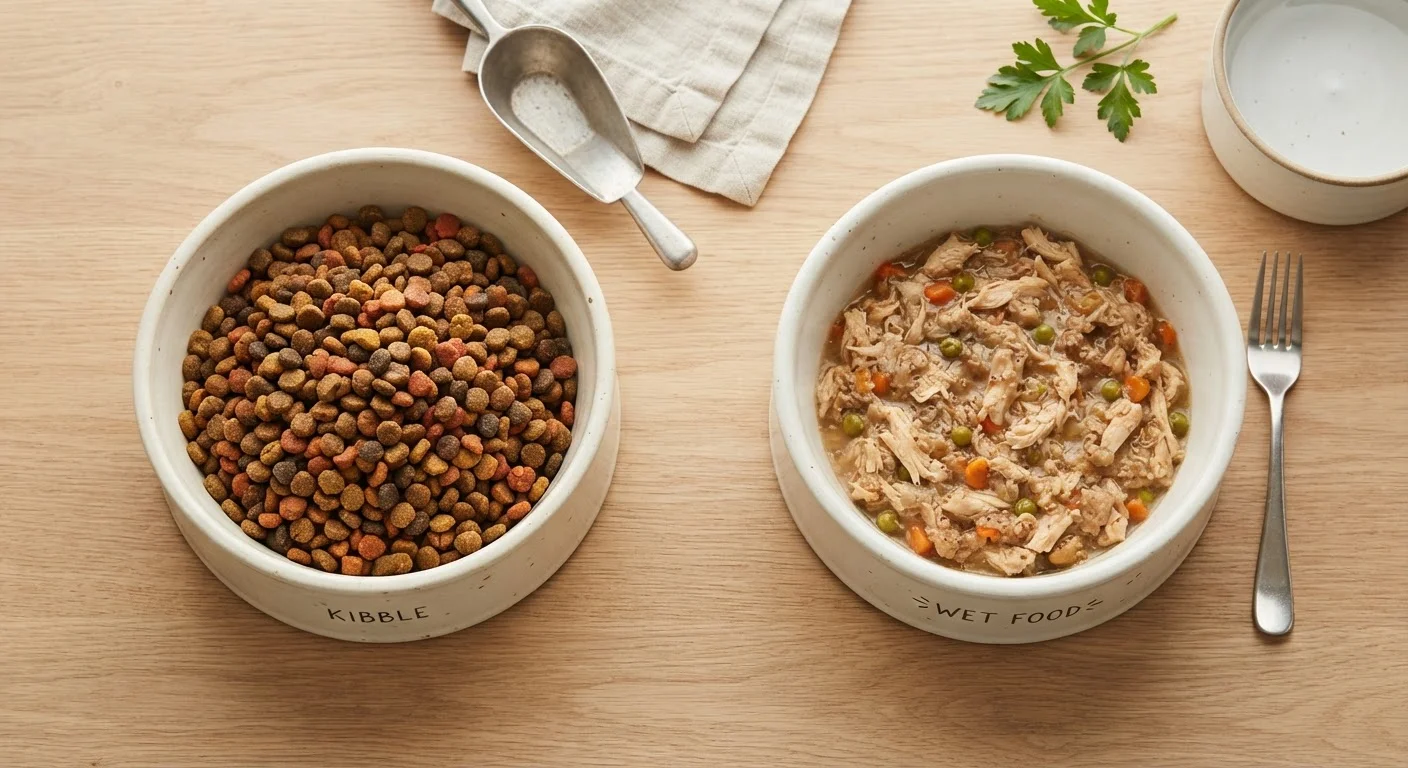
Photo: FaqsBay.com | Trending Blogs, Top Genres editorial
Key Takeaways
- Wet food contains 70–85% moisture versus roughly 10% in dry kibble, significantly affecting daily hydration.
- Dry food is calorie-dense; wet food delivers fewer calories per gram, which matters for weight management.
- Neither format is universally superior — the right choice depends on your pet's health, species, and life stage.
- Kibble's texture may offer a modest mechanical cleaning effect on teeth, though it is not a substitute for brushing.
- Mixing both formats can balance palatability, hydration, and cost for many pets.
- Always consult your veterinarian before making significant changes to your pet's diet.
How Moisture Content Changes Everything
The single biggest difference between dry and wet pet food is water. Dry kibble typically contains around 6–10% moisture, while canned wet food ranges from 70–85%. This gap has real consequences beyond just texture.
For cats especially, moisture intake is critical. Cats evolved in arid environments and have a naturally low thirst drive, meaning many do not compensate adequately through drinking alone. A diet that relies entirely on dry kibble can leave some cats chronically under-hydrated, which veterinary research has associated with a higher risk of lower urinary tract disease and kidney stress over time. Dogs are generally more reliable water drinkers, but pets with kidney disease, diabetes, or a history of urinary crystals often benefit from the additional fluid that wet food provides.
Hydration aside, the moisture difference also affects caloric density. Because wet food is largely water, it delivers fewer calories per gram than kibble. A cup of dry food may contain 300–400 calories, while an equivalent volume of wet food might contain a fraction of that. This is useful context for weight management — but it also means pet owners need to compare foods on a dry-matter basis (stripping out water to compare nutrients directly) rather than by weight or volume alone.
| Criterion | Dry Food (Kibble) | Wet Food (Canned) |
|---|---|---|
| Moisture content | ~6–10% | ~70–85% |
| Caloric density | High (calories per gram) | Low (water dilutes calories) |
| Protein (dry-matter basis) | Moderate to high | Often higher |
| Carbohydrate level | Generally higher | Generally lower |
| Dental effect | Modest mechanical cleaning | Minimal cleaning benefit |
| Shelf life after opening | Weeks (sealed bag) | 1–3 days refrigerated |
| Cost per serving | Generally lower | Generally higher |
| Palatability for picky eaters | Variable | Often higher |
| Suitable for urinary health concerns | Less ideal | Preferred by many vets |
Protein, Fat, and Carbohydrate Profiles
On a dry-matter basis, wet foods often contain higher protein and fat levels and significantly fewer carbohydrates than most dry kibbles. This is partly a function of manufacturing: producing shelf-stable kibble requires starch as a binding agent, which naturally raises the carbohydrate content. Canned foods don't rely on the same extrusion process, so formulators have more flexibility to reduce carbohydrates and increase animal-based protein.
For obligate carnivores like cats, higher protein and lower carbohydrate diets more closely mirror their evolutionary nutritional needs. Veterinary nutritionists generally note that while cats can tolerate moderate carbohydrate levels, they lack certain metabolic pathways to process high-carbohydrate diets as efficiently as omnivores like dogs. That said, not all kibbles are high in carbohydrates — grain-free and high-protein dry formulas exist, and the quality of protein sources matters as much as the percentage.
Dogs, being omnivores, have greater metabolic flexibility. A well-formulated dry food can meet all of a healthy dog's nutritional requirements. The key indicator to look for on any pet food label — wet or dry — is the statement of nutritional adequacy from the Association of American Feed Control Officials (AAFCO), which signals the food has been formulated or tested to meet established nutrient profiles. See our guide to life-stage nutrition for how these requirements shift as pets age.
~70–85%
Moisture in wet pet food
Compared to roughly 6–10% in dry kibble, this gap substantially affects a pet's daily fluid intake.
~50%
Estimated cats fed dry food only
Many feline nutritionists flag chronic mild dehydration as a concern for cats on exclusively dry diets, given their low thirst drive.
30–60%
Carbohydrate range in typical dry kibble
Starch is necessary for the extrusion process used to make kibble; wet foods often contain far less.
Dental Health: Does Food Format Actually Matter?
The idea that dry kibble cleans teeth is widespread, but the reality is more nuanced. Some research does suggest that the mechanical action of chewing harder kibble pieces can reduce plaque and tartar buildup compared to soft food — but only marginally, and only with kibble specifically designed for dental function. Standard kibble shatters on contact rather than providing sustained scraping action along the tooth surface.
Wet food, by contrast, does not offer this mechanical effect and may leave more residue on teeth. However, neither format replaces consistent dental care. Veterinary dental organizations consistently recommend tooth brushing as the most effective home dental hygiene practice for pets, regardless of diet.
Pets with missing teeth, jaw abnormalities, or post-surgical oral sensitivity may find wet food far more comfortable to eat. Conversely, some dental diets are formulated specifically as dry foods with a larger kibble size and fiber matrix designed to reduce tartar. If dental health is a significant concern for your pet, speak with your veterinarian rather than relying on food format alone as a solution.
For a broader look at how feeding habits affect health over time, our overview of common feeding mistakes covers what owners often overlook.
AAFCO Labeling: What to Look For
Choosing the Right Format — or Combining Both
There is no single correct answer for every pet. The right food format depends on species, age, health status, and individual preferences. A young, healthy Labrador eating a complete, balanced dry food has very different needs than a 14-year-old cat with chronic kidney disease, for whom veterinary-prescribed wet food may be a core part of management.
Many veterinarians and veterinary nutritionists support mixed feeding — offering a portion of wet food alongside a measured amount of dry — as a practical middle ground. This approach can improve hydration, increase palatability for picky eaters, and help with caloric control, provided total daily intake is monitored carefully. Overfeeding is a risk with any feeding strategy.
Species-specific differences also shape this decision significantly. Our article on feeding dogs vs. cats explains how their fundamentally different metabolisms affect what each animal needs from their diet. Similarly, body size plays a role — our breed-size nutrition guide explores how caloric density and mineral ratios should shift depending on your dog's size.
If you're considering home-prepared meals as an alternative to either format, be aware that nutritional gaps are common without expert guidance — our look at home-cooked pet meals covers the risks and realistic benefits.
This article is for general informational purposes only and does not constitute veterinary or medical advice. Always consult a licensed veterinarian before making significant changes to your pet's diet, particularly if your pet has an existing health condition.
The content provided on our blog site traverses numerous categories, offering readers valuable and practical information. Readers can use the editorial team’s research and data to gain more insights into their topics of interest. However, they are requested not to treat the articles as conclusive. The website team cannot be held responsible for differences in data or inaccuracies found across other platforms. Please also note that the site might also miss out on various schemes and offers available that the readers may find more beneficial than the ones we cover.