
Organic vs. Synthetic Fertilizers: Understanding the Real Differences

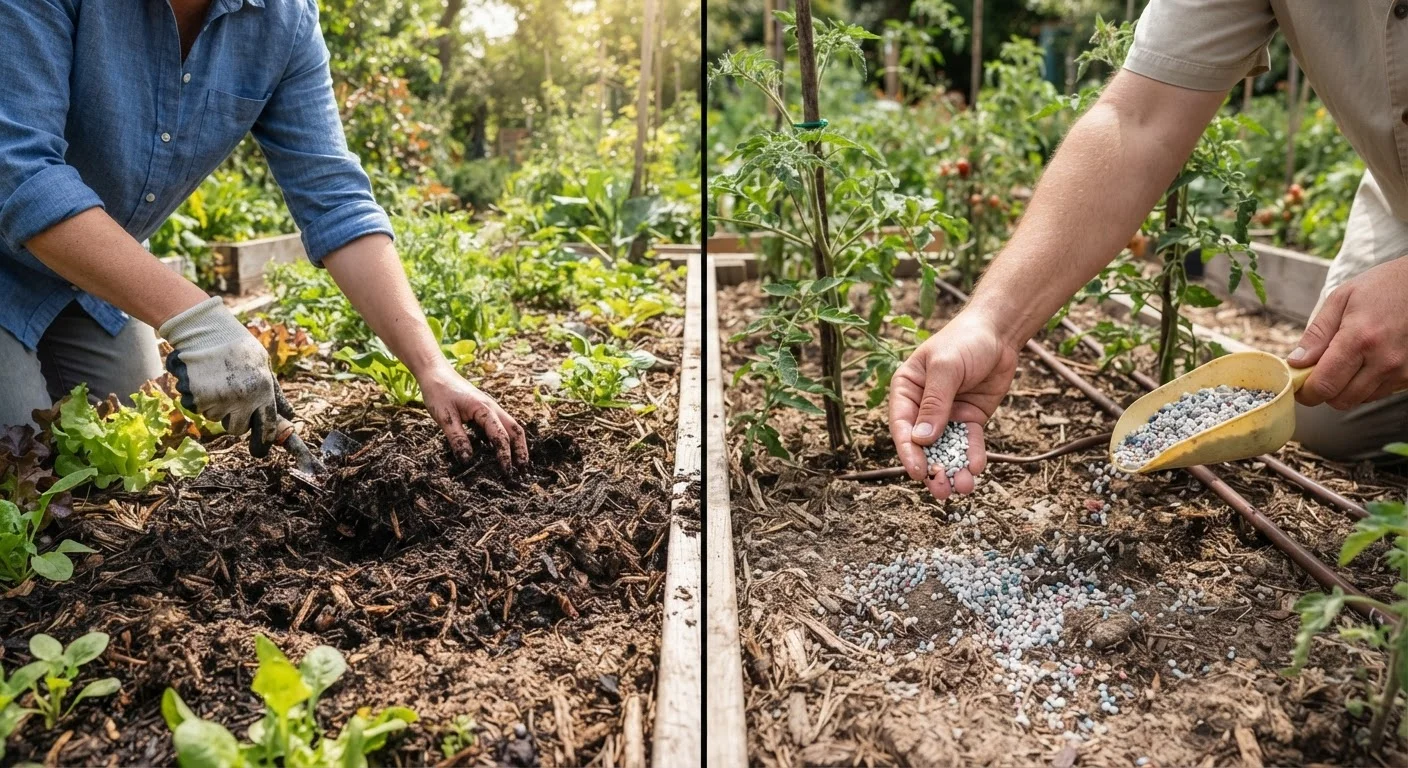
Photo: FaqsBay.com | Trending Blogs, Top Genres editorial
Key Takeaways
- Organic fertilizers feed soil biology slowly; synthetic fertilizers deliver nutrients directly and quickly to plant roots.
- Synthetic options offer precise nutrient ratios but carry a higher risk of runoff and long-term soil degradation.
- Organic fertilizers improve soil structure over time but may require soil testing to address specific deficiencies.
- Neither approach is universally superior — the right choice depends on your soil health, plants, and goals.
- Testing your soil before fertilizing helps you avoid over-application regardless of which type you choose.
How Each Type Works in the Soil
The core difference between organic and synthetic fertilizers isn't just their ingredients — it's the mechanism by which they deliver nutrients to plants.
Organic fertilizers are derived from plant, animal, or mineral sources — think compost, bone meal, blood meal, and kelp. They don't supply nutrients directly. Instead, soil microbes break down organic matter over time, releasing nitrogen, phosphorus, and potassium gradually. This process simultaneously feeds the microbial community that gives healthy soil its structure and water-retention capacity. For more on how organic additions interact with soil biology, see our guide on how mulch supports microbial health.
Synthetic fertilizers are manufactured from chemically processed minerals and industrial compounds. Their nutrients are formulated in water-soluble forms that plant roots can absorb almost immediately. That speed is useful — but it also means nutrients can leach past the root zone into groundwater if over-applied or applied before rain.
Understanding the N-P-K ratio on fertilizer labels is essential for either approach, so you know exactly what nutrient balance you're working with.
Comparing the Key Trade-Offs
Both fertilizer types have genuine strengths and real limitations. Here's how they stack up across the criteria that matter most to homeowners:
| Organic Fertilizers | Synthetic Fertilizers | |
|---|---|---|
| Nutrient release speed | Slow, gradual over weeks | Fast, often within days |
| Soil biology impact | Feeds and builds microbial life | Minimal to none |
| Nutrient precision | Variable, harder to control | High, clearly labeled ratios |
| Runoff risk | Generally lower | Higher if over-applied |
| Long-term soil structure | Improves over time | Neutral to degrading |
| Cost per application | Often higher upfront | Generally lower upfront |
| Best use case | Soil building, long-term fertility | Acute deficiency correction |
One nuance worth noting: synthetic fertilizers can, over many seasons, reduce soil organic matter and microbial diversity if used as the sole fertility strategy. Organic fertilizers avoid this but may release nutrients too slowly for plants showing acute deficiency symptoms mid-season.
Soil Health and Environmental Considerations
Soil is not just a growing medium — it's a living system. Organic fertilizers actively support that system by introducing carbon and feeding beneficial bacteria and fungi. Over multiple seasons, this can meaningfully improve drainage in clay soils and water retention in sandy ones.
Synthetic fertilizers, while effective at feeding plants, contribute little to this biological activity. Repeated heavy use without organic matter inputs can compact soil and reduce its long-term fertility. Runoff from synthetic fertilizers — particularly nitrogen — is also a documented contributor to waterway nutrient pollution, a concern that varies depending on application rates, timing, and proximity to drainage systems.
Test Before You Fertilize
Before applying any fertilizer, a basic soil test (available through most cooperative extension services) will reveal your actual nutrient levels. This matters because soil pH directly affects how available nutrients are to plants — even well-fertilized soil can leave plants deficient if pH is off.
Choosing the Right Approach for Your Garden
There's no single correct answer — the best fertilizer strategy depends on your starting soil conditions, what you're growing, and your timeline.
- For new garden beds: Building organic matter through compost or aged manure first creates a foundation that reduces long-term fertilizer dependency.
- For established vegetable gardens: Organic sources generally align better with edible bed goals, supporting soil life without synthetic residues.
- For lawns with visible yellowing: A targeted synthetic application based on a soil test can address the deficiency quickly, after which organic maintenance can sustain results.
- For container plants: Organic fertilizers can be slower to take effect in the limited soil volume of containers; slow-release synthetic options are often more practical here.
Many experienced gardeners use a blended approach — organic materials for seasonal soil building, and targeted synthetic amendments only when a specific, confirmed deficiency requires prompt correction. Neither dogma nor habit should drive the decision; your soil test results should.
The content provided on our blog site traverses numerous categories, offering readers valuable and practical information. Readers can use the editorial team’s research and data to gain more insights into their topics of interest. However, they are requested not to treat the articles as conclusive. The website team cannot be held responsible for differences in data or inaccuracies found across other platforms. Please also note that the site might also miss out on various schemes and offers available that the readers may find more beneficial than the ones we cover.