
What Garden Fertilizer Labels Actually Tell You

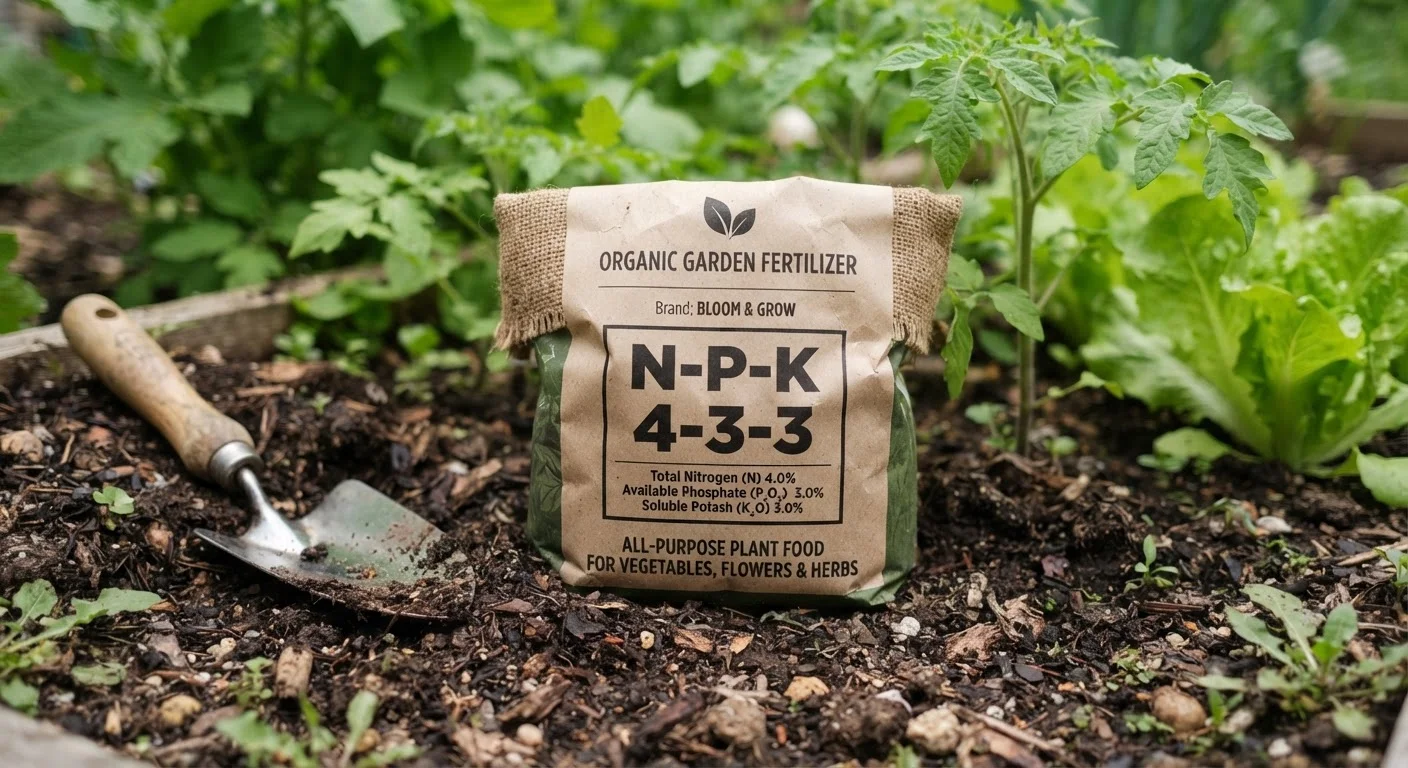
Photo: FaqsBay.com | Trending Blogs, Top Genres editorial
Key Takeaways
- Every fertilizer label must display the N-P-K ratio, which shows the percentage of nitrogen, phosphorus, and potassium.
- Each nutrient serves a distinct role: nitrogen drives leafy growth, phosphorus supports roots and blooms, potassium strengthens overall plant resilience.
- The guaranteed analysis section on the label includes secondary and micronutrient details beyond the main three.
- Application rate instructions on the label are calibrated to that specific product — always follow them rather than guessing.
- A soil test is the most reliable way to determine which nutrients your garden actually needs before buying any fertilizer.
The Three Numbers You'll Always See
Walk down any garden center aisle and you'll find fertilizer bags displaying a trio of bold numbers — something like 10-10-10 or 24-6-12. These three numbers form the N-P-K ratio, and they are the most important figures on the entire label.
Each number represents a nutrient's percentage by weight in the product:
- Nitrogen (N) — Fuels leafy, green, vegetative growth. Lawns, leafy vegetables, and fast-growing plants tend to benefit from higher nitrogen levels.
- Phosphorus (P) — Supports root development, flowering, and fruit set. Important for establishing new plants and encouraging blooms.
- Potassium (K) — Strengthens overall plant health, improves drought tolerance, and helps plants resist disease and stress.
A balanced fertilizer like 10-10-10 provides equal proportions of all three. Specialty formulas — such as those marketed for tomatoes or flowering shrubs — tend to emphasize one nutrient over others based on what those plants demand at key growth stages.
3
Primary macronutrients listed on every fertilizer label
Nitrogen, phosphorus, and potassium are required disclosures on all fertilizer products sold in the United States, as mandated by state fertilizer laws.
~50%
Of fertilizer nitrogen that can be lost before plant uptake
According to general agronomic research, significant nitrogen can volatilize or leach depending on soil type, moisture, and application method — underscoring why following label rates matters.
6.0–7.0
Optimal soil pH range for most vegetable gardens
Cooperative extension guidelines widely cite this range as ideal for nutrient availability; outside it, plants may not absorb fertilizer efficiently regardless of how much is applied.
Reading the Guaranteed Analysis Section
Below the prominent N-P-K numbers, every fertilizer label is required by law to include a guaranteed analysis — a detailed breakdown of nutrient content. This section confirms the minimum percentages of each declared nutrient and often lists additional ones.
Secondary macronutrients you may find here include:
- Calcium (Ca) — Important for cell wall strength; often needed in acidic soils.
- Magnesium (Mg) — Central to chlorophyll production; helps plants make use of sunlight.
- Sulfur (S) — Aids protein synthesis and can help lower soil pH slightly.
Micronutrients such as iron, manganese, zinc, and boron may also appear. While plants need these in much smaller quantities, deficiencies can cause visible symptoms like yellowing leaves (chlorosis) or stunted growth.
The guaranteed analysis also distinguishes between water-soluble and water-insoluble nitrogen where relevant — a detail that affects how quickly the fertilizer acts in the soil. This connects directly to the difference between slow-release and fast-release formulas, which you'll see described elsewhere on the bag.
Test Before You Fertilize
Application Rates, Release Type, and Other Label Details
Beyond nutrient content, fertilizer labels carry practical instructions that are easy to overlook but important to follow. The application rate — typically expressed in pounds per 1,000 square feet for granular products — is calibrated specifically to that formula's concentration. Applying more than the label recommends doesn't help plants grow faster; it increases the risk of burning roots and contributing to nutrient runoff.
Look for language describing the release type:
- Fast-release (water-soluble): Nutrients become available quickly. Results are visible sooner, but the window of effectiveness is shorter and the margin for over-application is narrower.
- Slow-release (controlled-release): Nutrients break down gradually over weeks or months. Lower risk of burn, fewer applications needed per season, and more forgiving if you slightly over-apply.
The label will also list the net weight, manufacturer contact information, and often a derived from statement explaining the source materials — for example, whether nitrogen comes from urea, ammonium sulfate, or composted poultry manure. That last detail matters if you're trying to compare an organic approach to a synthetic one; for a deeper look at how those two categories differ in practice, see our guide on organic vs. synthetic fertilizers.
State registration numbers may also appear. Most states require fertilizers sold within their borders to be registered with an agricultural agency, which provides a basic layer of quality assurance.
Putting the Label to Work in Your Garden
Reading a fertilizer label is most useful when paired with an understanding of what your soil already contains. Without that baseline, you risk adding nutrients your soil doesn't need and missing ones it does. A simple soil test — available through many cooperative extension services and garden centers — gives you a pH reading and a nutrient profile that makes the label's numbers meaningful in context.
Once you know your soil's needs, use the N-P-K ratio as your primary selection guide:
- Establishing a new lawn or planting area? Prioritize phosphorus for root development.
- Maintaining an established lawn through the growing season? A higher-nitrogen formula is typically more useful.
- Preparing perennials or fruiting vegetables for peak production? Look for a balanced or slightly potassium-forward formula.
The label is also your safety guide. Pay attention to any precautionary statements regarding protective equipment, storage conditions, and disposal. Fertilizers are regulated as agricultural chemicals, and labels carry legally required handling instructions for good reason.
Just as learning to decode nutrition labels helps consumers make better grocery decisions — a skill explored in our piece on reading nutrition labels — understanding a fertilizer label puts you in control of what you're adding to your garden rather than simply trusting the marketing language on the front of the bag.
Frequently Asked Questions
The content provided on our blog site traverses numerous categories, offering readers valuable and practical information. Readers can use the editorial team’s research and data to gain more insights into their topics of interest. However, they are requested not to treat the articles as conclusive. The website team cannot be held responsible for differences in data or inaccuracies found across other platforms. Please also note that the site might also miss out on various schemes and offers available that the readers may find more beneficial than the ones we cover.