
Nutrition Labels Demystified: Reading the Fine Print on Food Packaging

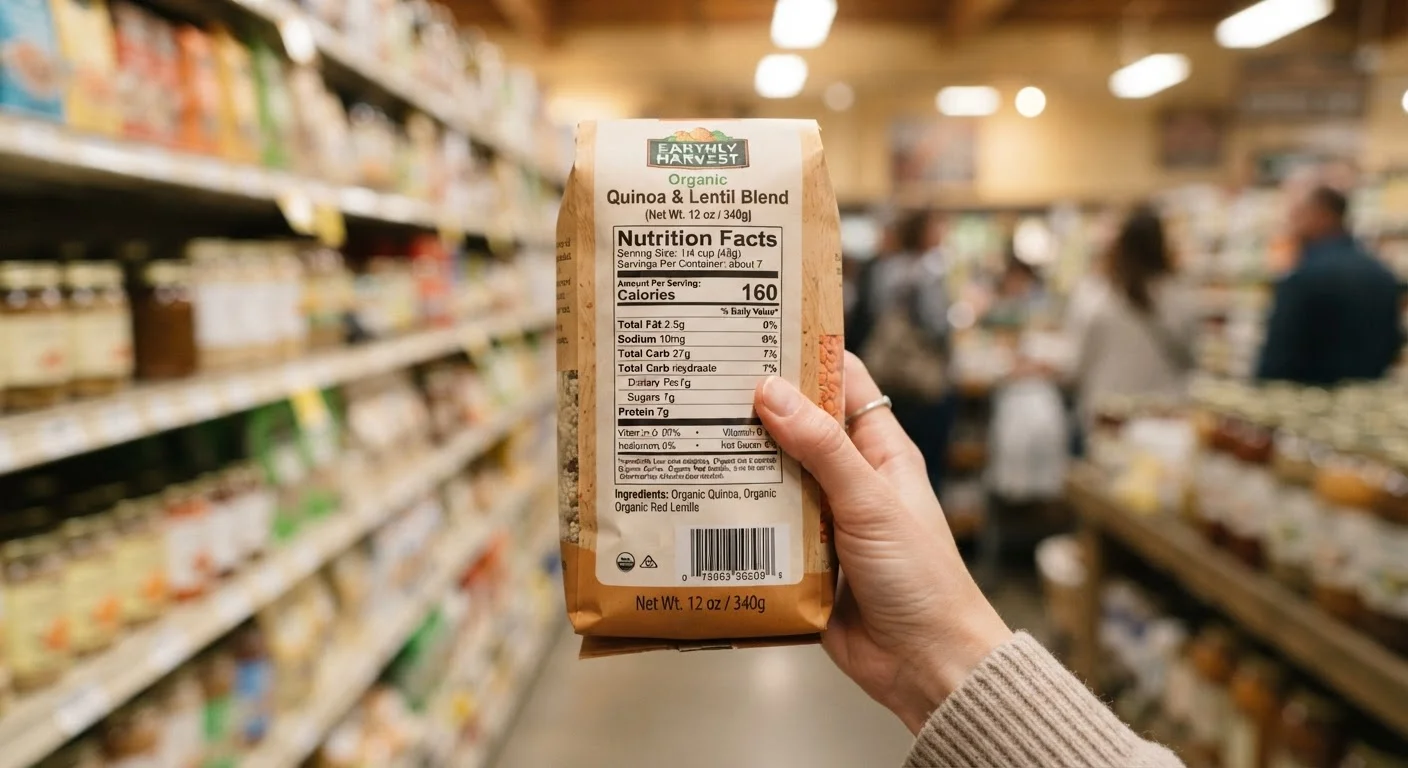
Photo: FaqsBay.com | Trending Blogs, Top Genres editorial
Key Takeaways
- Serving size controls every number on the label — always check it first before comparing products.
- The % Daily Value column uses a 2,000-calorie reference diet and is a quick benchmarking tool, not a personal prescription.
- Ingredients are listed by weight from most to least, making position a reliable signal of what dominates a product.
- Aim for higher % DV for fiber, vitamins, and minerals; lower % DV for saturated fat, sodium, and added sugars.
- Front-of-package claims like 'natural' or 'light' are marketing terms with limited or inconsistent regulatory definitions.
- Reading labels consistently over time builds nutritional literacy far more effectively than one-off label checks.
Why the Nutrition Facts Panel Is Designed the Way It Is
The Nutrition Facts label found on most packaged foods in the US is regulated by the Food and Drug Administration (FDA). It underwent a significant update — with mandatory compliance completed for most manufacturers — that added a dedicated line for added sugars and made serving sizes reflect amounts people actually eat rather than idealized portions.
Understanding the design logic behind the label helps you use it more efficiently. Every figure displayed — calories, fat, sodium, fiber — applies only to the declared serving size. Change the amount you eat, and all those numbers scale accordingly. The label is built around a 2,000-calorie reference diet, which is why % Daily Values (% DV) are standardized rather than personalized. Think of % DV as a rough compass: 5% DV or less is generally considered low; 20% DV or more is generally considered high. For nutrients you want to limit — saturated fat, sodium, and added sugars — low is favorable. For nutrients you want more of — dietary fiber, calcium, vitamin D, iron, and potassium — high is favorable. See our micronutrient reference guide for a deeper look at what individual vitamins and minerals actually do in the body.
What to Look at First, Second, and Third
Most people scan labels in a random order, which leads to misleading conclusions. A more systematic approach takes less than thirty seconds once it becomes habit.
Check the serving size and servings per container
Every other number on the label is anchored to the declared serving size. A bag of chips may list 150 calories per serving, but if the bag contains three servings and you eat the whole bag, your actual intake is 450 calories. The FDA updated serving sizes to reflect reference amounts customarily consumed — the amounts people realistically eat — but packages containing between one and two servings are now required to label the entire package as a single serving, which simplifies the math considerably.
Look at calories in context, not in isolation
Calories represent total energy, but they don't distinguish between nutrients. A 200-calorie serving of almonds and a 200-calorie serving of a sugary snack cake deliver very different nutritional profiles. After noting calories, move immediately to the nutrient breakdown to understand what those calories are made of — protein, fat, carbohydrate, and fiber content together tell a richer story than calorie count alone.
Review nutrients to limit: saturated fat, sodium, and added sugars
These three nutrients are associated with increased health risk when consumed in excess over time, according to established dietary guidance from bodies including the Dietary Guidelines for Americans. For saturated fat, current guidance suggests keeping intake below 10% of total daily calories. The American Heart Association recommends no more than 2,300 mg of sodium per day for most adults, with lower targets for certain individuals. Added sugars — now a mandatory line on FDA-regulated labels — should ideally stay below 10% of total daily calories per current federal dietary guidance.
Note nutrients to seek: fiber, vitamins, and minerals
Dietary fiber, vitamin D, calcium, iron, and potassium are nutrients that tend to fall short in typical US diets, which is why they are featured on the updated label. A high % DV for these is a genuine positive signal. Fiber in particular supports digestive health and sustained satiety — look for products providing at least 10–15% DV per serving as a practical benchmark. For a detailed breakdown of which nutrients are most commonly lacking in American diets, see our article on nutrient gaps in the US diet.
Scan the ingredient list from top to bottom
After reviewing the Nutrition Facts panel, read the ingredient list with the descending-weight rule in mind. Identify the first two or three ingredients — they constitute the majority of the product. If a whole food (oats, tomatoes, chicken) leads the list, the product is built around that ingredient. If a refined grain or added sugar appears among the first three, that should factor into your evaluation alongside the % DV figures you've already reviewed.
Used consistently, this sequence helps you evaluate products side-by-side without being misled by front-of-package marketing. If fiber is a nutritional priority for you, our companion piece on dietary fiber types and intake explains exactly what adequate fiber looks like across different eating patterns.
The Ingredient List: What It Reveals and What to Watch For
The ingredient list operates on a simple rule: ingredients are listed in descending order by weight before cooking or processing. This means the first few ingredients make up the bulk of the product. If refined flour or a form of sugar appears first or second, that ingredient dominates — regardless of what health claims appear on the front of the package.
Watch for Multiple Names for Added Sugar
Sugar has dozens of alternate names on ingredient lists: cane juice, dextrose, maltose, high-fructose corn syrup, agave nectar, and more. Scanning for multiple sugar-adjacent terms clustered together is a more reliable signal than looking for the word "sugar" alone. Similarly, partially hydrogenated oils indicate the presence of trans fats — a category of fat associated with cardiovascular risk — even if the Nutrition Facts panel shows 0 g trans fat (because amounts below 0.5 g per serving can be rounded down to zero).
The ingredient list also tells you about additives, preservatives, and allergens. The FDA requires the eight major allergens (milk, eggs, fish, shellfish, tree nuts, peanuts, wheat, and soybeans) to be clearly identified. If you're managing a food allergy or intolerance, the ingredient list — not the Nutrition Facts panel — is where you must look. To see how ingredient-list literacy applies in a different context, our piece on reading pet food ingredient lists critically covers overlapping principles of label literacy.
Front-of-Package Claims: Useful Signal or Marketing Noise?
Terms like natural, wholesome, artisan, and superfood carry no standardized FDA definition and can appear on nearly any product. Other terms do have regulated meanings worth knowing:
- Low sodium: 140 mg or less per serving
- Low fat: 3 g or less per serving
- Reduced: At least 25% less of the specified nutrient compared to the regular version
- Light (Lite): Either one-third fewer calories or 50% less fat than the reference food, depending on context
- High in / Excellent source of: 20% DV or more of the nutrient per serving
- Good source of: 10–19% DV per serving
Knowing these definitions lets you quickly decide whether a claim on the front panel is substantive or simply decorative. A product labeled made with whole grains may contain only a small fraction of whole grain — always confirm by checking where whole-grain ingredients appear in the ingredient list.
Build Label-Reading as a Habit, Not a Chore
For a broader look at how labeling literacy fits into everyday eating patterns, our nutritional audit guide offers a practical framework for assessing your overall diet without requiring tracking software.
This article is for general informational and educational purposes only and does not constitute medical or dietary advice. Individual nutritional needs vary. Consult a registered dietitian or qualified healthcare professional for guidance tailored to your personal health circumstances.
The content provided on our blog site traverses numerous categories, offering readers valuable and practical information. Readers can use the editorial team’s research and data to gain more insights into their topics of interest. However, they are requested not to treat the articles as conclusive. The website team cannot be held responsible for differences in data or inaccuracies found across other platforms. Please also note that the site might also miss out on various schemes and offers available that the readers may find more beneficial than the ones we cover.