
Micronutrient Reference Guide: Vitamins and Minerals at a Glance

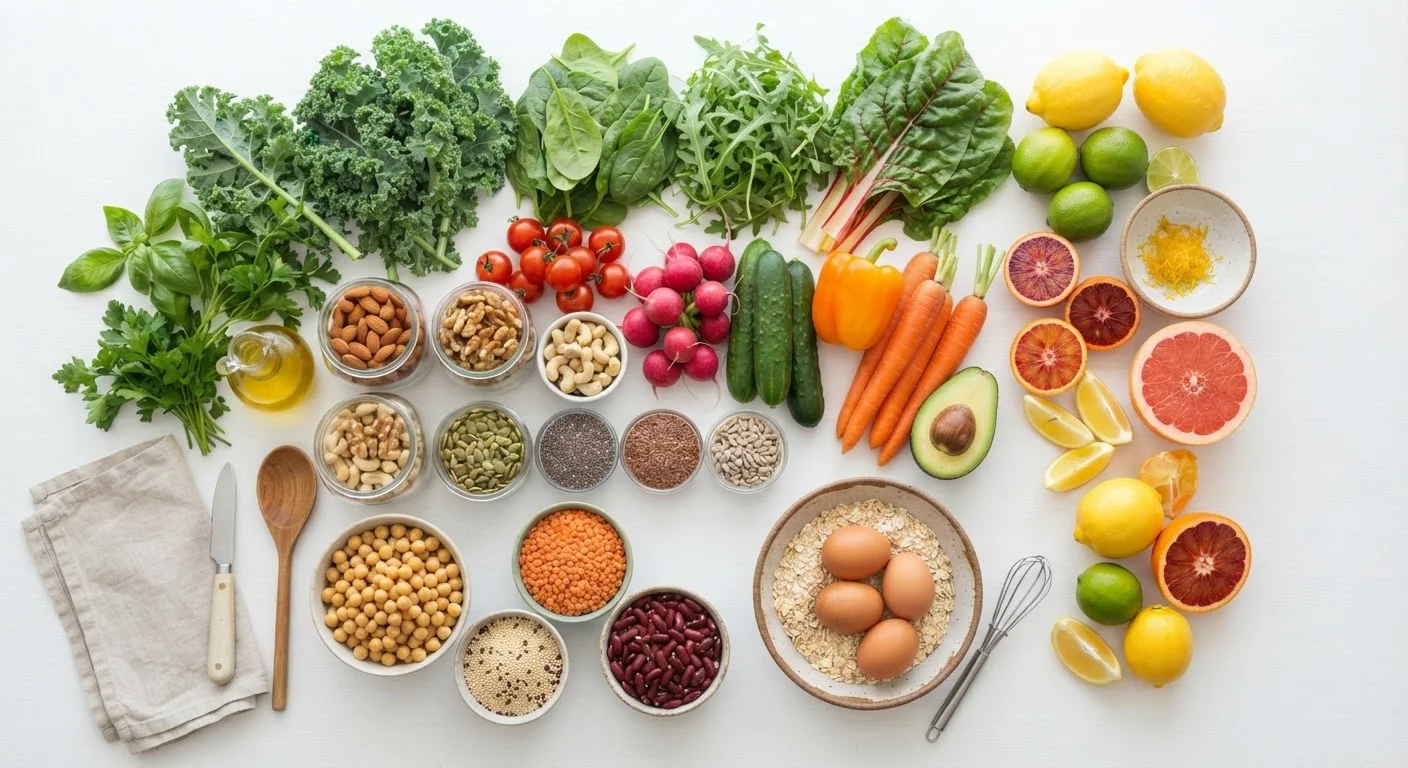
Photo: FaqsBay.com | Trending Blogs, Top Genres editorial
What Are Micronutrients and Why Do They Matter?
Micronutrients — vitamins and minerals — are compounds the body requires in relatively small amounts but cannot function well without. Unlike macronutrients (protein, carbohydrates, and fat), micronutrients do not supply calories directly. Instead, they serve as essential co-factors in hundreds of metabolic processes: building tissue, regulating hormones, supporting immunity, and converting food into usable energy.
The U.S. government establishes Recommended Dietary Allowances (RDAs) and Adequate Intakes (AIs) for each micronutrient, representing the levels estimated to meet the needs of most healthy adults. These values appear on nutrition labels as percentages of the Daily Value (DV). If you want a deeper look at how those numbers translate to food packaging, see our guide to reading nutrition labels.
This reference covers the core vitamins and minerals, what each does in the body, and which everyday foods supply them reliably.
Recommended Dietary Allowance (RDA)
The average daily intake level sufficient to meet the nutrient requirements of nearly all (97–98%) healthy individuals in a particular life stage and sex group. Established by the National Academies of Sciences, Engineering, and Medicine.
Daily Value (DV)
A reference number used on US nutrition labels, derived from RDAs and AIs, representing the amount of a nutrient a person should generally consume per day. Expressed as a percentage on food packaging.
Fat-Soluble Vitamin
Vitamins A, D, E, and K, which dissolve in fat and are stored in the body's fatty tissue and liver. Because they accumulate, excessive intake from supplements can pose toxicity risks.
Water-Soluble Vitamin
Vitamin C and the eight B vitamins, which dissolve in water and are not stored in the body in significant quantities. Excess amounts are generally excreted in urine, so regular dietary intake is important.
Trace Mineral
A mineral the body needs in very small amounts (generally less than 100 mg per day), such as iron, zinc, selenium, and iodine. Despite tiny required quantities, deficiency can have significant health consequences.
Bioavailability
The proportion of a nutrient that is actually absorbed and used by the body after ingestion. Bioavailability varies by food source, preparation method, and individual factors such as gut health.
Key Vitamins: Roles and Food Sources
Vitamins are classified as either fat-soluble (A, D, E, K — stored in body fat and the liver) or water-soluble (C and the B vitamins — not stored in significant quantities and needed regularly from food).
| Total recognized vitamins | 13 essential vitamins (NIH Office of Dietary Supplements) |
| Fat-soluble vitamins | A, D, E, K |
| Water-soluble vitamins | C and 8 B vitamins |
| Essential dietary minerals | ~16 recognized (National Academies of Sciences, Engineering, and Medicine) |
| Most common US deficiency | Vitamin D and iron (CDC Second National Report on Biochemical Indicators of Diet and Nutrition) |
| B12 concern for plant-based diets | Found almost exclusively in animal foods (NIH Office of Dietary Supplements) |
Fat-Soluble Vitamins
- Vitamin A: Supports vision (especially low-light), immune defense, and skin integrity. Found in liver, dairy, eggs, and as provitamin A (beta-carotene) in orange and dark-green vegetables such as carrots, sweet potatoes, and spinach.
- Vitamin D: Regulates calcium absorption, bone mineralization, and immune modulation. Few foods are naturally rich sources; fatty fish (salmon, sardines), fortified dairy, and eggs contribute modest amounts. Skin synthesis from sun exposure is also a significant pathway.
- Vitamin E: Acts as a fat-soluble antioxidant protecting cell membranes. Sunflower seeds, almonds, wheat germ oil, and peanut butter are among the richest dietary sources.
- Vitamin K: Essential for blood clotting (K1) and bone protein activation (K2). Leafy greens — kale, spinach, collards — deliver K1; fermented foods and some animal products provide K2.
Water-Soluble Vitamins
- Vitamin C: A powerful antioxidant that also drives collagen synthesis and enhances non-heme iron absorption. Bell peppers, citrus fruits, strawberries, and broccoli are excellent sources.
- B Vitamins (B1, B2, B3, B5, B6, B7, B9, B12): This family supports energy metabolism, red blood cell production, DNA synthesis, and nervous system function. Whole grains, legumes, nuts, meat, fish, eggs, and dairy collectively cover most B vitamins. Vitamin B12 is found almost exclusively in animal products, making it a nutrient to monitor for those following plant-based diets. Folate (B9) is critical during pregnancy for neural tube development — a situation where consulting a healthcare provider about appropriate intake is especially important.
Essential Minerals: What They Do and Where to Find Them
Minerals are inorganic elements that the body cannot synthesize. Macrominerals — needed in larger amounts — include calcium, phosphorus, magnesium, sodium, potassium, chloride, and sulfur. Trace minerals — needed in smaller amounts — include iron, zinc, iodine, selenium, copper, manganese, fluoride, and chromium.
- Calcium: The primary structural component of bones and teeth; also critical for muscle contraction and nerve signaling. Dairy products, fortified plant milks, tofu made with calcium sulfate, and leafy greens (bok choy, kale) are reliable sources.
- Iron: A component of hemoglobin, enabling red blood cells to transport oxygen. Heme iron (from meat, poultry, and fish) is more readily absorbed than non-heme iron (from legumes, tofu, and fortified cereals). Pairing non-heme iron sources with vitamin C improves absorption.
- Magnesium: Involved in over 300 enzymatic reactions, including energy production, protein synthesis, and blood pressure regulation. Pumpkin seeds, dark chocolate, black beans, edamame, and whole grains are good sources.
- Potassium: Works with sodium to maintain fluid balance and supports healthy blood pressure and muscle function. Bananas, potatoes, white beans, avocado, and leafy greens supply meaningful amounts.
- Zinc: Supports immune function, wound healing, and DNA synthesis. Oysters are exceptionally rich; beef, pumpkin seeds, chickpeas, and cashews also contribute significantly.
- Iodine: Required for thyroid hormone production, which governs metabolism and fetal development. Iodized salt, seafood, dairy, and eggs are common sources in the US diet.
- Selenium: A trace mineral functioning as an antioxidant co-factor and supporting thyroid metabolism. Brazil nuts are uniquely concentrated — a single nut can meet a day's need — while fish, poultry, and whole grains also contribute.
Curious which of these nutrients are most likely to fall short in a typical American diet? Our companion article on nutrient gaps most Americans actually have provides a practical breakdown.
More Is Not Always Better
Putting It Into Practice
No single food supplies every micronutrient, which is precisely why dietary variety is the cornerstone of sound nutrition. A pattern that includes a range of vegetables, fruits, whole grains, legumes, nuts, and — if included — moderate amounts of animal products naturally covers most micronutrient needs without the need to count or track obsessively.
Supplementation may be appropriate in specific circumstances — confirmed deficiencies, restricted diets, pregnancy, or certain health conditions — but supplements are not a substitute for a varied diet and should be discussed with a qualified healthcare provider before starting. This article is general health information only and is not a substitute for personalized medical or dietary advice.
For a structured way to assess whether your current eating pattern is hitting its nutritional marks, try the self-directed nutritional audit. And if you are newer to thinking about food and health broadly, our introduction to balanced eating offers a clear starting point.
This article is for general informational and educational purposes only and is not a substitute for professional medical or dietary advice. Always consult a qualified healthcare provider regarding your individual nutritional needs, symptoms, or before making significant changes to your diet or starting any supplement.
The content provided on our blog site traverses numerous categories, offering readers valuable and practical information. Readers can use the editorial team’s research and data to gain more insights into their topics of interest. However, they are requested not to treat the articles as conclusive. The website team cannot be held responsible for differences in data or inaccuracies found across other platforms. Please also note that the site might also miss out on various schemes and offers available that the readers may find more beneficial than the ones we cover.