
New Car vs. Used Car: What the Price Gap Actually Tells You

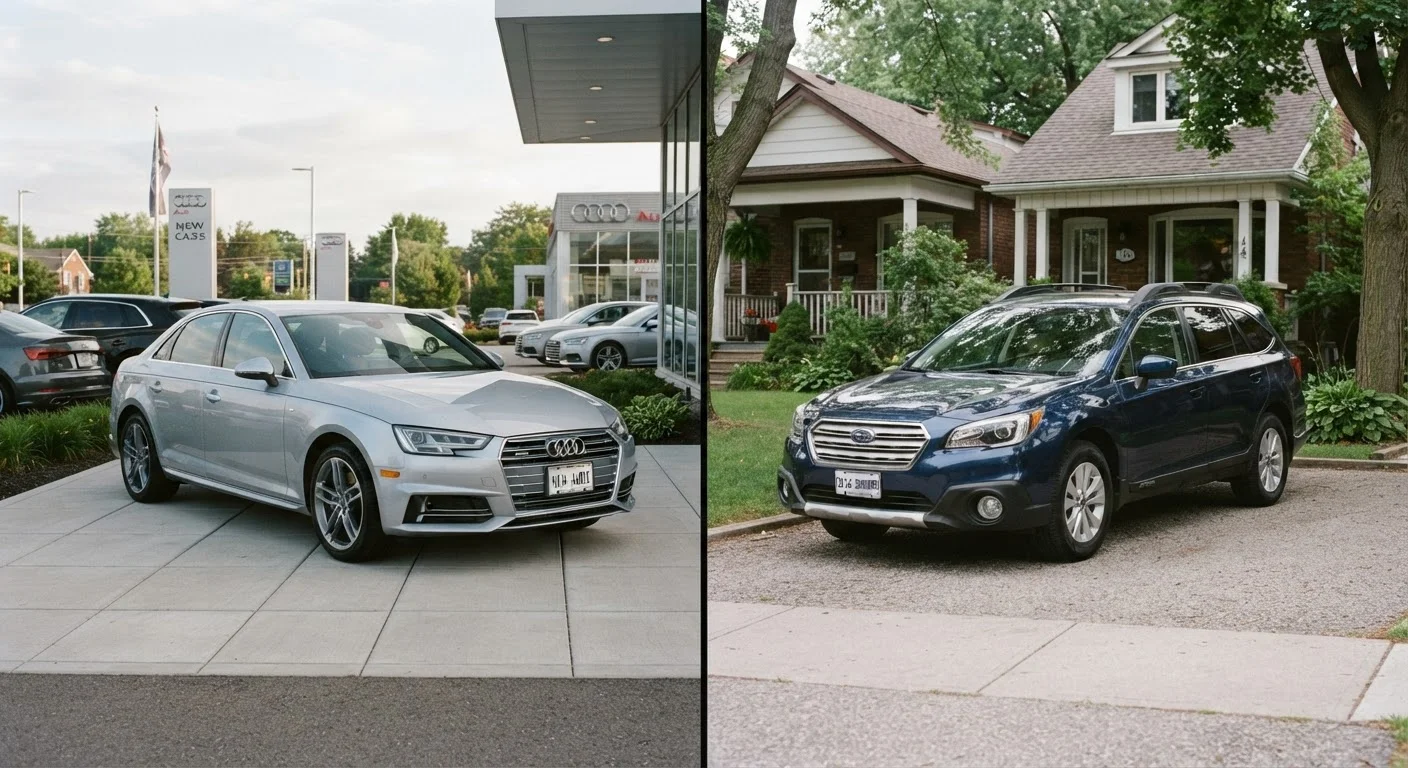
Photo: FaqsBay.com | Trending Blogs, Top Genres editorial
Key Takeaways
- New cars lose a significant portion of their value within the first two to three years of ownership.
- Used cars typically carry higher interest rates on financing, which can offset some of the sticker price savings.
- Certified pre-owned programs offer a middle ground but come with a premium that varies widely by brand.
- Total cost of ownership - not just purchase price - is the most reliable basis for comparison.
- Your credit profile and down payment capacity affect how each option pencils out financially.
- Neither choice is universally better; the right answer depends on your priorities, budget, and driving needs.
What the Price Gap Is Actually Measuring
The difference in price between a new and a used version of the same model is not simply a discount for age or wear. It is, more precisely, a measure of accumulated depreciation - the portion of value the vehicle has already lost since it left the factory. A new car that stickered at $35,000 may be listed used for $24,000 two years later not because it is broken, but because the market has priced in the ownership history and the miles driven.
Understanding this distinction matters because it reframes the decision. You are not choosing between a good car and a lesser car. You are choosing at which point in a vehicle's depreciation curve you want to enter. New car buyers absorb the steepest part of that curve. Used car buyers let someone else absorb it first.
For a fuller picture of how these costs compound across the life of a vehicle, see the real cost of owning a vehicle, which covers insurance, fuel, and maintenance alongside purchase price.
| Criterion | New Car | Used Car |
|---|---|---|
| Purchase Price | Higher sticker price | Lower sticker price |
| Depreciation Exposure | Steepest in first 1-3 years | Curve already partially absorbed |
| Financing Rate | Generally lower APR | Generally higher APR |
| Warranty Coverage | Full manufacturer warranty | Limited or none (unless CPO) |
| Insurance Cost | Typically higher premiums | Typically lower premiums |
| Registration Fees | Higher (value-based in most states) | Lower (lower assessed value) |
| Vehicle History | None - starts fresh | Requires verification |
| Safety Technology | Latest standard features | Varies by model year |
Financing: Where the Savings Can Quietly Shrink
Most buyers finance their purchase, and the financing terms for new and used cars differ in ways that can meaningfully affect total cost. Lenders - whether banks, credit unions, or dealer-arranged lenders - typically offer lower interest rates on new vehicles than on used ones. This happens because new cars are easier to value and carry less collateral risk from the lender's perspective.
The practical implication: a used car priced $8,000 less than its new equivalent may carry an interest rate that is two to four percentage points higher. Depending on the loan term and loan amount, that rate difference can recover a significant portion of the sticker savings over the life of the loan. Calculating the total interest paid - not just the monthly payment - gives a more accurate comparison.
~20%
Estimated value lost in year one
Industry data consistently shows new vehicles can lose roughly 15-20% of their value within the first 12 months, though this varies by make, model, and market conditions.
1-4 pts
Typical APR gap: used vs. new loans
According to Federal Reserve consumer credit data, interest rates on used car loans have historically run one to four percentage points above comparable new car loan rates.
~45%
New car share of auto loan originations
Despite higher prices, new vehicle financing consistently accounts for a large share of auto loan volume, reflecting buyer preference for warranty protection and lower rates.
Buyers who arrange their own financing before visiting a dealership are generally better positioned to evaluate both new and used offers on equal terms. For guidance on comparing loan sources, see financing through a dealer vs. your own bank or credit union.
Hidden Costs and the CPO Middle Ground
Beyond purchase price and financing, several costs distribute differently between new and used vehicles. Insurance premiums tend to be higher for new cars because the insurer's replacement liability is greater. Registration fees in many states are calculated on vehicle value, so new cars cost more to register annually. These are recurring costs worth factoring into a monthly budget comparison, not a one-time consideration.
On the maintenance side, new cars benefit from full manufacturer warranties - typically a three-year/36,000-mile bumper-to-bumper and five-year/60,000-mile powertrain coverage. Used cars, depending on age and mileage, may have limited or no remaining warranty, shifting repair risk to the buyer.
Certified Pre-Owned (CPO) programs occupy a middle position: manufacturer-inspected used vehicles that carry extended warranty coverage. They command a price premium over standard used cars, but that premium buys measurable risk reduction. However, CPO terms vary considerably by brand. Before paying the CPO markup, it is worth reviewing what the CPO designation actually guarantees so you know exactly what the coverage includes and excludes.
CPO Programs Are Not Uniform
If you are evaluating a used vehicle purchase specifically, a pre-purchase checklist for used vehicles provides a structured review of inspection points and paperwork to request before committing.
Making the Decision That Fits Your Situation
Neither new nor used is the objectively correct choice. The right answer is determined by the intersection of your financial position, how long you intend to keep the vehicle, and what trade-offs you are willing to accept. A buyer with strong credit, a stable long-term plan, and a preference for certainty may find a new car justifies its premium. A buyer optimizing for lower monthly exposure and comfortable with some diligence upfront may find a two- to four-year-old vehicle offers better financial fit.
What both buyers share is the need for a clear view of total cost - not just what they pay at signing, but what they will pay across years of ownership. For broader context on how purchase decisions fit into the full arc of car ownership, see the full lifecycle of a car transaction. And once you have identified your target vehicle, negotiating a car price without feeling outmatched can help you approach the transaction with confidence.
This article provides general educational information about vehicle purchasing and is not personalized financial or legal advice. Consult a qualified financial professional for guidance specific to your circumstances.
The content provided on our blog site traverses numerous categories, offering readers valuable and practical information. Readers can use the editorial team’s research and data to gain more insights into their topics of interest. However, they are requested not to treat the articles as conclusive. The website team cannot be held responsible for differences in data or inaccuracies found across other platforms. Please also note that the site might also miss out on various schemes and offers available that the readers may find more beneficial than the ones we cover.