
Financing Through a Dealer vs. Your Own Bank or Credit Union

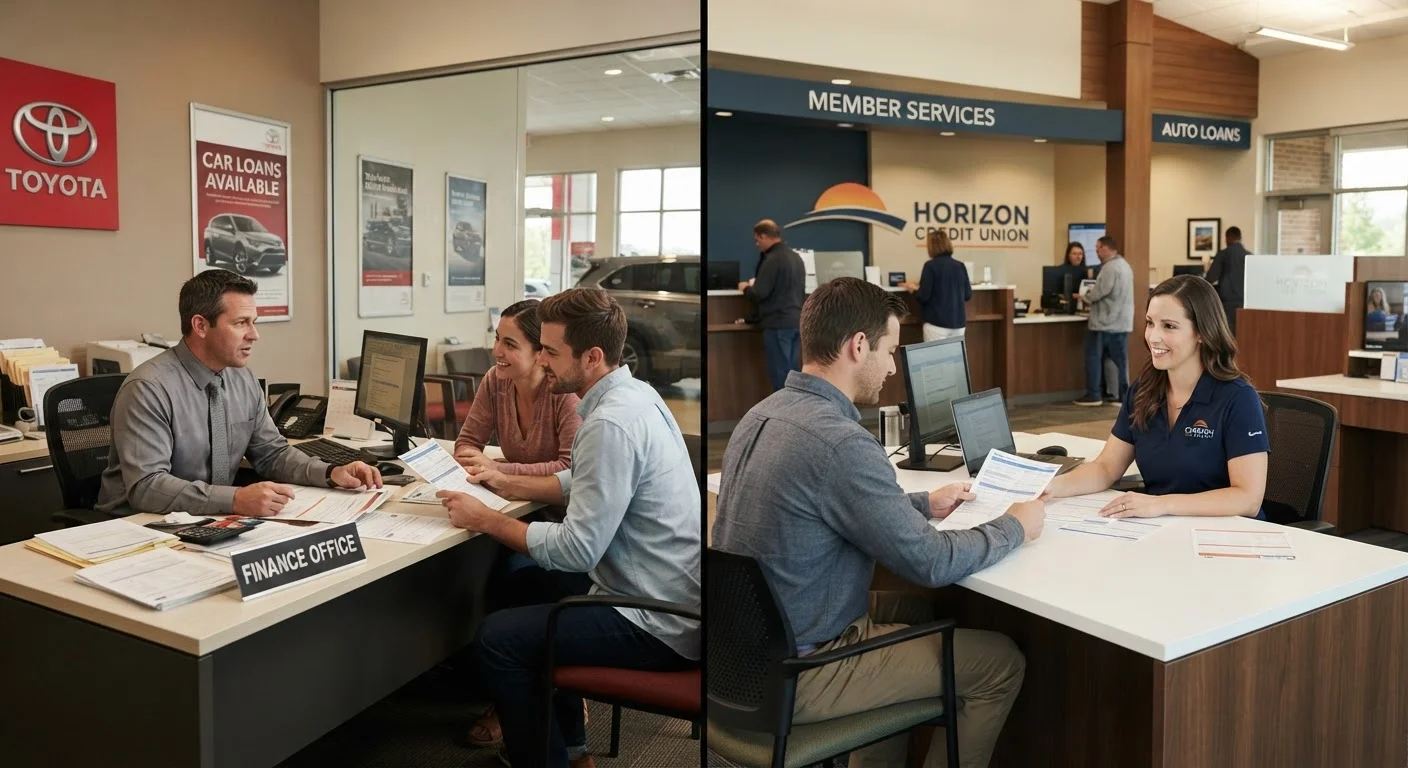
Photo: FaqsBay.com | Trending Blogs, Top Genres editorial
Key Takeaways
- Dealer financing offers convenience but may include a markup on the interest rate that benefits the dealership.
- Pre-arranging a loan through your bank or credit union gives you a clear rate benchmark before you negotiate.
- Manufacturer-sponsored low-rate promotions can occasionally make dealer financing genuinely competitive.
- Separating the financing conversation from the vehicle price negotiation usually leads to better outcomes.
- Comparing at least two loan offers before signing is one of the most impactful steps a buyer can take.
How Each Financing Path Works
When you finance through a dealership, the dealer submits your credit application to one or more lenders in its network - often banks, captive finance arms (the automaker's own lending division), or finance companies. The dealer earns what's known as a finance reserve, which is the difference between the rate the lender quotes the dealer and the rate the dealer quotes you. That spread represents additional profit for the dealer.
When you arrange financing independently - through your own bank, a credit union, or an online lender - you receive a pre-approval letter specifying a loan amount, interest rate, and term. You walk into the dealership effectively as a cash buyer, with a rate ceiling already in hand. The lender pays you or pays the dealer directly once you complete the purchase.
Understanding this structural difference is the foundation of a smarter buying conversation. For a broader look at how dealership dynamics work, see what dealers don't always volunteer during the sale.
The Rate Markup: What It Means for You
Dealer-arranged financing does not necessarily carry a higher rate - but it can, and buyers often have no easy way to detect it in the moment. A lender might approve your application at 6.5% APR, while the dealer presents you a contract at 8.0%. That 1.5-percentage-point difference on a $30,000 loan over 60 months can add more than $1,300 in total interest costs.
Regulations and lender policies do cap how much dealers can mark up rates, and some lenders have moved toward flat-fee arrangements. Still, the markup practice remains legal and common in most states. Coming in with an outside pre-approval is the most practical way to identify whether the dealer's offer is competitive or inflated.
| Dealer Financing | Bank or Credit Union | |
|---|---|---|
| Rate transparency | Rate may include dealer markup | Rate quoted directly to you |
| Convenience | Single-stop, in-dealership process | Requires separate application step |
| Low-rate promotions | Access to manufacturer subvented rates | No access to captive lender specials |
| Negotiating leverage | Dealer controls the terms presented | Pre-approval creates rate ceiling |
| Lender relationship | Lender chosen by dealer | Your existing or chosen lender |
| Credit inquiry timing | Inquiries occur at point of sale | Single inquiry completed before shopping |
For context on how loan terms interact with vehicle purchase price, understanding new vs. used pricing is worth reviewing before you shop.
When Dealer Financing Makes Genuine Sense
Dealer financing has real advantages in specific circumstances. Manufacturer-sponsored promotions - sometimes called subvented rates - are interest-rate subsidies offered directly by an automaker's captive lender to move specific models. These can include 0% APR for qualified buyers, rates that an outside lender simply cannot match.
Dealers also offer speed and consolidation. If you're trading in a vehicle, financing, and purchasing in one visit, the dealer handles all the paperwork. For buyers with limited time or those who find the process stressful, that convenience has value.
Get Your Pre-Approval Before You Shop
One important nuance: promotional low-rate financing and a cash rebate are frequently mutually exclusive offers. Taking the low rate may mean forgoing a rebate that, depending on the loan amount and term, could actually save you more money. Run both scenarios before deciding. Negotiating the vehicle price and the financing terms are separate conversations - keep them that way.
A Practical Strategy for Any Buyer
The most effective approach is to treat outside financing as your baseline, not a fallback. Before visiting any dealership, apply for a pre-approval from your bank or credit union. Credit unions in particular frequently offer competitive auto loan rates to members and are worth contacting even if you don't use them for everyday banking.
Arrive at the dealership knowing your approved rate and monthly payment range. Negotiate the out-the-door price of the vehicle first, independent of any financing discussion. Once you have an agreed purchase price, ask the dealer's finance office to beat your pre-approved rate. If they can - legitimately, not by extending the loan term - take their offer. If they cannot, use your outside approval.
This approach prevents common tactics such as focusing negotiations on monthly payment rather than total cost, which can obscure a higher rate or a longer loan term. For additional context on structuring a car deal to your advantage, see how to negotiate a car price without feeling outmatched.
This article provides general financial information for educational purposes and does not constitute personalized financial or lending advice. Consult a qualified financial professional or licensed lender for guidance specific to your situation.
The content provided on our blog site traverses numerous categories, offering readers valuable and practical information. Readers can use the editorial team’s research and data to gain more insights into their topics of interest. However, they are requested not to treat the articles as conclusive. The website team cannot be held responsible for differences in data or inaccuracies found across other platforms. Please also note that the site might also miss out on various schemes and offers available that the readers may find more beneficial than the ones we cover.