
The Overlooked Logistics of Traveling with Medications

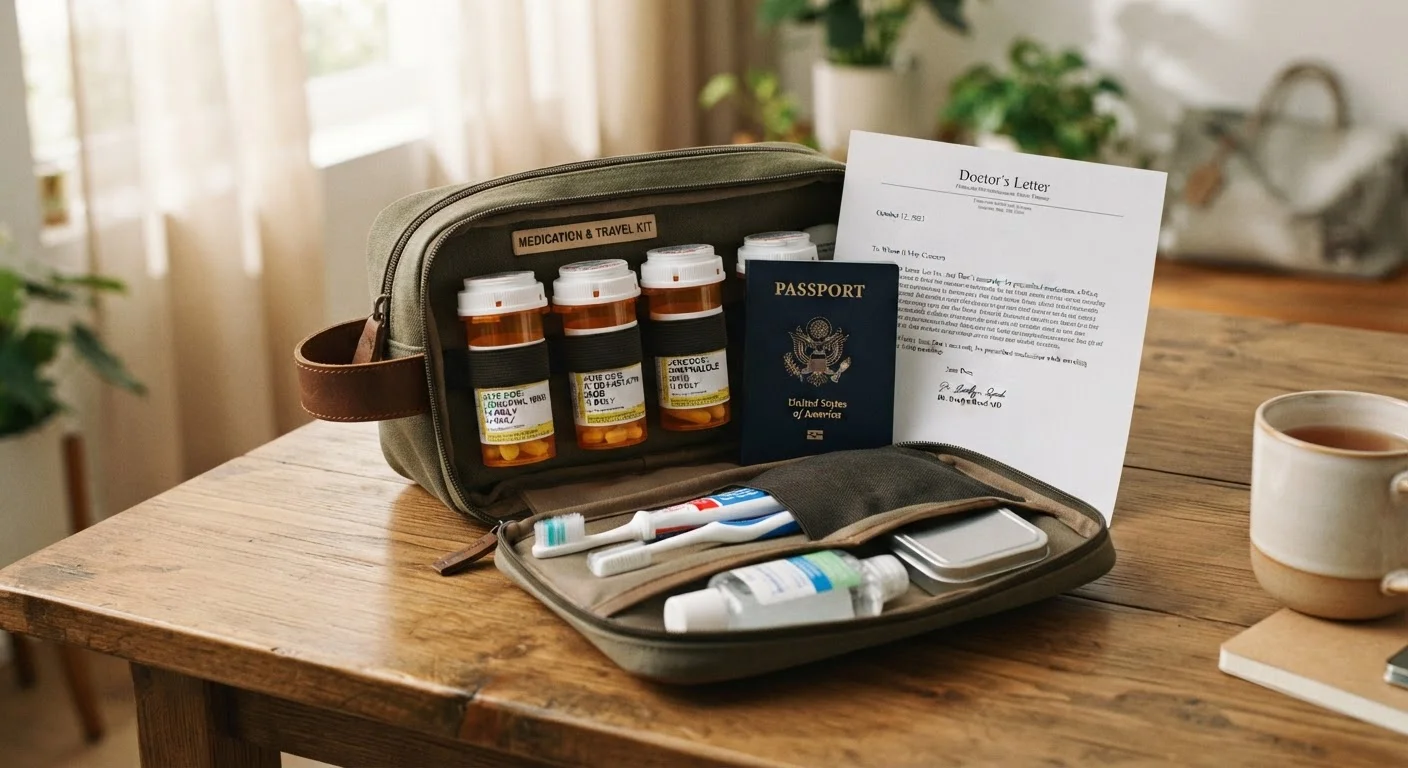
Photo: FaqsBay.com | Trending Blogs, Top Genres editorial
Why Medication Logistics Deserve a Spot on Your Pre-Trip Checklist
Most travelers remember to pack their medications — but far fewer think through the rules, paperwork, and storage requirements that govern those medications once they leave home. Customs officers, airline security, and foreign pharmacies each operate under different frameworks, and gaps in your preparation can mean confiscated supplies, fines, or simply running out of something essential at the worst possible moment.
This is especially relevant for international travel, where the stakes are higher and the logistics more layered. But even domestic road trippers should understand a few basics, particularly around controlled substances and temperature-sensitive drugs. See our pre-trip planning checklist for how medication prep fits into the broader picture.
Documentation: What to Carry and Why
The single most protective step you can take is traveling with a letter from your prescribing physician. This letter should include your full name, the medication's generic and brand name, the prescribed dosage, the medical condition being treated, and the doctor's contact information. For controlled substances — stimulants used for ADHD, opioid pain relievers, certain sleep aids — documentation is especially critical.
Keep medications in their original pharmacy-labeled containers whenever possible. Labels should match your passport name exactly. A copy of the actual prescription adds a useful second layer of verification. If you're carrying injectable medications or syringes, a doctor's letter explaining the medical necessity is strongly advisable for security screening.
For traveling internationally with prescription medications, each destination country has its own rules about what's permitted, what requires advance permits, and what's outright prohibited. Always verify entry requirements with the destination country's embassy or official health authority before departure — conditions vary significantly and change over time.
Controlled Substances Require Extra Research
Storage, Quantities, and Airport Security
Temperature-sensitive medications — insulin, certain biologics, some eye drops — require careful planning. Insulated cases with ice packs can help during transit, but temperature consistency on long international flights is hard to guarantee without purpose-built medication cooling solutions. Check with your prescriber about acceptable temperature ranges and recovery windows.
Carry a sufficient supply for your entire trip plus a reasonable buffer — typically several extra days' worth — in case of delays or lost luggage. Always keep medications in your carry-on bag rather than checked luggage; checked bags can be lost, and cargo holds aren't temperature-controlled in the same way as the cabin.
At airport security in the US, the TSA allows medically necessary liquids above the standard 3.4 oz limit; declare them separately at the checkpoint. Needles and syringes are permitted when accompanied by medication. That said, rules at foreign airports and re-entry screening points may differ, so build in extra time and keep documentation easily accessible — not buried at the bottom of your bag. Our pre-departure checklist covers this alongside other easy-to-miss logistics.
What to Do If You Run Out or Lose Your Medication Abroad
Running out of a prescription abroad is stressful but manageable with the right approach. Your first stop should typically be a local pharmacy, where pharmacists can often advise on equivalent local formulations — though a prescription from a local physician may be required. Our guide to navigating a foreign pharmacy walks through what to expect in that situation.
Contact your travel insurance provider early — many policies include coverage for emergency prescription refills or telehealth consultations abroad. The US embassy or consulate in your destination country can also provide referrals to English-speaking physicians. Keep a digital copy of your prescription and doctor's letter in cloud storage or email so you can access them even if your bag is lost.
This article is for general informational purposes only and does not constitute medical or legal advice. Always consult your healthcare provider and verify current regulations with official government sources before traveling with prescription medications.
The content provided on our blog site traverses numerous categories, offering readers valuable and practical information. Readers can use the editorial team’s research and data to gain more insights into their topics of interest. However, they are requested not to treat the articles as conclusive. The website team cannot be held responsible for differences in data or inaccuracies found across other platforms. Please also note that the site might also miss out on various schemes and offers available that the readers may find more beneficial than the ones we cover.