
Navigating a Foreign Pharmacy When You're Sick Abroad

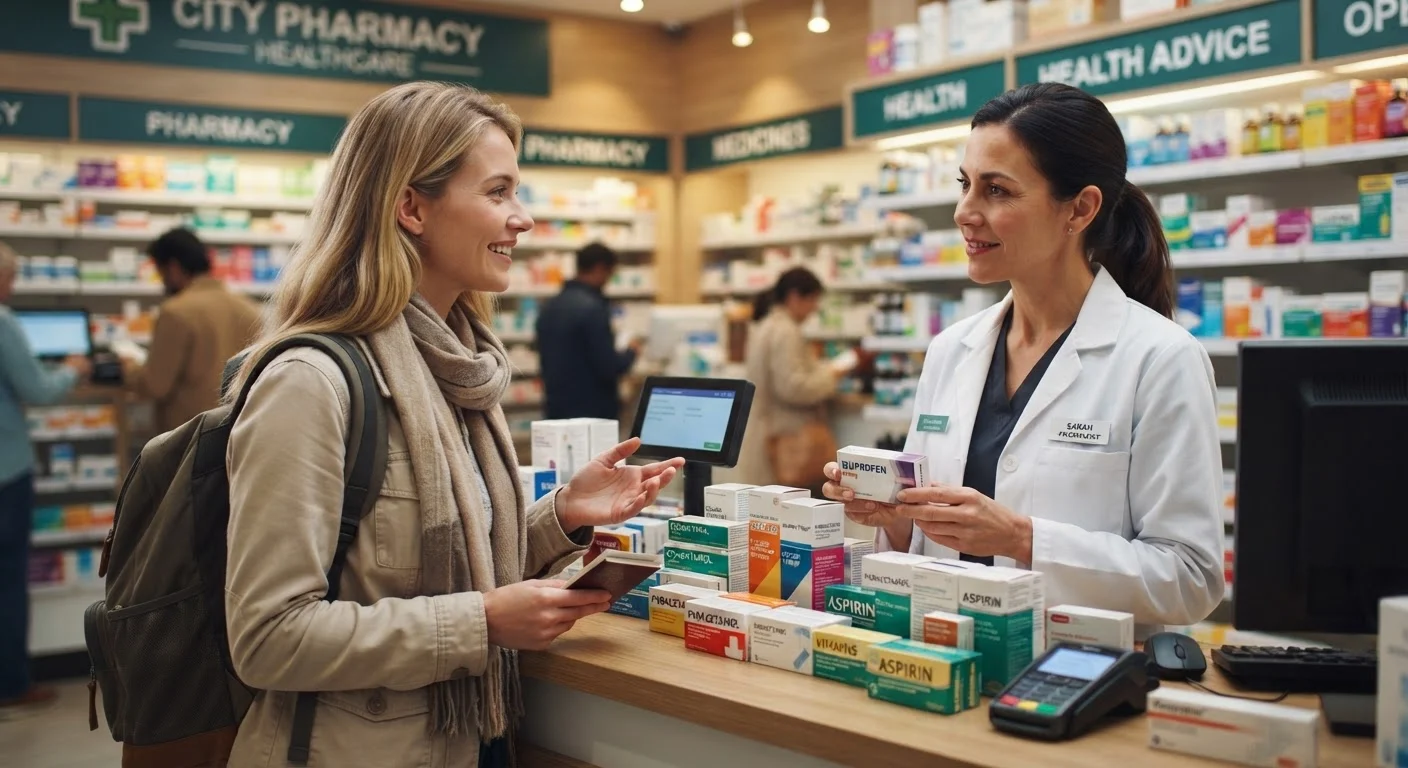
Photo: FaqsBay.com | Trending Blogs, Top Genres editorial
Key Takeaways
- Pharmacists in many countries can recommend treatments for minor ailments without a prescription.
- Bring written documentation of any prescription medications and known allergies before you travel.
- Generic drug names are more universally understood than US brand names abroad.
- Recognize warning signs that require a doctor, not a pharmacist, to treat safely.
- Travel insurance may reimburse out-of-pocket pharmacy costs — keep all receipts.
How International Pharmacies Differ From What You're Used To
In the United States, a clear line separates over-the-counter products from prescription-only drugs. That boundary is often drawn differently abroad. In many European, Latin American, and Asian countries, pharmacists are licensed healthcare practitioners with the authority to recommend — and in some cases dispense — medications that would require a prescription in the US. This includes certain antibiotics, stronger pain relievers, and topical treatments.
That broader scope can actually work in your favor when you're dealing with a straightforward travel illness like traveler's diarrhea, a UTI, or a mild respiratory infection. Rather than hunting for a clinic, you may be able to get effective treatment quickly at the pharmacy counter.
That said, systems vary. A pharmacy in rural Southeast Asia operates very differently from one in a major European city. Stocking levels, staff training, and available medications differ widely. If you're heading somewhere remote, plan ahead. Our guide on traveling internationally with prescription medications covers how to carry adequate supplies from home.
What you will need
Before You Even Feel Sick: Prep That Pays Off
The best pharmacy visit is one you walk into prepared. Before your trip, ask your doctor or pharmacist to write out your current medications using their generic international names. Compile a brief allergy list in writing. If you take any controlled substances, review the rules with your provider — the logistics of traveling with medications outlines what documentation you may need at customs.
Building a small travel health kit before departure — including familiar pain relievers, antidiarrheal medication, antihistamines, and oral rehydration salts — reduces how much you'll need to source abroad. But if you do end up at a foreign pharmacy, the steps below will walk you through it confidently.
Generic drug name list
Helps pharmacists identify equivalent medications when US brand names are unrecognized.
Offline translation app
Bridges language gaps when describing symptoms or reading packaging instructions.
Travel insurance documentation
Provides emergency contact numbers and may cover prescription or pharmacy costs.
Written allergy list
Ensures the pharmacist can avoid recommending medications that could cause a reaction.
Receipts folder or photo
Keeps proof of purchase for potential insurance reimbursement claims.
Step-by-Step: Getting Help at a Foreign Pharmacy
Follow these steps when you're feeling unwell overseas and need to find treatment without your usual support system nearby.
Locate a reputable pharmacy
Look for the internationally recognized green cross sign, which marks pharmacies across Europe, Latin America, and many other regions. Your hotel concierge is often the quickest resource for finding the nearest one. Alternatively, search maps offline or ask a local. In many countries, pharmacies called farmacia, apotheke, or pharmacie are densely distributed and easy to find on foot.
Describe your symptoms clearly and simply
Approach the pharmacist and describe what you're experiencing using short, specific phrases — "stomach pain," "fever for two days," "skin rash," "sore throat." If there's a language barrier, use your translation app to show written text or point to a body diagram. Pharmacists in many countries have significant clinical training and routinely assist walk-in patients with minor ailments.
Share your medication and allergy information
Hand over your written list of current medications using generic names (for example, ibuprofen rather than a brand name, or amoxicillin rather than a trade name). This matters because brand names can differ significantly between countries. Also share any known allergies so the pharmacist can avoid contraindicated products. If you're already taking prescription drugs, this step is essential before accepting any new treatment.
Ask about dosage, duration, and side effects
Once a product is recommended, ask — or use your translation app to understand — how often to take it, for how many days, whether it should be taken with food, and what side effects to watch for. Don't assume the instructions on foreign-language packaging will be self-explanatory; ask the pharmacist to write out the dosing schedule in simple terms or draw a visual if needed.
Pay and keep your receipt
Pharmacy costs vary significantly by country — some places offer strikingly affordable over-the-counter medications, while others may feel expensive relative to US prices. Pay with local currency or your travel card and always request a receipt. Travel insurance policies often include medical expense reimbursement that extends to pharmacy purchases; you'll need itemized receipts to file a claim successfully.
Monitor your symptoms and know when to escalate
After taking medication, track your symptoms over the next 24–48 hours. If you improve, continue the recommended course. If symptoms stay the same or worsen, stop self-treating and seek a qualified doctor or clinic. Many countries have private clinics that cater to international travelers and offer English-speaking physicians — your travel insurance helpline can usually refer you to one.
Avoid Self-Diagnosing Serious Symptoms
When to Skip the Pharmacy Entirely
Tips for a Smoother Visit
A few habits make the whole experience less stressful. Pharmacies in many countries are open longer hours than US drugstores — some operate 24 hours, and in regions like France and Spain, a rotating on-call pharmacie de garde system ensures at least one location in each area stays open overnight. Ask your hotel which pharmacies in the area follow extended hours before you need one urgently.
If you're a first-time international traveler, getting comfortable with local healthcare resources is part of the broader orientation process. Our guide for your first international trip includes general preparation advice that sets you up well across situations like this.
Download a Translation App Before You Leave
This article is for general travel information only and does not constitute medical advice. Always consult a qualified healthcare professional for personal medical concerns, especially when traveling abroad.
The content provided on our blog site traverses numerous categories, offering readers valuable and practical information. Readers can use the editorial team’s research and data to gain more insights into their topics of interest. However, they are requested not to treat the articles as conclusive. The website team cannot be held responsible for differences in data or inaccuracies found across other platforms. Please also note that the site might also miss out on various schemes and offers available that the readers may find more beneficial than the ones we cover.