
Traveling Internationally with Prescription Medications

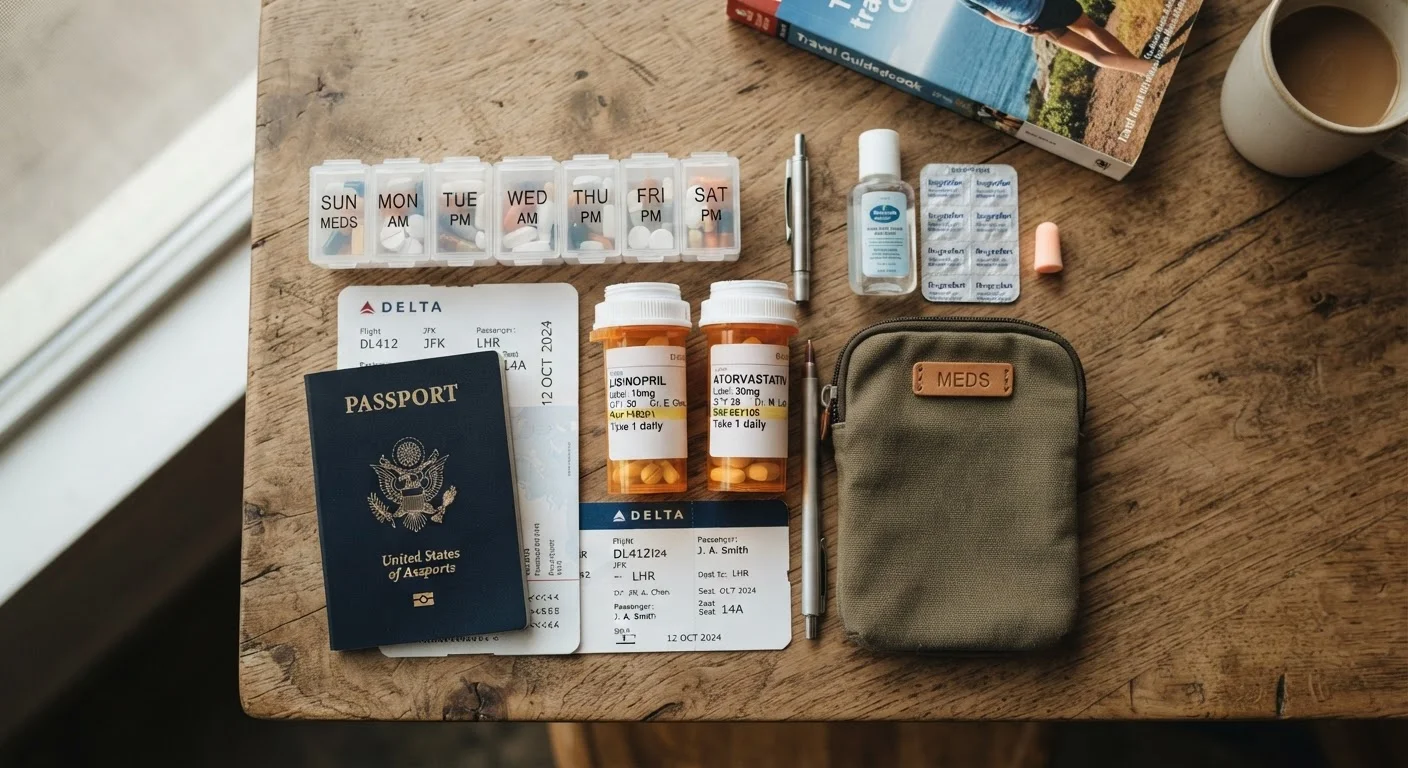
Photo: FaqsBay.com | Trending Blogs, Top Genres editorial
Key Takeaways
- Carry medications in original labeled containers along with a signed letter from your prescribing physician.
- Research destination-country regulations for each medication before departure — some drugs legal in the US are restricted abroad.
- Bring enough supply for your full trip plus several buffer days in case of delays.
- Controlled substances require extra documentation and should be verified with official government sources.
- Always consult your doctor and pharmacist before traveling internationally with prescription medications.
Why Medication Planning Deserves Its Own Checklist
Packing your prescriptions might feel like a simple task compared to booking flights or sorting visas. But carrying medication across international borders involves a layer of preparation that catches many travelers off guard. Regulations differ dramatically by country, customs processes can be unpredictable, and running out of a critical medication abroad is far more stressful than any delayed flight.
This isn't a reason to avoid traveling — it's a reason to plan ahead with the same care you'd give your passport. Whether you're managing a chronic condition, carrying injectable medications, or simply bringing a routine prescription, a few deliberate steps before departure make the whole journey smoother. See our pre-trip planning checklist for a broader view of what to sort out before you leave home.
This Is General Information, Not Medical Advice
The Core Practices: Documentation, Packaging, and Supply
Most medication-related problems at international borders come down to three gaps: missing documentation, improper packaging, or an insufficient supply. The practices below address all three directly.
Keep medications in their original pharmacy-labeled containers throughout your journey.
Obtain a signed physician's letter on clinic letterhead before departure.
Research destination-country regulations for every medication you're carrying.
Pack medications in your carry-on bag, never in checked luggage.
Bring more medication than you think you'll need — at least a few extra days' supply.
Declare medications honestly at customs — always.
If this is your first time traveling internationally, it's worth reviewing everything you need to know before your first international trip — medication planning fits into a broader checklist of health and logistics prep.
Controlled Substances and Country-Specific Rules
Controlled substances deserve special attention. Medications classified as Schedule II through IV in the US — including certain stimulants, opioids, benzodiazepines, and sleep aids — are subject to strict import rules in many countries. Some nations require a government-issued permit obtained weeks before arrival; others ban certain substances outright.
The most reliable sources for country-specific requirements are the destination country's embassy in the United States and the US Embassy or Consulate in your destination. The US Department of State's travel country information pages are also a useful starting point, though always verify with official in-country authorities since regulations change.
Use a Medication Travel Card as a Backup
If you discover that a medication you rely on is restricted in your destination, work with your prescribing doctor well in advance. There may be an alternative medication, a temporary adjustment, or a formal import permit available — but these options take time to arrange.
For what to do if you fall ill or run out of medication while abroad, our guide on navigating a foreign pharmacy when you're sick abroad walks through your options clearly.
Quick Steps You Can Take Before Your Next Trip
The good news: most medication-related travel prep can be handled in a handful of calls and conversations. Don't leave these until the week before departure.
Medication logistics are one piece of the larger puzzle of smart international travel. For a full walkthrough of the preparation process — from documents to arrival — see our practical international travel guide.
This article is for general informational purposes only and does not constitute medical, legal, or pharmaceutical advice. Medication regulations vary by country and are subject to change. Always consult your doctor or pharmacist and verify requirements with official government sources before traveling with prescription medications.
The content provided on our blog site traverses numerous categories, offering readers valuable and practical information. Readers can use the editorial team’s research and data to gain more insights into their topics of interest. However, they are requested not to treat the articles as conclusive. The website team cannot be held responsible for differences in data or inaccuracies found across other platforms. Please also note that the site might also miss out on various schemes and offers available that the readers may find more beneficial than the ones we cover.