
Your Lawn Through the Seasons: A Year-Round Care Calendar

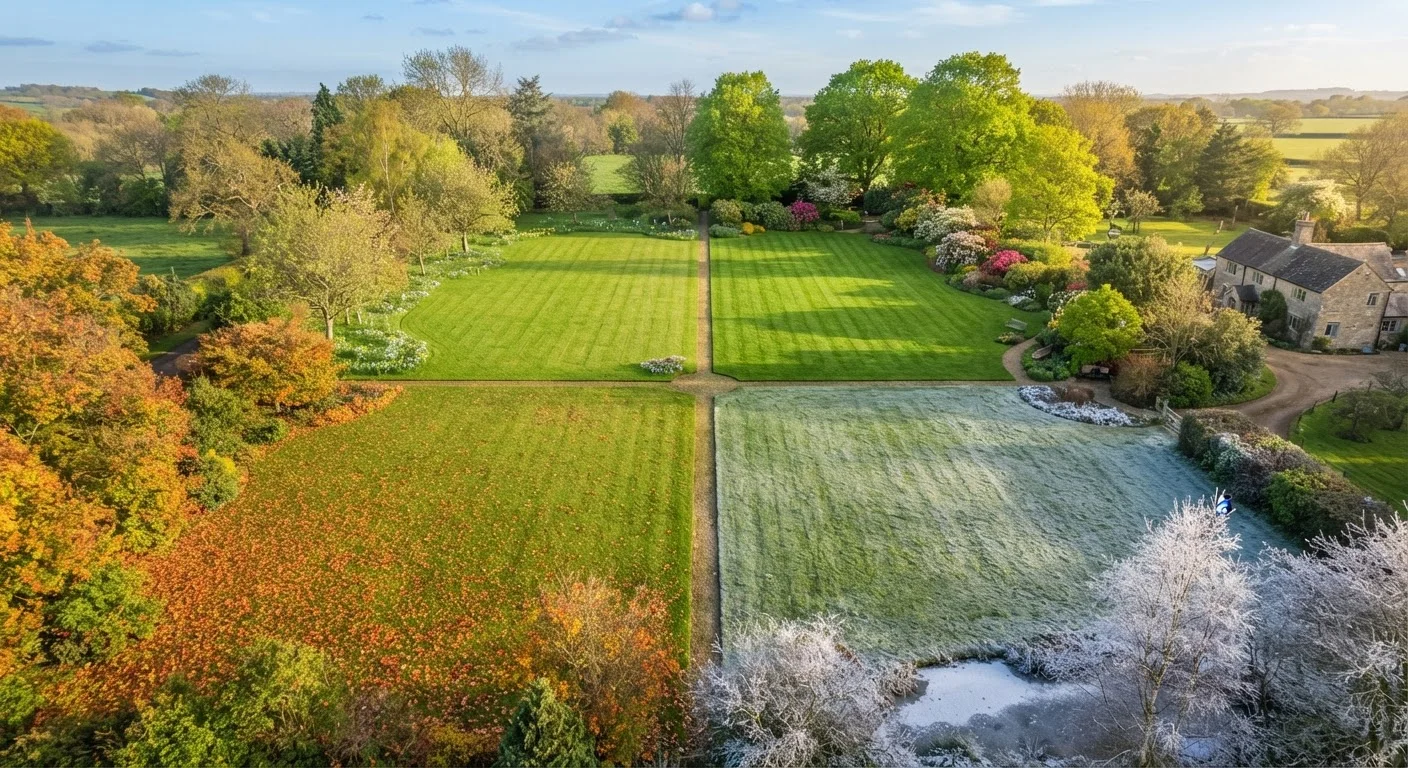
Photo: FaqsBay.com | Trending Blogs, Top Genres editorial
How to Use This Seasonal Lawn Calendar
Lawn care isn't a single task — it's a rotating rhythm of activities timed to your grass type, climate zone, and the growing calendar. This reference guide breaks down what to do each season so you can keep your yard healthy without guesswork. For a deeper foundation on grass varieties and soil prep, see the Complete Homeowner's Lawn Care Reference.
Two grass categories shape your timing above all else:
- Cool-season grasses (fescue, bluegrass, ryegrass) thrive in spring and fall and go semi-dormant in summer heat. Common in the northern US.
- Warm-season grasses (Bermuda, zoysia, St. Augustine) peak in summer and go dormant in winter. Dominant in the South and Southwest.
Apply the calendar below with your grass type in mind. Tasks marked cool-season or warm-season are specific; untagged tasks apply broadly.
| Ideal mowing height (cool-season) | 2.5–4 inches (University Cooperative Extension Services) |
| Ideal mowing height (warm-season) | 1–3 inches (University Cooperative Extension Services) |
| Recommended watering depth per session | 1 inch (General turfgrass science consensus) |
| Best time to aerate | Fall (cool-season) / Late spring (warm-season) |
| Pre-emergent herbicide window | When soil temps reach 50–55°F |
| Optimal overseeding season | Early fall for cool-season grasses |
Spring (March–May): Wake the Lawn Up Carefully
Spring is when most homeowners are eager to act — but restraint matters early in the season.
- March: Rake lightly to remove matted debris and thatch. Avoid heavy foot traffic on saturated soil. Test soil pH with a home kit or county extension lab.
- April: Apply pre-emergent herbicide before soil temperatures reach 55°F to suppress crabgrass germination. Begin mowing when grass actively grows, cutting no more than one-third of the blade height at a time.
- May: Fertilize cool-season grasses with a balanced, slow-release formula. Warm-season grasses should receive their first feeding once they green up fully. Overseed thin patches and water new seed consistently.
For watering guidance — including how often and at what time of day — read what homeowners get wrong about watering their lawns.
Summer (June–August): Protect and Maintain
Heat and drought stress are the primary threats in summer. Your goal is maintenance over improvement.
- Mowing height: Raise your mower deck by half an inch. Taller grass shades soil, retains moisture, and tolerates heat better.
- Watering: Water deeply 1–2 times per week rather than shallow daily watering. Early morning irrigation reduces evaporation and fungal risk.
- Fertilizing: Avoid fertilizing cool-season grasses during heat stress — it can scorch the lawn. Warm-season grasses can receive a midsummer feeding.
- Weed and pest patrol: Spot-treat broadleaf weeds as they appear. Watch for signs of grubs (irregular brown patches that pull up easily) and consult your local extension service for treatment options.
Thatch
A layer of dead grass stems, roots, and debris that accumulates between soil and living grass blades. Light thatch is normal; excessive buildup blocks water and nutrients from reaching roots.
Aeration
The process of perforating soil with small holes to relieve compaction. Core aeration removes small plugs of soil, improving air, water, and nutrient penetration to grass roots.
Pre-emergent herbicide
A weed control product applied to soil before weed seeds germinate. It works by creating a chemical barrier at the soil surface rather than killing established weeds.
Winterizer fertilizer
A fall fertilizer formulated with higher potassium levels to help grass store carbohydrates and develop root strength before winter dormancy.
Dormancy
A period of reduced or halted growth that grass enters in response to extreme cold or heat. Dormant grass is not dead — it resumes growth when conditions improve.
Fall (September–November): The Most Productive Season
Fall is the single most important season for cool-season grass care, and still critical for warm-season lawns before dormancy.
- September: Aerate compacted soil to improve oxygen and water penetration. Overseed bare or thin areas — soil temperatures are warm and competition from weeds is lower. This is also the optimal time to apply a fall fertilizer for cool-season grasses.
- October: Keep mowing until growth stops. Mulch fallen leaves with your mower rather than raking — this returns nutrients to the soil. Apply a winterizer fertilizer for cool-season turf.
- November: Lower your mowing height slightly for the final cut. Drain and store hoses and irrigation equipment before the first hard freeze.
For a complete fall checklist, including timing for aeration and overseeding, visit Fall Lawn Prep: What to Do Before the First Frost.
Winter (December–February): Rest and Plan
Dormant lawns need little intervention, but winter is a good time to prepare your tools and plan ahead.
- Stay off frozen grass: Foot traffic on frozen turf crushes grass crowns and can cause lasting damage.
- Avoid salt near lawn edges: Road salt and de-icing products damage grass. Use sand or alternative de-icers on adjacent walkways.
- Maintain equipment: Sharpen mower blades, change the oil, and inspect spreaders so they're ready for spring. A dull blade tears grass rather than cutting it cleanly, increasing disease risk.
- Plan for spring: Order grass seed, soil amendments, and slow-release fertilizer so you're ready when temperatures rise.
Common misconceptions can quietly undermine even a well-planned calendar. Check out common lawn myths that waste time and water to avoid inherited bad habits.
Your Climate Zone Changes the Timeline
The content provided on our blog site traverses numerous categories, offering readers valuable and practical information. Readers can use the editorial team’s research and data to gain more insights into their topics of interest. However, they are requested not to treat the articles as conclusive. The website team cannot be held responsible for differences in data or inaccuracies found across other platforms. Please also note that the site might also miss out on various schemes and offers available that the readers may find more beneficial than the ones we cover.