
Online Degrees vs. Traditional Campus Programs: An Honest Comparison

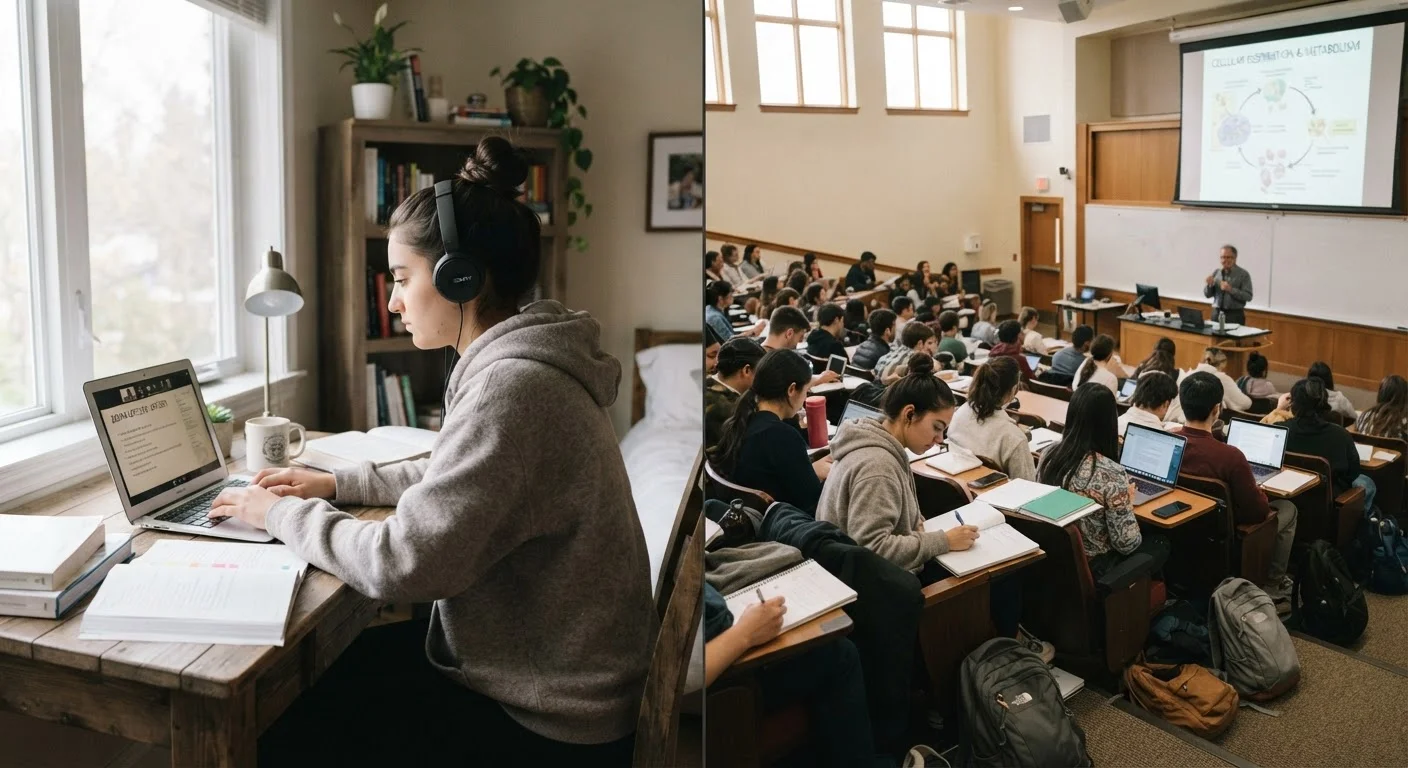
Photo: FaqsBay.com | Trending Blogs, Top Genres editorial
Key Takeaways
- Accredited online degrees are generally recognized by employers at the same level as campus equivalents from the same institution.
- Campus programs offer richer in-person networking, career fairs, and campus resources that are harder to replicate online.
- Online programs typically cost less in total when housing, commuting, and lost wages are factored in.
- Self-discipline and time management are significantly more important in online formats than in structured campus schedules.
- Your field of study matters: some disciplines require hands-on labs or clinical hours that demand physical attendance.
- Both formats vary widely in quality - accreditation and institutional reputation matter more than the delivery method alone.
How the Two Formats Actually Work
At their core, online and campus degree programs lead to the same type of credential - a bachelor's, master's, or doctoral degree - awarded by an accredited institution. The difference lies in how instruction is delivered, how students interact with peers and faculty, and what the daily rhythm of learning looks like.
Traditional campus programs require physical attendance at scheduled classes, labs, office hours, and often extracurricular activities. The structure is externally imposed: your timetable, your campus, your cohort. Online programs, by contrast, move instruction to digital platforms. Lectures may be pre-recorded or live, assignments are submitted electronically, and interaction with instructors typically happens via email, discussion boards, or video conferencing. For a deeper look at how these delivery structures compare within online learning itself, see our guide to synchronous vs. asynchronous formats.
Neither format is inherently superior. Each suits different learners, life situations, and academic disciplines.
| Criterion | Online Degree Programs | Traditional Campus Programs |
|---|---|---|
| Scheduling flexibility | High - largely self-directed | Low - fixed class times |
| Total cost (tuition + living) | Often lower overall | Higher due to housing and fees |
| In-person networking | Limited; mostly virtual | Rich and spontaneous |
| Employer recognition | Strong if accredited | Strong; well-established |
| Self-discipline required | Very high | Moderate |
| Hands-on lab or clinical access | Limited or unavailable | Fully available on campus |
| Campus resources (library, counseling) | Available digitally | Available in person |
| Geographic requirement | None - study from anywhere | Must be near campus |
Cost, Flexibility, and Time Commitment
Tuition rates for online and campus programs at the same institution are often similar or identical, but the total cost of attendance can differ significantly. Campus students typically pay for housing, meal plans, transportation, and campus fees that online learners can avoid. That said, online students aren't cost-free - reliable internet, a capable computer, and occasionally specialized software are real expenses.
Flexibility is where online programs most clearly separate themselves. Most online degrees allow students to complete coursework during evenings or weekends, making it practical to maintain employment while studying. Campus schedules are far less negotiable. Missing a lecture or lab session has immediate consequences in a way that asynchronous coursework generally does not.
3.1M+
US students enrolled exclusively online
According to the National Center for Education Statistics, more than three million students were enrolled exclusively in online courses at degree-granting institutions in recent survey data.
~15%
Lower tuition for online vs. campus at same schools
Several large public universities price their online programs roughly 10-20% below equivalent on-campus tuition, though figures vary significantly by institution and program.
83%
Employers who view online degrees as credible
A survey by the Society for Human Resource Management found that a large majority of HR professionals view online degrees from accredited institutions as equivalent to campus degrees.
Time commitment, however, should not be underestimated in either format. A three-credit course typically demands eight to twelve hours of effort per week regardless of delivery mode. The difference is that online students must self-impose that time, while campus students are partly held accountable by the physical rhythm of showing up.
Social Experience, Networking, and Career Support
One of the most cited advantages of traditional campus programs is the density and spontaneity of social connection. Study groups form organically, professors are accessible before and after class, and career fairs, alumni networks, and on-campus recruiters are physically present. These interactions often shape professional trajectories in ways that are difficult to quantify.
Online programs have invested heavily in bridging this gap - virtual office hours, LinkedIn communities, online career counseling, and alumni networks are now standard at many institutions. But the consensus among researchers and graduates alike is that replicating the casual, unplanned relationship-building of campus life remains genuinely difficult in a remote environment.
The credibility question is worth addressing directly. Employer perception of online degrees has shifted considerably over the past decade, particularly since the growth of fully online programs at well-regarded universities. Accreditation - not delivery format - is the primary signal of quality that most employers use. Navigating the credibility question provides a more detailed breakdown of how hiring managers and graduate schools evaluate degree formats. For an overview of how degrees compare to other credential types, our online education landscape guide is a useful starting point.
Accreditation Is the Non-Negotiable
Choosing the Format That Fits Your Life
The right choice depends on a combination of factors: your field, your current life circumstances, your learning style, and the specific institutions you're considering. Someone pursuing a nursing degree cannot complete clinical hours entirely online. Someone raising children while working full-time may find campus attendance structurally impossible.
Before deciding, ask yourself three practical questions: Can I reliably self-direct my study time without external accountability? Does my intended career field value or require in-person credentials or experiences? And does the total financial picture - tuition plus living costs - make one format materially more feasible?
If you're weighing degrees against shorter-form credentials altogether, our comparison of certificates and degree programs examines the career tradeoffs in detail. And if you're comparing institution types more broadly, our look at community colleges versus four-year universities maps the structural differences that affect cost and outcomes. More resources across the higher education decision are available through the College & Degrees hub.
Both paths can lead to the same credential and, with the right fit, the same career outcomes. The format should serve your life - not the other way around.
The content provided on our blog site traverses numerous categories, offering readers valuable and practical information. Readers can use the editorial team’s research and data to gain more insights into their topics of interest. However, they are requested not to treat the articles as conclusive. The website team cannot be held responsible for differences in data or inaccuracies found across other platforms. Please also note that the site might also miss out on various schemes and offers available that the readers may find more beneficial than the ones we cover.