
Minimum Coverage vs. Full Coverage: Understanding the Real Trade-Offs

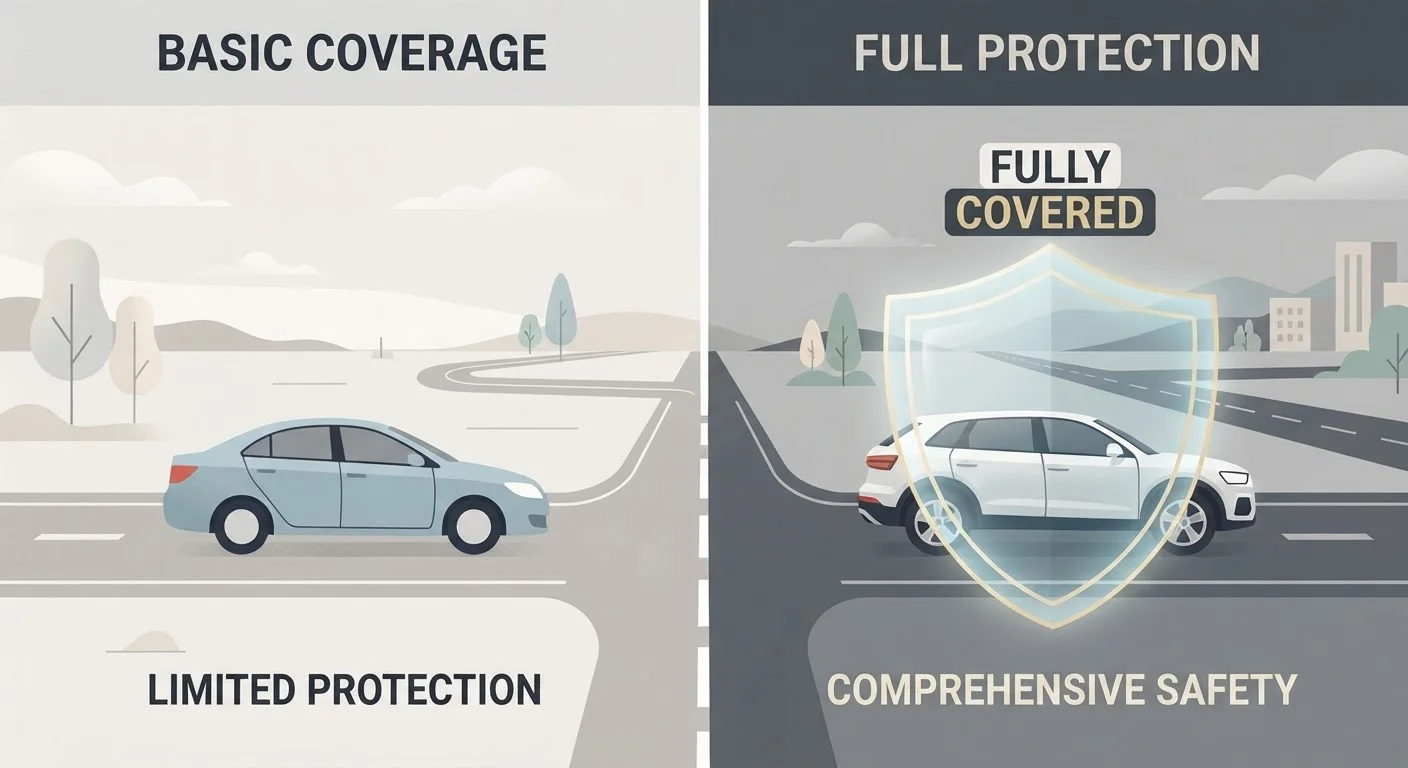
Photo: FaqsBay.com | Trending Blogs, Top Genres editorial
Key Takeaways
- Minimum coverage only pays for damage you cause to others - your own vehicle is not protected.
- Full coverage adds collision and comprehensive protection, which cover your vehicle in most damage scenarios.
- Lenders typically require full coverage on financed or leased vehicles.
- The right choice depends on your vehicle's value, financial cushion, and risk tolerance.
- Coverage gaps often surface only at claim time - knowing what each policy excludes matters.
What Each Coverage Level Actually Includes
Minimum coverage refers to the lowest level of auto insurance required by your state to legally operate a vehicle. In most states, this means liability insurance - specifically bodily injury liability and property damage liability. These coverages pay for injuries or property damage you cause to other people in an at-fault accident. Your own vehicle, your own injuries, and any damage done to your car by weather, theft, or an uninsured driver are not covered.
Full coverage is not a single, standardized policy type. The term generally describes a policy that combines state-required liability with two additional components: collision coverage (which pays to repair or replace your vehicle after an accident, regardless of fault) and comprehensive coverage (which covers non-collision damage such as theft, hail, flooding, or animal strikes). For a detailed breakdown of how these three layers work together, see our guide to liability, collision, and comprehensive coverage.
Some policies also bundle in uninsured/underinsured motorist protection, medical payments coverage, or roadside assistance - but those vary by insurer and state. Always read the declarations page of any policy to confirm exactly what is and is not included.
| Criterion | Minimum Coverage | Full Coverage |
|---|---|---|
| Damage you cause to others | Covered (liability) | Covered (liability) |
| Damage to your own vehicle | Not covered | Covered (collision) |
| Theft, weather, animal strikes | Not covered | Covered (comprehensive) |
| Required for financed vehicles | No - typically not sufficient | Yes - lenders usually require it |
| Typical premium cost | Lower | Higher |
| Out-of-pocket risk if your car is damaged | High - driver bears full cost | Lower - subject to deductible |
| Meets state legal minimum | Yes | Yes (and more) |
The Real Gaps: What Each Option Leaves Exposed
The most significant gap in minimum coverage is simple: your vehicle is unprotected. If you cause an accident that totals your own car, minimum coverage pays nothing toward your repairs. If a storm floods your vehicle overnight, minimum coverage pays nothing. If someone hits your parked car and flees the scene, minimum coverage - without an added uninsured motorist property damage endorsement - typically pays nothing either.
These are not edge cases. They are among the most common claim scenarios drivers face. Our article on coverage gaps drivers discover after filing a claim goes deeper on situations that catch policyholders off guard.
Full coverage has its own limitations. It does not cover mechanical breakdowns unrelated to a covered event, normal wear and tear, or personal belongings stolen from your vehicle. It also involves a deductible - the amount you pay out of pocket before the insurer covers the rest. Choosing a higher deductible lowers your premium, but means more exposure when you do file a claim. Understanding that relationship is worth exploring in depth: how deductibles and premiums interact.
~1 in 8
Drivers on US roads without insurance
According to the Insurance Research Council, roughly one in eight US drivers was uninsured in a recent study period - a significant exposure for drivers carrying only minimum coverage.
Varies by state
Minimum liability limits required by law
State minimum liability requirements differ substantially - some states require as little as $10,000 in property damage liability, which may not cover the cost of many modern vehicles in an at-fault accident.
How to Think Through the Decision for Your Situation
There is no universally correct answer. The right coverage level depends on three practical factors: your vehicle's current market value, your financial ability to absorb an unexpected loss, and whether a lender has a say in the matter.
Vehicle value: A common rule of thumb is to compare the annual cost of adding collision and comprehensive to the vehicle's actual cash value (ACV) - what an insurer would pay if the vehicle were totaled. If those added premiums approach or exceed 10% of the ACV annually, some drivers reassess whether full coverage remains cost-effective. This is a general framework, not a guarantee of savings.
Financial cushion: Minimum coverage transfers financial risk onto you. If your vehicle were damaged or destroyed tomorrow, could you cover repair costs or a replacement without serious hardship? If not, the lower premium of minimum coverage may be a false economy.
Loan or lease obligations: If you do not own your vehicle outright, this decision may already be made for you. Lenders typically require collision and comprehensive coverage for the life of the loan. Dropping to minimum coverage on a financed vehicle can result in the lender placing force-placed insurance on the vehicle - often at higher cost and with less favorable terms.
For drivers evaluating a vehicle purchase alongside insurance planning, our buying and selling hub offers broader context on how vehicle decisions and ownership costs connect. Additionally, if you frequently share the road with uninsured drivers, it is worth reviewing what uninsured motorist coverage actually protects against before finalizing any policy.
This article is for general informational purposes only and does not constitute personalized insurance or financial advice. Coverage terms, requirements, and costs vary by state and provider. Consult a licensed insurance professional to evaluate your specific situation.
The content provided on our blog site traverses numerous categories, offering readers valuable and practical information. Readers can use the editorial team’s research and data to gain more insights into their topics of interest. However, they are requested not to treat the articles as conclusive. The website team cannot be held responsible for differences in data or inaccuracies found across other platforms. Please also note that the site might also miss out on various schemes and offers available that the readers may find more beneficial than the ones we cover.