
Deductibles and Premiums: The Relationship Drivers Often Get Backwards

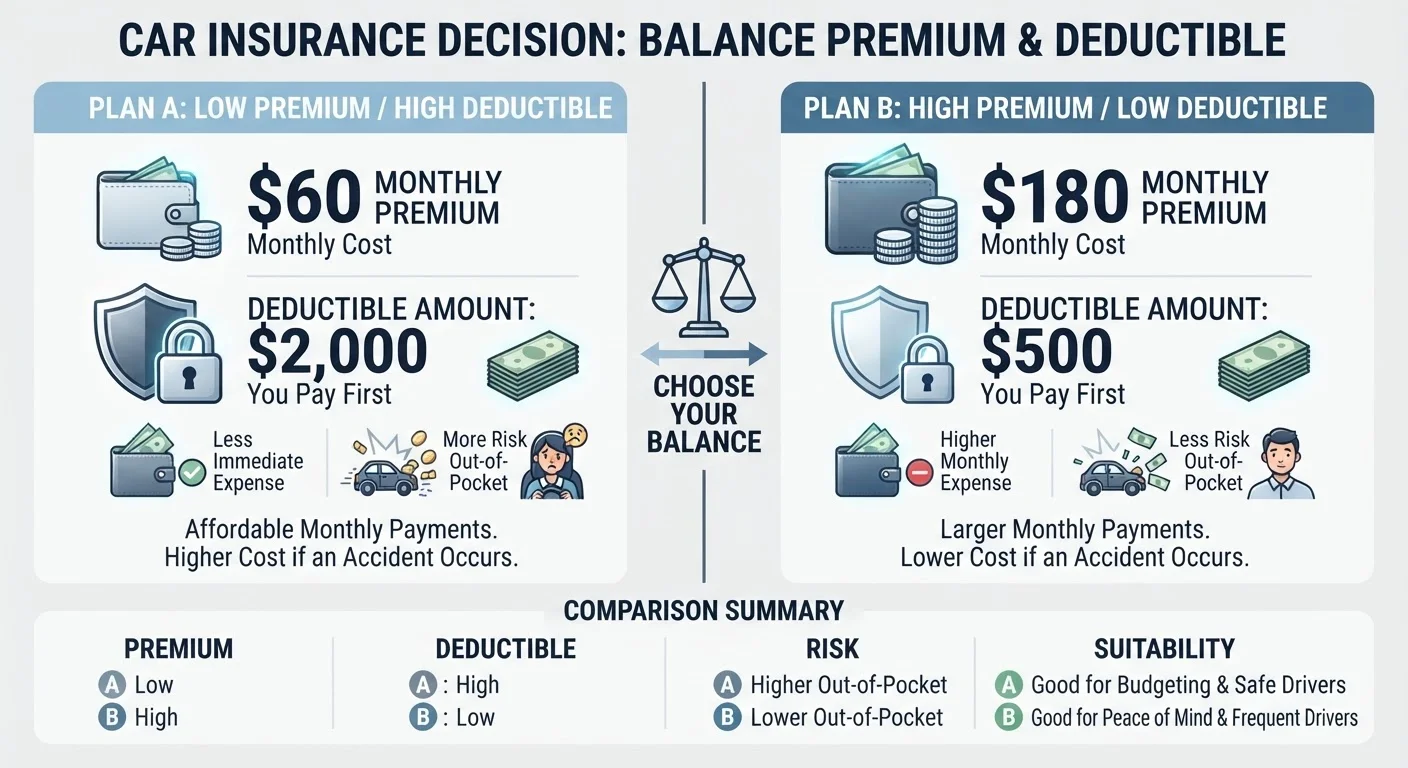
Photo: FaqsBay.com | Trending Blogs, Top Genres editorial
Key Takeaways
- A deductible is what you pay out of pocket when you file a claim; a premium is what you pay to keep your policy active.
- Raising your deductible typically lowers your premium, but only saves you money if you file claims infrequently.
- Your savings account balance matters: a high deductible is only practical if you can actually cover that amount when needed.
- The right choice depends on your financial cushion, driving history, and how much risk you're comfortable carrying.
- Neither a high nor low deductible is universally better - context determines which works in your favor.
What Each Term Actually Means
These two words appear on every auto insurance policy, yet they're frequently confused - or conflated into a single vague concept of "what insurance costs."
Premium is the amount you pay to keep your policy in force - typically monthly, semi-annually, or annually. You pay it regardless of whether you ever file a claim. Think of it as a subscription fee for coverage.
Deductible is the amount you agree to pay out of pocket before your insurer covers the remainder of a covered claim. If you have a $1,000 deductible and sustain $4,000 in collision damage, you pay the first $1,000 and your insurer pays the remaining $3,000.
The relationship between them is inverse: when one goes up, the other tends to go down. Insurers offer this trade-off because a higher deductible means you're absorbing more of the financial risk yourself - so they charge less to hold the policy. Factors beyond your deductible choice - including your driving history, ZIP code, and vehicle type - also shape your premium, but the deductible is one of the few levers you control directly.
| Criterion | High Deductible | Low Deductible |
|---|---|---|
| Monthly/annual premium | Lower | Higher |
| Out-of-pocket cost at claim time | Higher (e.g., $1,000-$2,000+) | Lower (e.g., $250-$500) |
| Savings account required | Yes - must cover deductible readily | Less critical |
| Best claim frequency profile | Infrequent filers | More frequent or unpredictable |
| Suited to older/low-value vehicles | Often yes | Generally less so |
| Financial predictability after accident | Lower - larger surprise cost | Higher - known, manageable cost |
Where Drivers Most Often Go Wrong
The most common mistake is choosing a deductible based solely on which option produces the lowest monthly payment - without considering whether that deductible amount is actually accessible in an emergency.
A $1,500 deductible only works in your favor if you can write that check on short notice. If covering that amount would require going into debt or draining a critical savings buffer, the lower premium isn't really a savings - it's a deferred financial stress waiting for the wrong moment.
The second mistake is assuming that a higher deductible always saves money over time. That math only holds if your claim frequency is low. Drivers who file even one or two claims per year can easily wipe out years of premium savings in a single policy period. Common auto insurance myths often reinforce this kind of faulty logic, making it worth pressure-testing your assumptions before locking in a deductible level.
Deductibles Don't Apply to Every Claim
It's also worth noting that deductibles typically apply separately for different coverage types. Your collision deductible and your comprehensive deductible (covering theft, weather, and non-collision events) can be set independently. Adjusting one doesn't automatically change the other.
How to Find Your Right Balance
Start with a straightforward question: if you had to pay your deductible tomorrow, could you do it without financial hardship? If the answer is no, your deductible is too high - regardless of the premium savings.
Next, estimate your realistic break-even point. Divide the annual premium difference between a high- and low-deductible option by the amount your deductible increases. That tells you roughly how many claim-free years it takes to recoup the higher out-of-pocket exposure. If that number is three years and you've filed a claim in the last two, a high deductible may not be working in your favor.
Also consider your vehicle's value. As a car ages and depreciates, carrying a low deductible on comprehensive and collision coverage makes progressively less sense. Minimum vs. full coverage decisions intersect directly with this calculus - at some point, the combined cost of premiums and a low deductible can approach or exceed what an insurer would actually pay out on a totaled older vehicle.
Finally, keep your deductible choice under periodic review. As your financial situation changes - savings grow, a car ages, your driving patterns shift - the right balance point can shift with it. This isn't a set-it-and-forget-it decision.
$500
Most common collision deductible chosen by US drivers
Industry data consistently shows $500 as the modal deductible selection, though the right level varies significantly by individual financial situation.
~6 years
Average time between auto insurance claims per driver
The Insurance Information Institute has noted that the average driver files a collision claim roughly once every six years, a figure that matters when calculating deductible break-even points.
This article provides general information about auto insurance concepts and is not a substitute for personalized advice from a licensed insurance professional. Policy terms, deductible options, and premium calculations vary by insurer and individual circumstances.
The content provided on our blog site traverses numerous categories, offering readers valuable and practical information. Readers can use the editorial team’s research and data to gain more insights into their topics of interest. However, they are requested not to treat the articles as conclusive. The website team cannot be held responsible for differences in data or inaccuracies found across other platforms. Please also note that the site might also miss out on various schemes and offers available that the readers may find more beneficial than the ones we cover.