
Car Insurance Myths That Lead Drivers to Make Costly Assumptions

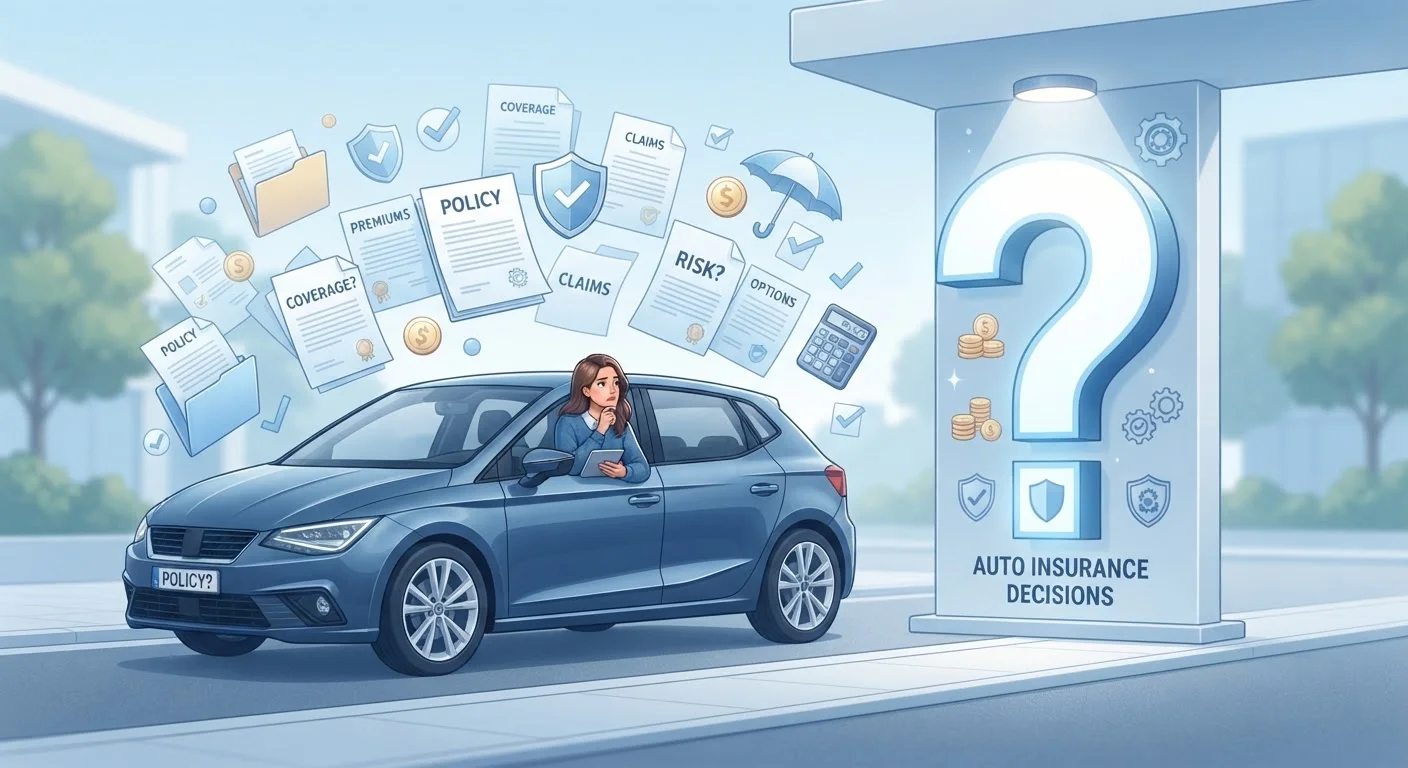
Photo: FaqsBay.com | Trending Blogs, Top Genres editorial
Key Takeaways
- Vehicle color has no effect on your auto insurance premium whatsoever.
- Minimum state-required coverage often leaves significant financial exposure after a serious accident.
- Your credit history is a legitimate rating factor in most US states for insurance pricing.
- Personal auto insurance typically does not cover vehicles used for rideshare or delivery work.
- Filing a small claim can raise your premium more than simply paying the repair out of pocket.
Why Insurance Myths Are More Than Just Harmless Misunderstandings
Auto insurance is one of the largest recurring expenses most drivers face, yet it remains widely misunderstood. Misconceptions don't just stay abstract - they translate into real decisions: choosing the wrong coverage level, skipping a rider that would have helped, or assuming protection exists where it doesn't.
The myths below are among the most persistent. Getting them straight can help you have a more productive conversation with a licensed insurance agent and avoid surprises when you actually need your policy to perform. For a foundational explanation of how policies are structured, see our plain-language guide to auto insurance.
Myth
Red cars cost more to insure because insurers charge a premium for high-performance colors.
Fact
Insurers do not consider vehicle color when calculating premiums. It simply isn't a rating factor.
This is one of the oldest and most durable auto insurance myths. In reality, insurance companies base rates on factors such as the vehicle's make, model, age, engine size, safety record, and how it is used - not its paint color. The perception that red equals speed, and speed equals risk, may be culturally intuitive, but it has no basis in how policies are actually priced.
Myth
Carrying the state minimum liability coverage is enough to protect you financially after an accident.
Fact
State minimums are legal floors, not adequate financial protection. A serious accident can easily exceed those limits.
Every US state sets a minimum liability coverage requirement, but those thresholds were often established years ago and may not reflect today's medical costs or vehicle repair bills. If damages from an at-fault accident exceed your policy limits, you can be held personally responsible for the difference - meaning your savings or future wages could be at risk. Many drivers benefit from carrying higher limits than the legal minimum, though the right amount depends on your individual financial situation. A licensed insurance agent can help you assess your exposure.
Myth
Your credit score has nothing to do with your car insurance premium.
Fact
In most US states, insurers are permitted to use a credit-based insurance score as one of several rating factors.
A credit-based insurance score is not identical to the FICO score lenders use, but it draws on similar underlying data. Insurers and researchers have found statistical correlations between credit history and the likelihood of filing claims - which is why most states allow its use in pricing. California, Hawaii, and Massachusetts are among the states that prohibit or significantly restrict this practice. If you live in a state where it applies, maintaining healthy credit habits can have a modest influence on your auto insurance costs over time.
Myth
Full coverage means your insurer will pay for any loss, no matter what happened.
Fact
'Full coverage' is an informal term, not a defined policy type - and all policies contain exclusions.
When people say full coverage, they typically mean a policy that includes liability, collision, and comprehensive coverage combined. But even that combination has limits, deductibles, and exclusions. Intentional damage, mechanical breakdowns, and personal belongings left in the car are examples of things that are commonly excluded. Reading your declarations page and policy documents - rather than relying on the label - is the only reliable way to know what is and isn't covered.
Myth
Your personal auto insurance policy covers you when driving for a rideshare or delivery app.
Fact
Standard personal auto policies typically exclude commercial or app-based driving activity.
This gap has caught many drivers off guard. When you're logged into a rideshare or delivery platform - whether waiting for a ride request or actively transporting a passenger or package - you may be in a coverage gap between your personal policy and the platform's commercial coverage. Most major rideshare companies carry some coverage during active trips, but the specifics vary and periods between trips are often under-covered. Drivers doing this type of work should ask their insurer about a rideshare endorsement or a separate commercial policy.
Myth
Filing a small claim is always the smart move - that's what insurance is for.
Fact
Filing a minor claim can trigger a premium increase that costs more than the claim paid out.
Insurance is designed for losses that would genuinely strain your finances, not every small fender-bender or parking lot scrape. Filing a claim - even a relatively small one - can result in a surcharge that persists for several years on your renewal. Before filing, it is worth comparing the expected claim payout against your deductible and the likely long-term premium impact. Paying for minor repairs out of pocket is sometimes the less expensive option overall.
What These Myths Cost Drivers in Practice
The financial stakes attached to these misconceptions vary, but the pattern is consistent: drivers who act on incorrect assumptions tend to either overpay for coverage they don't need or find themselves underinsured when a claim arises. Both outcomes are avoidable.
1 in 8
Drivers on US roads are uninsured
According to the Insurance Research Council, roughly one in eight drivers in the US was uninsured as of its most recent estimates, highlighting the real-world risk of relying solely on minimum coverage assumptions.
~$24,000
Average cost of an injury claim
The Insurance Information Institute has reported that the average bodily injury liability claim runs well into the tens of thousands of dollars, often far exceeding basic state minimum limits.
Understanding the factors that actually drive your premium - including your driving record, location, vehicle type, and in most states your credit history - puts you in a stronger position when shopping for or renewing a policy. Our companion piece explores those rating factors in detail. And if you're weighing how to balance your deductible against your monthly premium, this breakdown of the deductible-premium trade-off walks through the logic clearly.
Don't Discover Coverage Gaps at Claim Time
Coverage gaps are another costly consequence of myth-based assumptions. Drivers who believe they're fully protected are sometimes caught off guard when a real claim reveals exclusions they never anticipated. Learn which situations commonly expose those gaps before a loss occurs rather than after.
This article is for general informational purposes only and does not constitute personalized insurance, legal, or financial advice. Coverage terms, pricing factors, and regulations vary by insurer, policy, and state. Consult a licensed insurance agent or adviser regarding your specific situation.
The content provided on our blog site traverses numerous categories, offering readers valuable and practical information. Readers can use the editorial team’s research and data to gain more insights into their topics of interest. However, they are requested not to treat the articles as conclusive. The website team cannot be held responsible for differences in data or inaccuracies found across other platforms. Please also note that the site might also miss out on various schemes and offers available that the readers may find more beneficial than the ones we cover.