
Liability, Collision, and Comprehensive: What Each Coverage Type Actually Covers

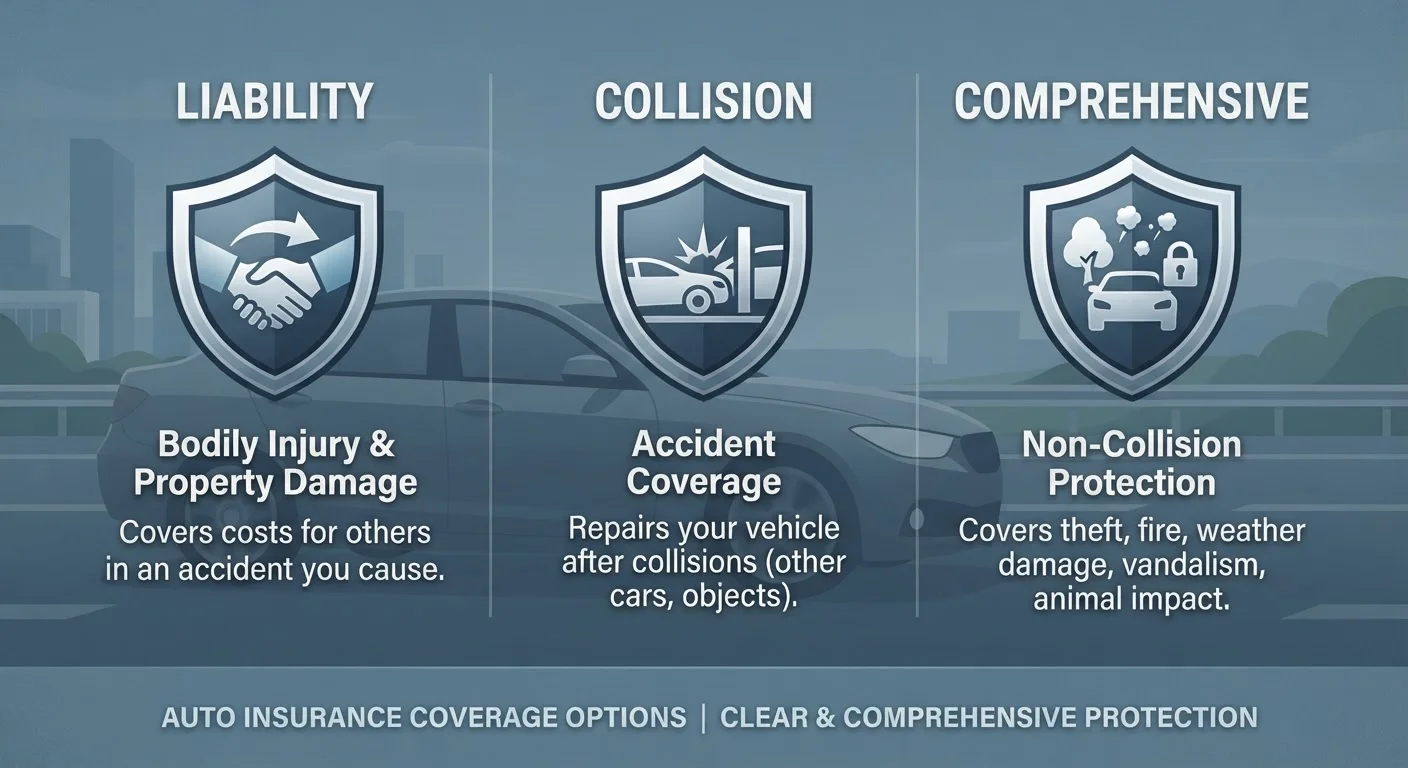
Photo: FaqsBay.com | Trending Blogs, Top Genres editorial
Key Takeaways
- Liability coverage protects other people - not you or your vehicle - when you are at fault in an accident.
- Collision coverage pays for repairs to your car after a crash, regardless of who caused it.
- Comprehensive coverage addresses non-collision damage such as theft, fire, hail, and animal strikes.
- Lenders and lease companies typically require both collision and comprehensive on financed or leased vehicles.
- Each coverage type has its own deductible and limit that you set when purchasing the policy.
Liability Coverage: Protection for Others When You're at Fault
Liability coverage is the legal and financial backbone of most auto policies - and in the vast majority of states, it is the coverage the law requires you to carry before you can legally drive. Despite being the most commonly held coverage type, it is frequently misunderstood.
When you cause an accident, liability coverage pays for the injuries and property damage suffered by the other party. It does not cover your own vehicle or your own medical bills. Think of it as protection for other people from the consequences of your driving mistakes.
Liability limits are typically written as three numbers, such as 25/50/25. These represent, in thousands of dollars: the maximum per-person bodily injury payout, the total bodily injury cap per accident, and the property damage limit. If your liability limits are too low and damages exceed them, you are personally responsible for the difference.
Liability Limits and Personal Exposure
For a plain-language breakdown of how all the moving parts of a policy connect, see our Car Insurance Decoded guide.
Collision Coverage: Repairing Your Vehicle After a Crash
Collision coverage pays to repair or replace your vehicle when it is damaged in a crash - whether that means hitting another car, striking a guardrail, or backing into a concrete pillar in a parking garage. Crucially, it applies regardless of fault. Even if the other driver caused the accident, collision coverage can step in while fault is being sorted out.
This coverage comes with a deductible you choose - common amounts range from $250 to $1,500. A higher deductible lowers your premium but means you pay more out of pocket if you file a claim. Collision coverage pays up to the actual cash value (ACV) of your vehicle, which accounts for depreciation rather than replacement cost.
~80%
U.S. drivers carrying liability insurance
The Insurance Information Institute estimates that the vast majority of U.S. drivers carry at least the state-minimum liability coverage, though a meaningful share remain uninsured.
~1 in 8
Drivers estimated to be uninsured
The Insurance Research Council has estimated that roughly one in eight U.S. motorists drives without any auto insurance, underscoring why uninsured motorist coverage matters.
If you are financing or leasing a vehicle, your lender almost certainly requires collision coverage for the duration of the loan or lease. Once the vehicle is paid off, the decision is yours. For a deeper look at how collision differs from comprehensive, our collision vs. comprehensive comparison walks through the distinctions in detail.
Comprehensive Coverage: When the Threat Isn't Another Vehicle
Comprehensive coverage - sometimes called "other than collision" coverage - protects your vehicle from a wide range of events that have nothing to do with a crash. Common covered perils include theft, vandalism, fire, flooding, hail, falling objects, and collisions with animals such as deer.
Like collision, comprehensive has a deductible and pays out at actual cash value. The two coverages are often purchased together, but they are priced and structured separately. A driver in a low-crime, mild-climate area might have very different exposure to comprehensive-type risks than someone in a region prone to severe hailstorms or high vehicle theft rates.
One common point of confusion: if you hit a deer, that is a comprehensive claim, not a collision claim. The distinction matters because the two coverages may carry different deductibles. Understanding which bucket an incident falls into helps you avoid surprises when you call your insurer.
Unfamiliar with insurance terminology? Our auto insurance glossary defines dozens of policy terms in plain language.
How These Three Coverages Work Together
Liability, collision, and comprehensive are designed to address different risk categories, and together they form the core of what most people call "full coverage" - though that phrase has no standard industry definition. A policy that includes all three provides meaningful protection for both your legal obligations and your own vehicle.
However, even a policy with all three types has gaps. Injuries to you and your passengers may require medical payments coverage or personal injury protection. Damage caused by a driver who carries no insurance - or not enough - may require its own dedicated coverage. Our article on uninsured and underinsured motorist coverage explains why that protection is often overlooked.
When deciding which combination of coverages makes sense, consider your vehicle's value, your loan or lease obligations, your state's requirements, and your own financial ability to absorb out-of-pocket costs. For a structured look at how minimum and broader coverage stacks compare, see our minimum vs. full coverage comparison.
This article provides general information about auto insurance coverage types and is not a substitute for personalized advice from a licensed insurance professional. Coverage terms, limits, and availability vary by insurer and state. Always review your actual policy documents and consult a licensed agent for guidance specific to your situation.
Frequently Asked Questions
The content provided on our blog site traverses numerous categories, offering readers valuable and practical information. Readers can use the editorial team’s research and data to gain more insights into their topics of interest. However, they are requested not to treat the articles as conclusive. The website team cannot be held responsible for differences in data or inaccuracies found across other platforms. Please also note that the site might also miss out on various schemes and offers available that the readers may find more beneficial than the ones we cover.