
Everything You Should Pack Before Leaving the Driveway

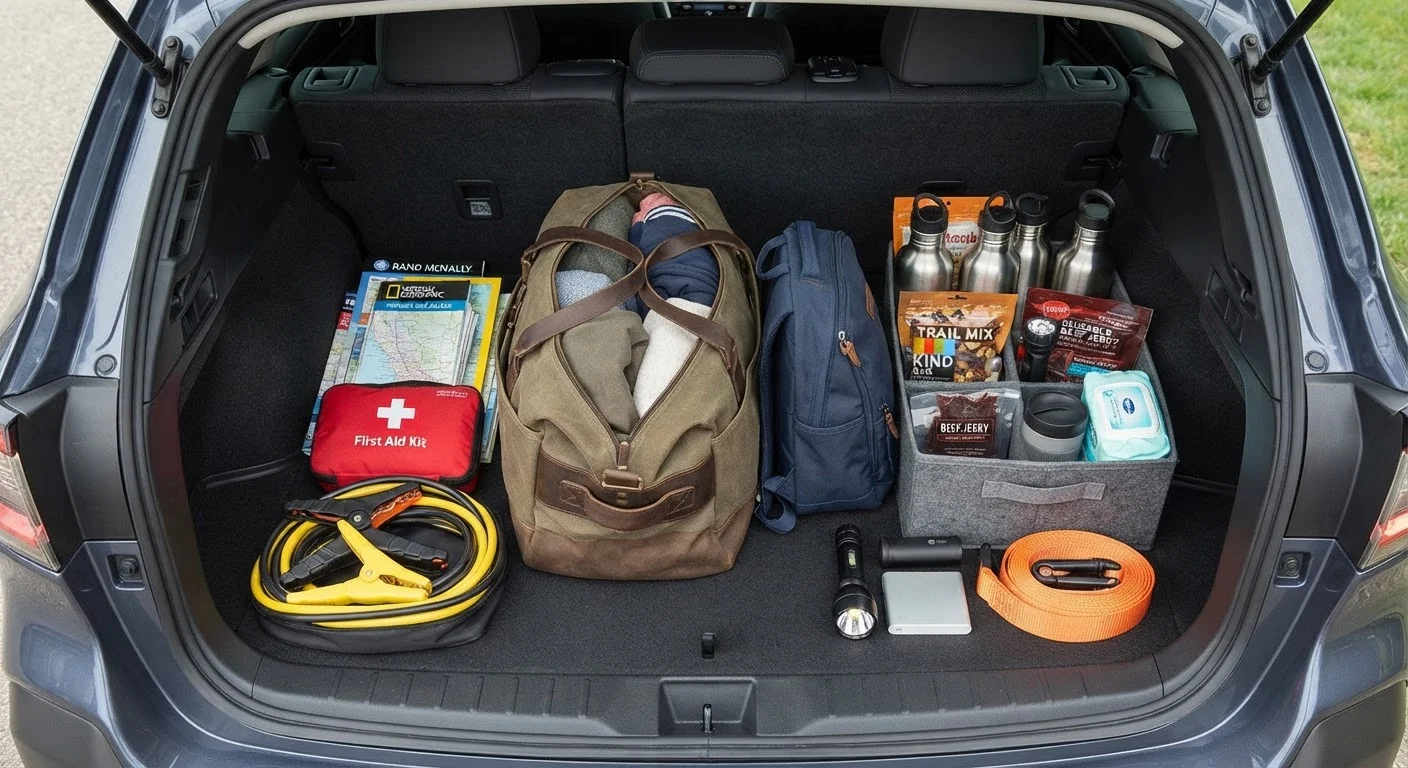
Photo: FaqsBay.com | Trending Blogs, Top Genres editorial
Key Takeaways
- Vehicle safety checks should happen before every road trip, not just long ones.
- Carrying key documents — registration, insurance, ID — is legally required in most US states.
- A basic emergency kit can make a critical difference if you break down far from help.
- Packing snacks and water strategically reduces costs and improves driver alertness.
- Comfort items like neck pillows and entertainment reduce fatigue on long hauls.
Why a Pre-Departure Checklist Pays Off
The open road rewards preparation. Whether you're heading across two states or two time zones, missing something critical — a spare tire with no air, a forgotten insurance card, or a dead phone charger in the middle of nowhere — can turn a great trip into a stressful one fast. This checklist is your last line of defense before the driveway disappears in your rearview mirror.
Think of it as a final audit across five key categories: your vehicle's mechanical health, your paperwork, safety gear, food and hydration, and comfort. If you're still in the broader planning phase, our complete end-to-end US road trip planning resource covers everything from route selection to overnight logistics. And if you're newer to long-distance driving, our first-timer's overview is worth a read before you hit the highway.
Run through the checklist below the night before departure or early the morning you leave — not five minutes before you pull out.
Tire Pressure Gauge
Accurately measures PSI in all four tires and the spare before departure.
Portable Jump Starter
Lets you restart a dead battery without needing another vehicle nearby.
Offline Navigation App
Provides reliable turn-by-turn directions even in areas with no cell service.
First Aid Kit
Covers minor injuries and health needs during the trip.
Cooler or Insulated Bag
Keeps water, perishable snacks, and drinks cold throughout the drive.
Portable Power Bank
Charges phones and devices when away from the vehicle or during extended stops.
Your Complete Road Trip Packing Checklist
The checklist below covers every major category. Items marked must are non-negotiable; should items are strongly recommended for most trips; nice to have items elevate comfort but aren't critical.
Vehicle Mechanical Checks
Documents and ID
Safety and Emergency Gear
Food, Water, and Hydration
Navigation and Connectivity
Comfort and In-Car Essentials
Don't Skip the Spare Tire Check
Packing well doesn't mean packing everything. Once you've used this list a few times, you'll know exactly what your style of road trip actually demands. For a smart take on trimming excess, see why your packing list is probably longer than it needs to be.
Before You Back Out: A Final 60-Second Walk-Around
Even after working through the full checklist, a quick physical walk-around catches things lists can miss. Check that all doors and the trunk are fully closed, that nothing is sitting on the roof, and that your mirrors are adjusted. Glance at all four tires for obvious flats. Start the car and confirm fuel level, tire pressure warning lights, and that your GPS or phone mount is secure before moving.
For ongoing vehicle health beyond a single trip, the car maintenance hub is a solid bookmark. And if you're still finalizing trip logistics like bookings and health prep, the pre-trip planning checklist for smarter travelers pairs well with this one. Now go — adventure is waiting.
The content provided on our blog site traverses numerous categories, offering readers valuable and practical information. Readers can use the editorial team’s research and data to gain more insights into their topics of interest. However, they are requested not to treat the articles as conclusive. The website team cannot be held responsible for differences in data or inaccuracies found across other platforms. Please also note that the site might also miss out on various schemes and offers available that the readers may find more beneficial than the ones we cover.