
Your First Financial Plan: A Roadmap from Zero to Stability

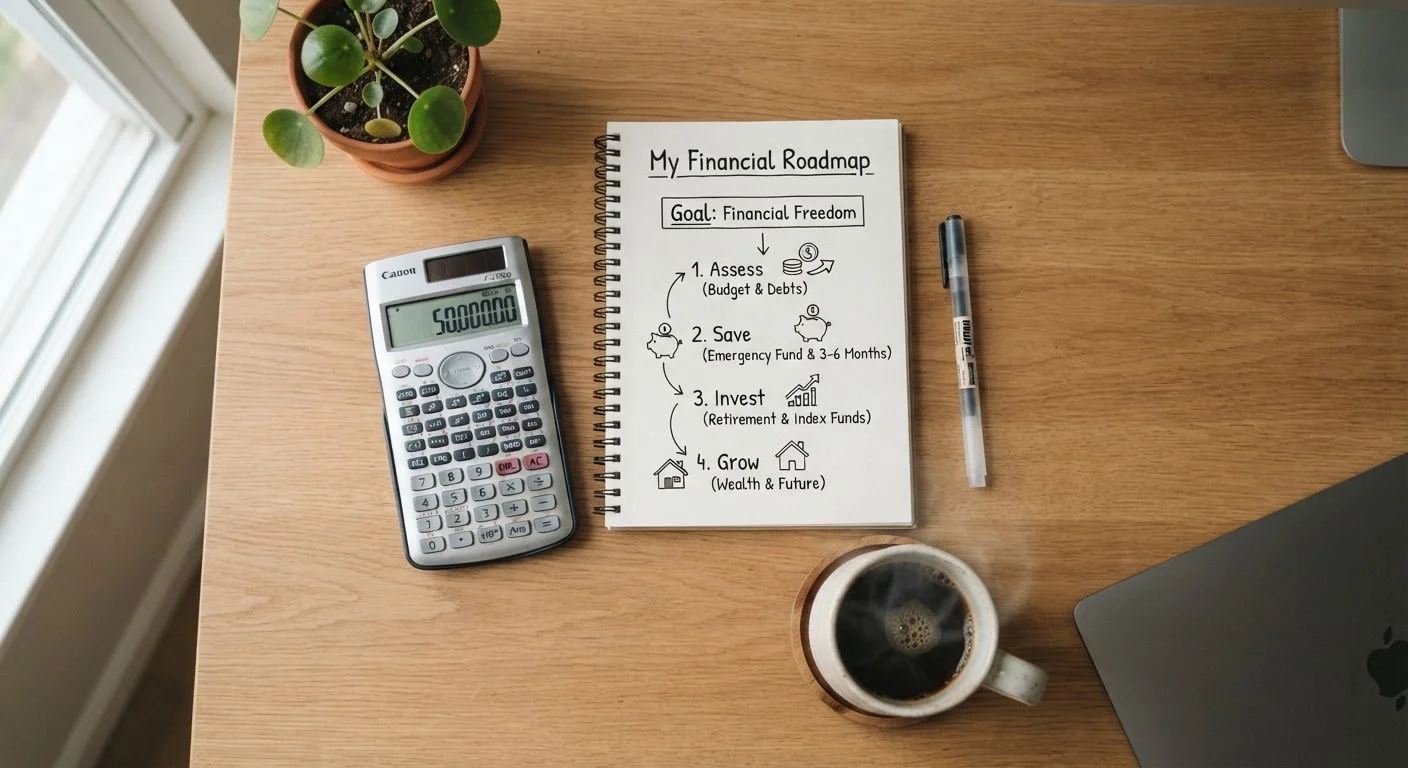
Photo: FaqsBay.com | Trending Blogs, Top Genres editorial
Key Takeaways
- A financial plan is simply a written map of where your money goes and where you want it to go.
- Tracking income and expenses is the essential first step before any goal-setting begins.
- An emergency fund of three to six months of expenses is a cornerstone of financial stability.
- Goals should be specific, time-bound, and ranked by priority to stay actionable.
- Major milestones like retirement and homeownership require planning well before they arrive.
- Reviewing your plan every few months keeps it aligned with your actual life.
Why a Financial Plan Matters Before You Have Much Money
Many people assume financial planning is something you do once you have savings worth protecting. The reality is the opposite: a financial plan is most powerful at the beginning, when your habits are still forming and every dollar decision compounds over time.
A financial plan is simply a written picture of your current money situation and a roadmap toward where you want to be. It doesn't require a spreadsheet software subscription or a professional adviser — just honesty about your numbers and clarity about your priorities. Think of it as the difference between driving with a map and driving with a vague sense of direction. Both might eventually get you somewhere, but only one does so efficiently.
If you're wondering how this connects to bigger life ambitions, our guide to financial milestones most adults should plan for shows exactly why getting started early matters so much.
Net cash flow
The amount left over after subtracting all monthly expenses from total monthly income. A positive number means you have money available to save or invest.
Emergency fund
A dedicated savings reserve set aside to cover unexpected expenses or loss of income, typically three to six months of essential living costs.
Fixed expenses
Regular, predictable costs that stay roughly the same each month, such as rent, loan payments, or insurance premiums.
Variable expenses
Spending that changes from month to month based on choices or circumstances, such as groceries, dining out, or entertainment.
Compound growth
The process by which savings or investments earn returns not just on the original amount, but also on previously earned returns — causing the total to grow faster over time.
IRA (Individual Retirement Account)
A tax-advantaged savings account designed specifically for retirement, available to individuals who meet certain income and eligibility requirements under US tax law.
Step 1: Get Clear on Your Income and Expenses
Before you can plan, you need to know what you're working with. List every source of take-home income — your paycheck after taxes, any side income, and consistent transfers you receive. Then, for one full month, track every dollar you spend. Categorize spending into fixed expenses (rent, loan payments, subscriptions) and variable expenses (groceries, dining, entertainment).
This exercise almost always reveals surprises. Most people find several categories where spending is higher than expected. That awareness is the foundation of every decision that follows. Our budgeting basics hub offers practical frameworks if you want help structuring this tracking process.
Use One Full Month of Real Data
Once you have a month of data, calculate your net cash flow: total income minus total expenses. If the number is positive, you have room to save and build. If it's negative or near zero, your first goal is identifying where to trim spending before layering on any larger financial goals.
Step 2: Build Your Financial Foundation
With your cash flow understood, the next step is laying the groundwork that protects everything else you'll build. Financial advisors broadly agree on two foundational priorities: an emergency fund and high-interest debt reduction.
An emergency fund is a dedicated pool of liquid savings — money you can access quickly — covering three to six months of essential expenses. It acts as a buffer so that an unexpected car repair or medical bill doesn't derail your other financial goals. For detailed strategies on building this from nothing, see our guide to building your first savings habit.
Simultaneously, high-interest debt — typically credit card balances carrying rates above 15% — erodes your financial position faster than most savings strategies can compensate. Prioritizing this debt doesn't mean ignoring savings entirely, but it does mean directing extra dollars toward it aggressively. The complete savings and debt management roadmap covers both strategies in depth.
Don't Skip the Emergency Fund
Step 3: Set Short- and Long-Term Goals
A financial plan without goals is just a spreadsheet. Goals give your numbers meaning and your decisions direction. Divide your goals into two categories:
- Short-term goals (under two years): Fully fund your emergency fund, pay off a specific debt, save for a planned expense like a move or a vacation.
- Long-term goals (two or more years): Buy a home, fund a child's education, retire comfortably.
For each goal, assign a dollar amount and a target date. Then work backward: if you need $6,000 in 18 months, you need to save roughly $333 per month. This kind of concrete math converts vague aspirations into weekly and monthly actions.
Prioritize ruthlessly. Most people can't fund every goal simultaneously at full speed. Rank them, and allocate your surplus cash flow accordingly. Revisit rankings whenever your income or circumstances change.
Step 4: Plan for Major Life Milestones
Beyond month-to-month goals, your plan should account for the bigger, predictable events most adults will navigate. These milestones often require years of preparation and can represent some of the largest financial decisions of your life.
Retirement: Even if it feels distant, starting contributions to a workplace retirement account or an Individual Retirement Account (IRA) as early as possible gives compound growth the most time to work. The general principle is: contribute at least enough to capture any employer match if one is offered, as that match is effectively additional compensation.
Homeownership: If buying a home is a goal, planning well in advance — saving for a down payment, managing your credit profile, understanding what you can realistically afford — dramatically reduces stress when the time arrives.
Education costs: Whether for yourself or a dependent, education funding benefits from early, consistent contributions. First-generation students navigating this for the first time may also find our college search guide for first-generation students a useful companion resource.
For a comprehensive view, our complete personal finance planning guide covers the full spectrum of these decisions.
Keeping Your Plan on Track
A financial plan isn't a document you write once and file away. Life changes — income rises or falls, expenses shift, goals evolve. Build a habit of reviewing your plan every three to six months and after any significant life event.
During each review, ask: Is my net cash flow still positive? Am I on pace for my goals? Have my priorities changed? Small recalibrations made regularly are far less disruptive than large corrections made in a crisis.
It's also worth noting that financial planning, like any skill, improves with practice. Your first plan will be imperfect — that's expected and fine. The act of making it, reviewing it, and adjusting it over time is where the real value lives.
This article is for general informational and educational purposes only and does not constitute personalized financial, investment, tax, or legal advice. Please consult a qualified financial professional for guidance tailored to your individual circumstances.
Frequently Asked Questions
The content provided on our blog site traverses numerous categories, offering readers valuable and practical information. Readers can use the editorial team’s research and data to gain more insights into their topics of interest. However, they are requested not to treat the articles as conclusive. The website team cannot be held responsible for differences in data or inaccuracies found across other platforms. Please also note that the site might also miss out on various schemes and offers available that the readers may find more beneficial than the ones we cover.