
Common Myths About Home Insulation That Lead to Wasted Energy and Money

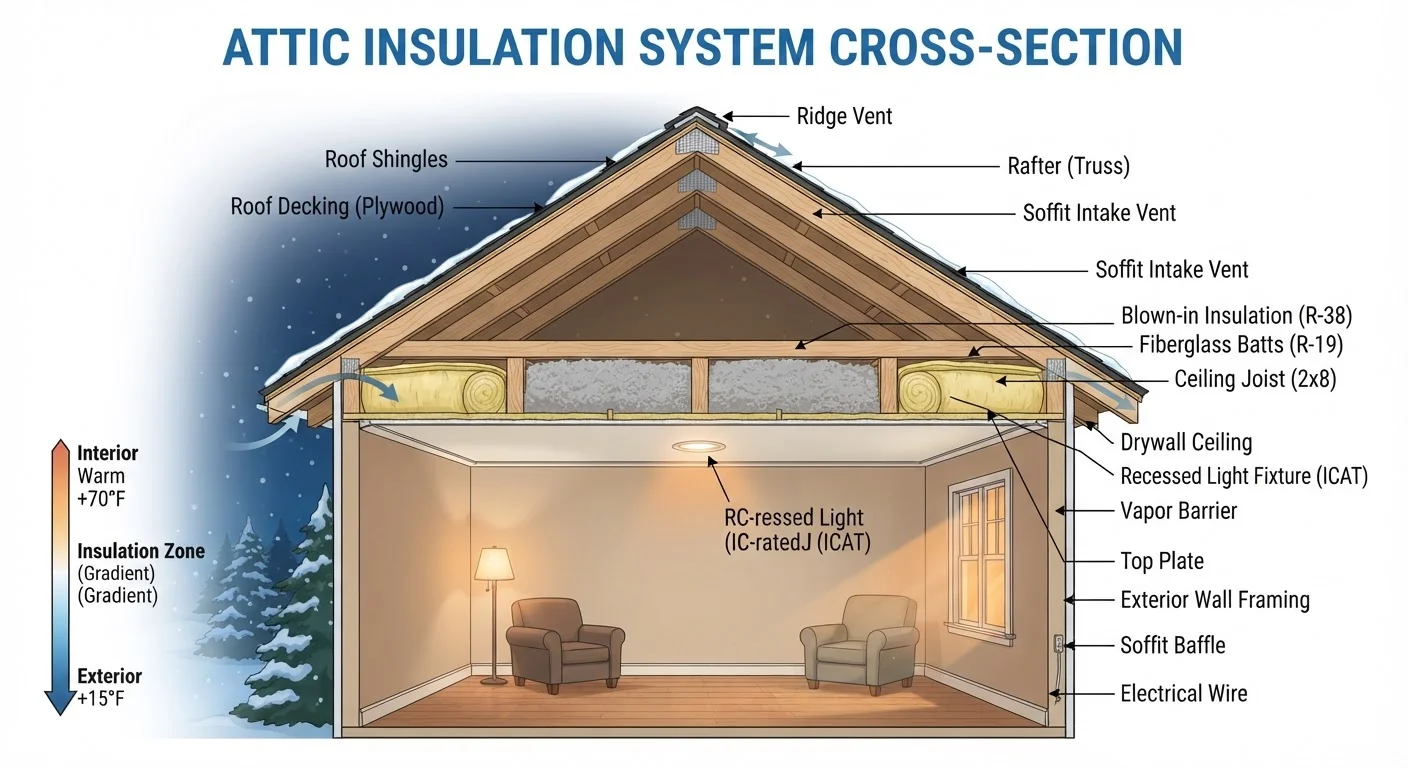
Photo: FaqsBay.com | Trending Blogs, Top Genres editorial
Key Takeaways
- More insulation is not always better — the right R-value for your climate zone matters most.
- Vapor barriers belong on the warm-in-winter side of a wall, not universally on the outside.
- Insulation slows heat transfer but does not eliminate it; air sealing is equally critical.
- Fiberglass batts installed with gaps or compression lose significantly more performance than most homeowners realize.
- Insulating only the attic while ignoring walls and crawl spaces leaves major energy losses unaddressed.
Why Insulation Myths Are So Persistent
Home insulation sits mostly out of sight — inside walls, above ceilings, beneath floors — which makes it easy for misconceptions to take root. Contractors repeat rules of thumb that once made sense; product marketing oversimplifies how materials behave; and well-meaning neighbors pass along advice that sounds reasonable but conflicts with modern building science.
The result is real money lost. The U.S. Department of Energy estimates that air leaks and insufficient insulation together account for a significant share of residential energy waste. Correcting the myths below is a practical first step toward a more efficient home — and it applies the same principle we explore in common lawn care myths: folklore rarely outperforms evidence-based practice.
Myth
More insulation is always better, so piling it on can only help.
Fact
Beyond a certain R-value threshold for your climate zone, additional insulation delivers diminishing returns and adds unnecessary cost.
Each additional inch of insulation provides less incremental benefit than the inch before it — a concept called diminishing returns. Going from R-13 to R-38 in an attic produces a dramatic efficiency gain; going from R-49 to R-60 in the same attic produces a much smaller one. The right target is the R-value recommended for your specific IECC climate zone, not simply the highest number available. Over-insulating can also create moisture management problems in some assemblies if it changes the dew-point location within the wall.
Myth
Vapor barriers always go on the outside of a wall assembly.
Fact
Vapor retarders belong on the warm-in-winter side — typically the interior in cold climates, and sometimes the exterior in hot-humid climates.
Vapor drives from warm, moist air toward cooler, drier air. In a cold climate, interior air is warmer and more humid in winter, so the vapor retarder goes on the interior face of the insulation to stop moisture from migrating into the cold wall cavity and condensing. In a hot-humid climate the logic can reverse. Installing a vapor barrier on the wrong side can trap moisture and accelerate mold and rot. The correct placement depends on your climate — consult the building code for your region or a building-science professional before adding or repositioning any vapor control layer.
Myth
Insulation keeps a house warm, so it works differently in summer than winter.
Fact
Insulation resists heat flow in both directions — it slows heat escaping in winter and slows heat entering in summer.
The physics are identical in both seasons: insulation resists the movement of heat from the warmer side to the cooler side. In winter, the interior is warmer, so insulation limits heat loss to the outside. In summer, the exterior is warmer, so the same insulation limits heat gain into the conditioned space. A well-insulated home benefits from lower heating costs in winter and reduced air conditioning loads in summer.
Myth
Fiberglass batts are all roughly the same — installation method doesn't matter much.
Fact
Gaps, compression, and voids in batt insulation can reduce effective R-value by 20–50%, making installation technique critical.
Building science research — including work published through programs like ASHRAE and the Building Science Corporation — consistently shows that poorly installed batts perform far below their label rating. Common installation errors include compressing batts into cavities shallower than the batt's designed depth, cutting batts too short and leaving voids at the top or bottom of a cavity, and failing to split batts around wiring or pipes. Each of these defects creates a path for heat to move through the insulation layer with minimal resistance. Properly fitted batts that fill the cavity fully and contact all six sides of the framing bay perform close to their rated value.
Myth
Once the attic is insulated, the rest of the house doesn't need much attention.
Fact
Attic insulation addresses only one of several significant heat-loss pathways; walls, floors, crawl spaces, and rim joists can account for comparable losses.
The attic is often the easiest and most cost-effective place to start — it's accessible, labor costs are lower, and heat rises — but it's rarely the end of the story. Uninsulated rim joists (the wood framing at the top of a foundation wall) can be a disproportionately large source of air leakage. Crawl space floors or walls, depending on whether the crawl space is vented or conditioned, represent another pathway. Walls in older homes built before insulation standards were common may have little or no cavity fill. A whole-house energy audit using a blower-door test can identify which areas offer the greatest remaining opportunity.
What Actually Determines Insulation Performance
Two factors overshadow all others: R-value installed correctly and air sealing done thoroughly. R-value measures resistance to heat flow — higher numbers mean greater resistance — but that number on the label assumes the material is installed without compression, gaps, or moisture exposure. A compressed fiberglass batt can lose 20–40% of its rated R-value depending on how severely it is squeezed.
20–40%
R-value lost from compressed fiberglass batts
Building science research indicates that batt insulation compressed even slightly below its designed thickness can lose a significant fraction of its rated thermal resistance.
~15%
Average home energy lost through the attic alone
The U.S. Department of Energy cites the attic as one of the largest single sources of residential heat loss, representing roughly 15% of total energy use in typical homes.
Air sealing deserves equal attention. Insulation slows conductive and radiative heat transfer, but it cannot stop air movement. If warm indoor air can bypass insulation through gaps around pipes, wiring, or recessed lights, the insulating layer is largely bypassed too. Caulk, spray foam, and weatherstripping address these pathways before or alongside insulation installation.
Air Sealing Must Come Before — or With — Insulation
Climate zone also shapes the right answer. The U.S. is divided into eight IECC climate zones, each with its own recommended minimum R-values for attics, walls, floors, and basements. An R-38 attic that is adequate in a mild zone may be well short of what a colder northern climate requires. Consult the Department of Energy's zone map or a qualified energy auditor to match recommendations to your specific location.
Just as myths about maintenance costs drivers real money — as covered in our car maintenance myths guide — insulation misconceptions carry a similar financial sting that accumulates month by month on your utility bill.
The content provided on our blog site traverses numerous categories, offering readers valuable and practical information. Readers can use the editorial team’s research and data to gain more insights into their topics of interest. However, they are requested not to treat the articles as conclusive. The website team cannot be held responsible for differences in data or inaccuracies found across other platforms. Please also note that the site might also miss out on various schemes and offers available that the readers may find more beneficial than the ones we cover.