
Saturated Fat vs. Unsaturated Fat: Why the Distinction Matters for Heart Health

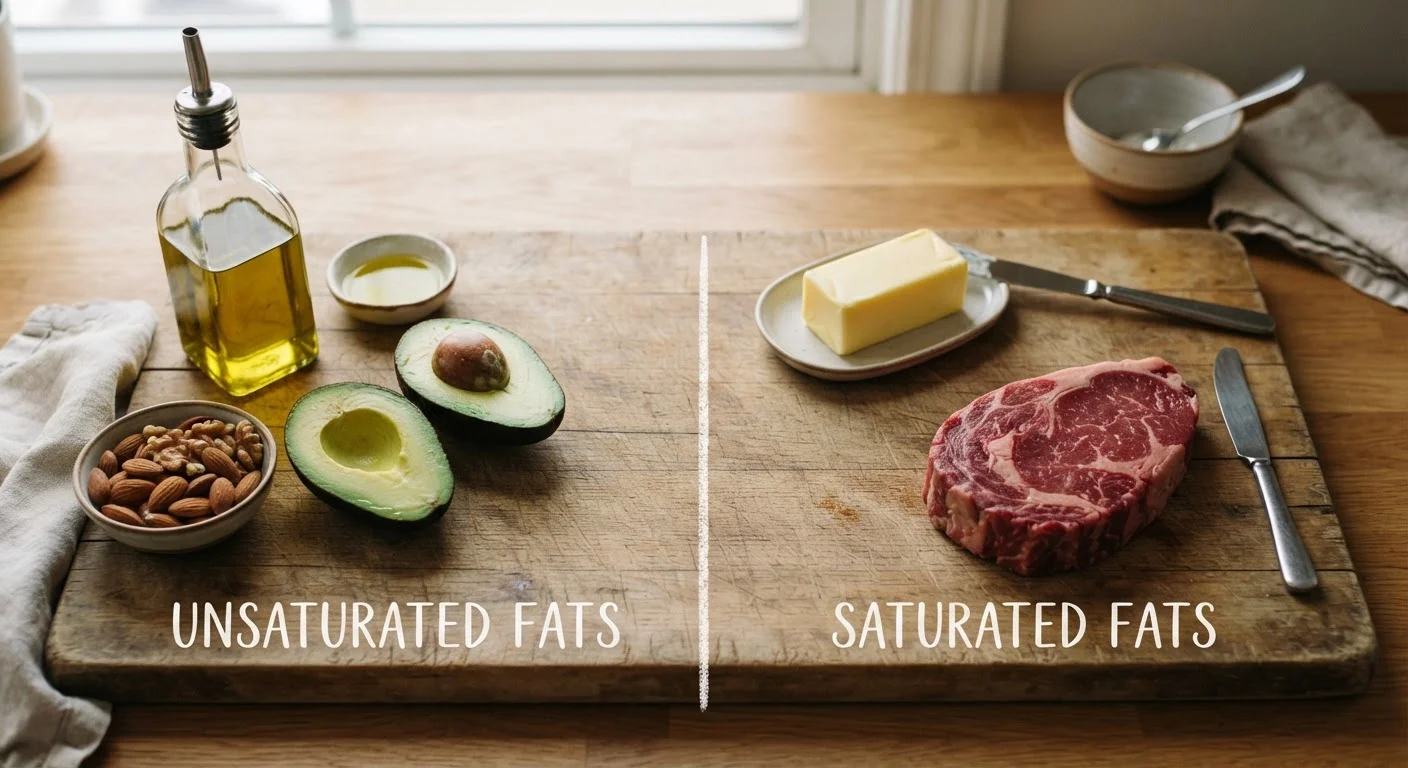
Photo: FaqsBay.com | Trending Blogs, Top Genres editorial
Key Takeaways
- Saturated fats raise LDL ("bad") cholesterol and are linked to increased cardiovascular disease risk when consumed in excess.
- Unsaturated fats — both mono- and polyunsaturated — are associated with improved cholesterol levels and reduced heart disease risk.
- Most saturated fat comes from animal products; most unsaturated fat comes from plant oils, nuts, seeds, and fatty fish.
- Replacing saturated fat with unsaturated fat, rather than refined carbohydrates, is where the evidence is strongest.
- Current US dietary guidelines recommend limiting saturated fat to less than 10% of daily calories.
- All dietary fats provide 9 calories per gram — type and overall diet pattern matter more than fat avoidance alone.
The Chemistry Behind the Difference
At the molecular level, the distinction between saturated and unsaturated fat comes down to carbon bonds. Saturated fats have no double bonds between carbon atoms — every carbon is "saturated" with hydrogen atoms. This structure makes them solid at room temperature (think butter or coconut oil). Unsaturated fats contain one or more double bonds, which introduces a kink in the molecular chain, keeping them liquid at room temperature (think olive oil or sunflower oil).
Unsaturated fats divide further into two main categories: monounsaturated fatty acids (MUFAs), which have one double bond, and polyunsaturated fatty acids (PUFAs), which have two or more. Omega-3 and omega-6 fatty acids — both essential, meaning the body cannot synthesize them — fall into the PUFA category.
| Criterion | Saturated Fat | Unsaturated Fat |
|---|---|---|
| Molecular structure | No double bonds; solid at room temp | One or more double bonds; liquid at room temp |
| Primary food sources | Red meat, butter, full-fat dairy, coconut oil | Olive oil, avocados, nuts, seeds, fatty fish |
| Effect on LDL cholesterol | Tends to raise LDL levels | Tends to lower or not raise LDL levels |
| Effect on HDL cholesterol | Modest raise in some studies | May raise HDL, especially MUFAs |
| Heart disease risk (excess intake) | Associated with increased risk | Associated with reduced risk |
| US dietary guidance | Limit to <10% of daily calories | Encouraged as replacement for saturated fat |
| Calories per gram | 9 kcal/g | 9 kcal/g |
What the Research Says About Heart Health
The cardiovascular case against excess saturated fat centers on its effect on LDL cholesterol. Multiple large reviews, including analyses published by the American Heart Association, have found that high saturated fat intake is associated with elevated LDL levels, which is an established risk factor for atherosclerosis and coronary heart disease.
Unsaturated fats tell a different story. Replacing saturated fat with MUFAs or PUFAs is associated with lower LDL cholesterol and, in some studies, higher HDL ("good") cholesterol. The PREDIMED trial, a large randomized study, found that a Mediterranean diet rich in olive oil and nuts was associated with significantly reduced rates of major cardiovascular events compared with a low-fat control diet.
One important nuance: the benefit of reducing saturated fat depends heavily on what replaces it. Swapping saturated fat for refined carbohydrates does not appear to deliver the same heart-health gains. The evidence is strongest for the direct swap to unsaturated fat sources. For a broader look at eating patterns that apply this principle, see our comparison of Mediterranean, Keto, and Plant-Based diets.
<10%
Recommended daily calories from saturated fat
Per the 2020–2025 US Dietary Guidelines for Americans, saturated fat should remain below 10% of total daily caloric intake.
~30%
Reduction in cardiovascular events (Mediterranean diet)
The PREDIMED trial found a roughly 30% relative reduction in major cardiovascular events in participants following a Mediterranean diet rich in olive oil or nuts versus a low-fat control diet.
2–3x
Omega-3 fatty fish servings per week (AHA guidance)
The American Heart Association recommends eating at least two servings of fatty fish per week as a practical way to increase heart-healthy omega-3 PUFA intake.
Common Food Sources and Practical Guidance
Saturated fat is found primarily in animal-derived foods — fatty cuts of meat, full-fat dairy products, butter, and ghee. Some plant-based oils, notably coconut oil and palm kernel oil, are also high in saturated fat despite their plant origin. Current US Dietary Guidelines for Americans suggest limiting saturated fat to fewer than 10% of total daily calories.
Unsaturated fat sources include:
- MUFAs: olive oil, avocados, most nuts (almonds, cashews, peanuts)
- PUFAs (omega-6): sunflower oil, safflower oil, walnuts
- PUFAs (omega-3): fatty fish (salmon, mackerel, sardines), flaxseed, chia seeds, walnuts
Practical shifts don't require overhauling your diet overnight. Cooking with olive oil instead of butter, snacking on a handful of nuts, adding avocado to meals, and including fatty fish a couple of times a week are incremental changes with meaningful cumulative effect.
When shopping, reading nutrition labels helps you track fat type, not just total fat. Our guide to reading nutrition labels breaks down exactly where saturated and unsaturated fat figures appear on packaging and what the daily value percentages mean in practice.
It's also worth noting that trans fats — artificially produced through partial hydrogenation — are a separate category that research links even more strongly to cardiovascular harm. The FDA has largely eliminated artificial trans fats from the US food supply, but it remains worth checking ingredient lists for "partially hydrogenated oils."
A Word on Coconut Oil and the Nuance of "Natural"
This article provides general nutrition information and education. It is not a substitute for personalized medical or dietary advice. Consult a registered dietitian or qualified healthcare professional before making significant changes to your diet, especially if you have a cardiovascular condition or other health concerns.
The content provided on our blog site traverses numerous categories, offering readers valuable and practical information. Readers can use the editorial team’s research and data to gain more insights into their topics of interest. However, they are requested not to treat the articles as conclusive. The website team cannot be held responsible for differences in data or inaccuracies found across other platforms. Please also note that the site might also miss out on various schemes and offers available that the readers may find more beneficial than the ones we cover.