Free vs. Paid Online Courses: When Spending More Actually Makes Sense

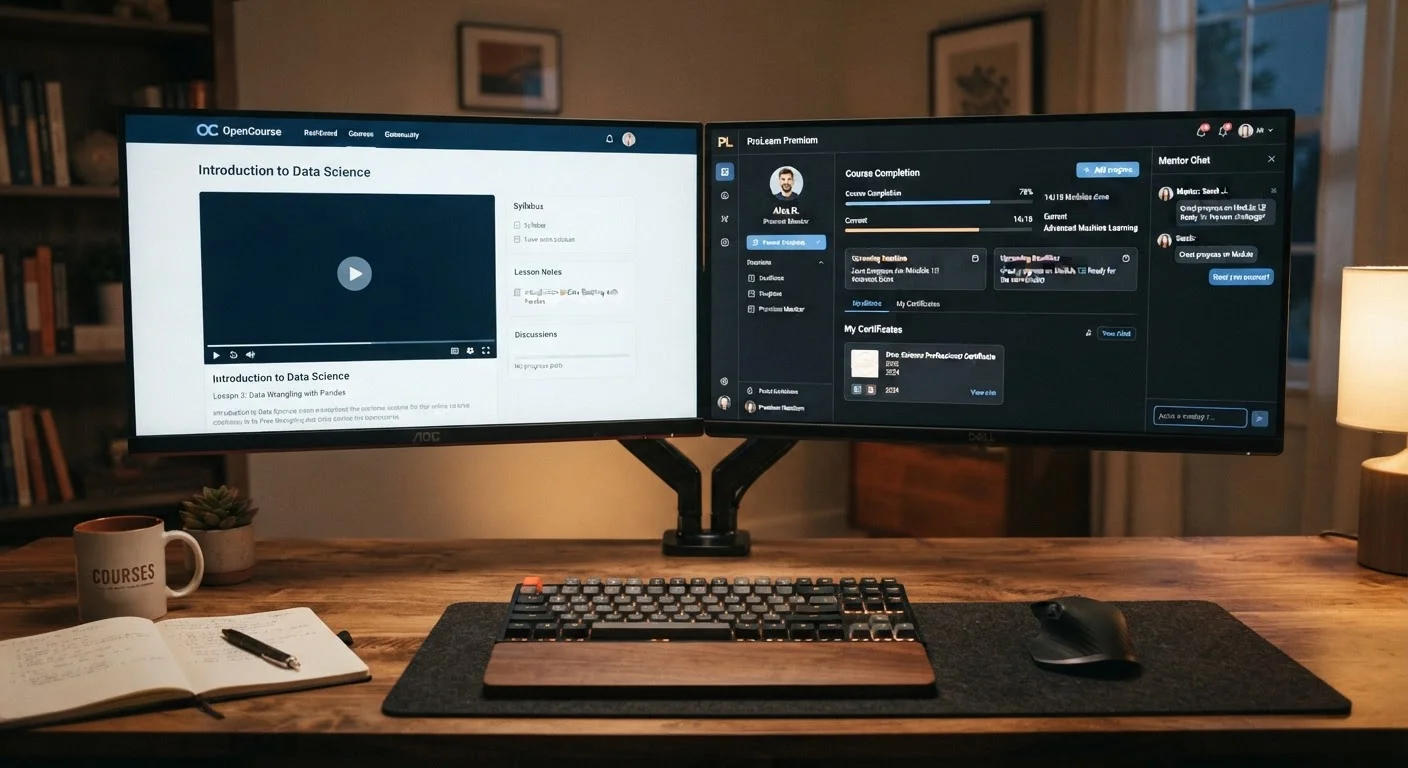
Photo: FaqsBay.com | Trending Blogs, Top Genres editorial
Key Takeaways
- Free courses work well for casual exploration, skill sampling, and self-motivated learners.
- Paid programs often provide structured curricula, instructor feedback, and verifiable credentials.
- The value of a paid course depends heavily on how it aligns with your specific career or learning goal.
- Completion rates tend to be higher in paid programs, partly due to financial commitment.
- Neither format is universally superior - the right choice depends on your goal, timeline, and budget.
Zero financial risk for exploration
Free courses let learners test a subject area before investing money, making them ideal for early-stage interest without commitment.
Wide access to reputable content
Many top universities and platforms publish free curricula that are substantively identical to paid versions, minus formal certification.
Maximum scheduling flexibility
Without enrollment windows or deadlines, free courses can be paused, revisited, or abandoned without penalty - useful for irregular schedules.
Stackable for self-directed learners
Motivated learners can combine multiple free courses to build a customized learning path that mirrors a structured paid program, at their own pace.
Low completion rates without accountability
Research on MOOC platforms has consistently shown completion rates below 15%, largely because free enrollment carries no financial or social accountability.
Limited or no instructor feedback
Free course formats rarely include personalized feedback, making it harder to identify knowledge gaps or correct errors in skill-based subjects.
Credentials often not employer-recognized
Audit or free-tier certificates from major platforms are frequently not verifiable in the same way paid certificates are, limiting their resume value.
Inconsistent content quality and currency
Free courses vary widely in production quality and may not be updated regularly, creating a risk of learning outdated methods or tools.
No structured learning sequence
Without a curated curriculum design, self-assembling a learning path from free resources demands significant time and subject-matter judgment.
What You're Actually Comparing
The phrase "free course" covers a wide spectrum - from a polished 40-hour curriculum on a major MOOC platform (Massive Open Online Course) to a disorganized YouTube playlist. Paid programs are equally varied, ranging from a $15 recorded lecture series to a $15,000 structured bootcamp with live mentorship and job placement support.
Before weighing cost, it helps to understand what you're actually shopping for. For a broader map of online learning formats, see The Online Education Landscape: MOOCs, Bootcamps, Degrees, and Certificates Compared.
The most useful comparison isn't free vs. paid - it's what each format delivers against what you specifically need. That framing shapes every trade-off that follows.
Zero financial risk for exploration
Free courses let learners test a subject area before investing money, making them ideal for early-stage interest without commitment.
Wide access to reputable content
Many top universities and platforms publish free curricula that are substantively identical to paid versions, minus formal certification.
Maximum scheduling flexibility
Without enrollment windows or deadlines, free courses can be paused, revisited, or abandoned without penalty - useful for irregular schedules.
Stackable for self-directed learners
Motivated learners can combine multiple free courses to build a customized learning path that mirrors a structured paid program, at their own pace.
The Real Advantages of Free Courses
Free courses have earned their place in mainstream education for good reasons. For learners testing interest in a new field before committing time or money, they provide genuine value at zero financial risk. Many reputable universities and platforms publish high-quality free content - some of it identical to paid versions minus the certificate.
Free formats also support self-paced learning well. There's no enrollment deadline pressure, and you can revisit material indefinitely. For a motivated learner with a clear study plan, that flexibility is a real asset rather than a limitation.
<15%
Typical MOOC course completion rate
Research published in peer-reviewed education journals has repeatedly found that completion rates on open online platforms average well below 15%, even for high-quality content.
~6x
Higher completion in paid vs. free tiers
Platform-level analyses suggest learners who pay for a certificate track on the same course complete at significantly higher rates than those auditing for free.
Where Paid Programs Justify Their Cost
The strongest argument for paying is structure. Paid programs typically offer a designed learning sequence, assignments with feedback, and defined milestones. That architecture matters more than many learners expect - studies on self-directed online learning consistently find that unstructured content leads to high dropout rates even among motivated students.
Credentials are a second major factor. A free course audit rarely produces a certificate an employer will recognize. A paid certificate from an accredited provider or respected industry platform may carry genuine weight. That said, credential value varies widely - it's worth researching how employers in your target field actually view a given certification before enrolling. Online Certificates vs. Degree Programs offers a useful breakdown of how credential types compare in practice.
Instructor access is a third differentiator. Paid tiers on many platforms unlock direct feedback, office hours, or cohort-based peer review - formats that help learners identify and fix gaps that video lectures alone can't surface.
Low completion rates without accountability
Research on MOOC platforms has consistently shown completion rates below 15%, largely because free enrollment carries no financial or social accountability.
Limited or no instructor feedback
Free course formats rarely include personalized feedback, making it harder to identify knowledge gaps or correct errors in skill-based subjects.
Credentials often not employer-recognized
Audit or free-tier certificates from major platforms are frequently not verifiable in the same way paid certificates are, limiting their resume value.
Inconsistent content quality and currency
Free courses vary widely in production quality and may not be updated regularly, creating a risk of learning outdated methods or tools.
No structured learning sequence
Without a curated curriculum design, self-assembling a learning path from free resources demands significant time and subject-matter judgment.
Hidden Costs Worth Considering on Both Sides
"Free" has real costs that don't appear on a price tag. Time spent navigating poorly organized content, restarting incomplete courses, or discovering that a free curriculum is outdated represents a genuine investment. Opportunity cost - time you could have spent on a faster, more structured path - is worth factoring in.
Paid programs carry their own underexamined costs: subscription fees that auto-renew, platform lock-in that makes credentials hard to verify outside the ecosystem, and the risk of enrolling in a paid course that is no better in quality than its free equivalent. The Hidden Costs of Upskilling Nobody Mentions covers several of these blind spots in detail.
Credential Verification Matters
One practical approach: use free content to validate genuine interest in a subject, then invest in a paid program once you've confirmed you'll follow through. That sequence reduces both financial risk and the likelihood of abandoning an expensive commitment early.
Making the Call for Your Situation
A few questions help sharpen the decision. First, does your goal require external validation - a credential for a job application, a portfolio piece, or a licensure requirement? If yes, verify whether a free path can realistically deliver that. Second, what is your track record with self-directed learning? Honest self-assessment here matters more than most people allow. Third, how does the course format fit your life? Synchronous vs. Asynchronous Online Courses is worth reading before committing to any program format.
Finally, evaluate the instructor regardless of price. Quality varies dramatically on both free and paid platforms - how to evaluate an online instructor before enrolling is a step too many learners skip.
The content provided on our blog site traverses numerous categories, offering readers valuable and practical information. Readers can use the editorial team’s research and data to gain more insights into their topics of interest. However, they are requested not to treat the articles as conclusive. The website team cannot be held responsible for differences in data or inaccuracies found across other platforms. Please also note that the site might also miss out on various schemes and offers available that the readers may find more beneficial than the ones we cover.