
Buying a Car at Auction: How the Process Works for Everyday Buyers

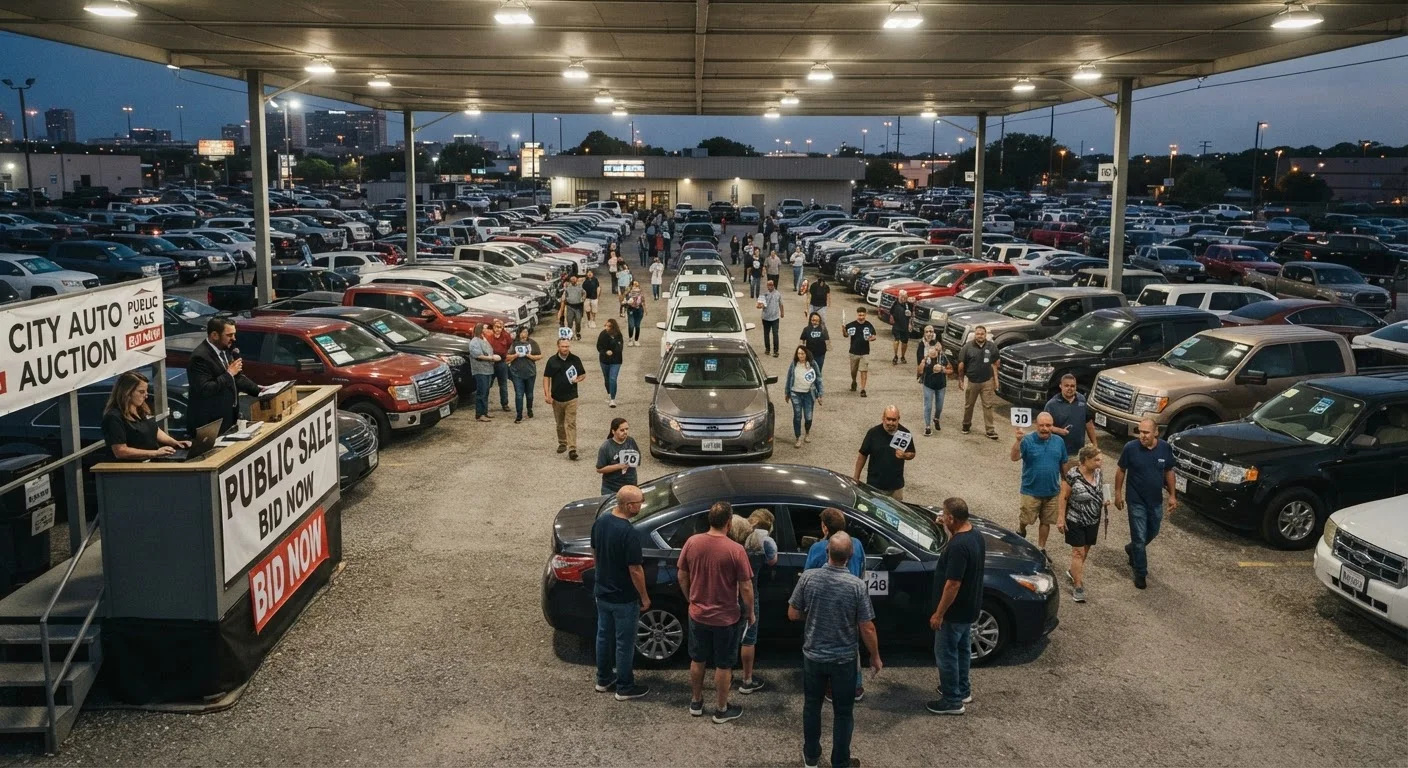
Photo: FaqsBay.com | Trending Blogs, Top Genres editorial
Key Takeaways
- Public auctions and dealer-only auctions operate under very different access rules for everyday buyers.
- Most auction vehicles are sold as-is, with little or no opportunity for a pre-purchase mechanical inspection.
- Buyer's premiums and administrative fees can add 5-15% or more on top of the hammer price.
- Researching a vehicle's history report and market value before bidding is essential, not optional.
- Financing must usually be arranged before the auction - payment windows are short.
- Winning a bid is a binding commitment; walking away after the hammer falls typically results in penalties.
Types of Car Auctions Open to the Public
Car auctions are not a single, uniform experience. Understanding which type you're entering shapes everything from who can participate to what protections - if any - you'll have as a buyer.
Government and municipal auctions liquidate vehicles from public fleets: police cars, utility trucks, and agency-owned passenger vehicles. These are typically open to anyone who registers, and they tend to offer clear ownership histories since fleet maintenance records are often available.
Charity and estate auctions vary widely in vehicle quality and transparency. Condition disclosures, if they exist at all, depend on the individual seller or auction organizer.
Dealer-only auctions - run by major wholesale networks - are closed to the general public. Only licensed dealers can buy and sell there. You may encounter dealers who purchase from these auctions and resell on their lots, which is a routine part of the used-car market.
Online public auction platforms have expanded access significantly, allowing individuals to bid on vehicles remotely. These platforms typically offer vehicle history reports and condition disclosures, though physical inspection opportunities are still limited.
Buyer's Premium
A fee charged by the auction house on top of the winning bid price, usually expressed as a percentage. It is paid by the buyer, not the seller.
Reserve Price
A minimum sale price set by the seller below which the auctioneer will not sell the vehicle, even if bidding occurs.
As-Is Sale
A sale in which the vehicle is sold in its current condition with no warranty or guarantee from the seller. All defects, known or unknown, become the buyer's responsibility.
VIN (Vehicle Identification Number)
A unique 17-character code assigned to every vehicle at manufacture, used to look up ownership history, accident reports, and title status.
Salvage Title
A designation given to a vehicle that an insurance company has declared a total loss, usually due to severe damage. Salvage-titled vehicles often face restrictions on registration and insurance.
Preview Period
A designated window of time before bidding starts when registered participants can physically inspect vehicles on the auction lot.
How the Bidding Process Actually Works
At a live auction, a licensed auctioneer controls the pace. Vehicles move through a lane - or across a digital display for online events - and bidding opens at a set starting price. The auctioneer calls out increments; participants signal bids by raising a paddle, nodding, or clicking a button online.
The hammer (or digital equivalent) falls when no higher bid is received. At that moment, the winning bid is a binding commitment. Some auctions use a reserve price - a minimum threshold the seller has set - meaning vehicles can pass through the lane unsold if bidding doesn't reach it. If no reserve exists, the vehicle sells to the highest bidder regardless of price.
Bidding moves quickly. A single vehicle can sell in under two minutes at a live event. First-timers often underestimate this pace, which is one reason preparation matters so much. See our comprehensive car purchase guide for broader context on how auctions fit into the full buying journey.
What You Can and Cannot Inspect Before Bidding
This is where auction buying differs most sharply from a traditional private sale or dealership purchase. Most auctions allow a preview period - typically a few hours before bidding begins - during which you can walk the lot and visually inspect vehicles. What you usually cannot do is take a car to an independent mechanic for a pre-purchase inspection, run the engine for an extended period, or conduct a test drive.
What you can often do includes checking for obvious body damage, rust, mismatched paint, or fluid leaks under the vehicle; reading any condition report the auction has prepared; and running a vehicle history report using the VIN (Vehicle Identification Number) if one is provided. History reports flag prior accidents, title issues, and reported odometer readings, but they don't reveal mechanical conditions that were never reported to insurers or authorities.
As-Is Means No Recourse After the Hammer Falls
If visible inspection is not possible - as with some online-only sales - rely heavily on condition reports, ask detailed questions of the auction staff, and factor potential repair costs into your maximum bid.
Fees, Payment, and Title Transfer
The price you bid is rarely the price you pay. Auctions charge a buyer's premium - a percentage added on top of the winning bid - that typically ranges from 5% to 15% or higher depending on the auction house and vehicle price. Administrative, documentation, and storage fees may also apply. Before bidding, obtain a complete fee schedule in writing so your true cost is clear.
Payment windows are short. Many auctions require full payment within 24 to 72 hours of winning. Accepted payment methods vary - cashier's checks, wire transfers, and sometimes debit cards are common; personal checks and credit cards are frequently not accepted. Arrange your financing in advance if you're not paying cash, and confirm your lender will approve an auction purchase.
Once payment clears, the auction house typically handles title transfer paperwork. Verify that the title is clean - free of liens, salvage designations, or other encumbrances - before bidding. A salvage or rebuilt title affects not only registration but also your ability to insure the vehicle; review how auto insurance works to understand the implications.
Bring Your Maximum Bid in Writing
Preparing Yourself Before Auction Day
Effective preparation is what separates buyers who find genuine value at auction from those who overpay or inherit expensive problems.
- Set a firm maximum bid. Calculate the vehicle's market value using publicly available pricing guides, subtract estimated repair costs, then subtract all fees. That number is your ceiling - not a suggestion.
- Research the VIN. If vehicle information is published in advance (many auctions list upcoming inventory online), run a history report before you arrive.
- Attend a preview. Arrive during the inspection window and spend time with the specific vehicles you're targeting. Look underneath, check panel gaps, inspect the interior, and note any warning lights visible in the instrument cluster.
- Understand the paperwork. Know what documents you need to bring - government-issued ID, proof of insurance, and payment method are common requirements.
- Consider attending once before bidding. Watching an auction without bidding gives you a feel for pace, terminology, and atmosphere without financial risk.
Auction buying rewards disciplined, informed buyers and tends to penalize impulsive ones. The same clear-headed approach that helps in dealership negotiations applies here - know your number, stick to it, and walk away when the price exceeds it.
Frequently Asked Questions
The content provided on our blog site traverses numerous categories, offering readers valuable and practical information. Readers can use the editorial team’s research and data to gain more insights into their topics of interest. However, they are requested not to treat the articles as conclusive. The website team cannot be held responsible for differences in data or inaccuracies found across other platforms. Please also note that the site might also miss out on various schemes and offers available that the readers may find more beneficial than the ones we cover.