
Carry-On Only: What It Really Takes to Pack Light for Any Trip

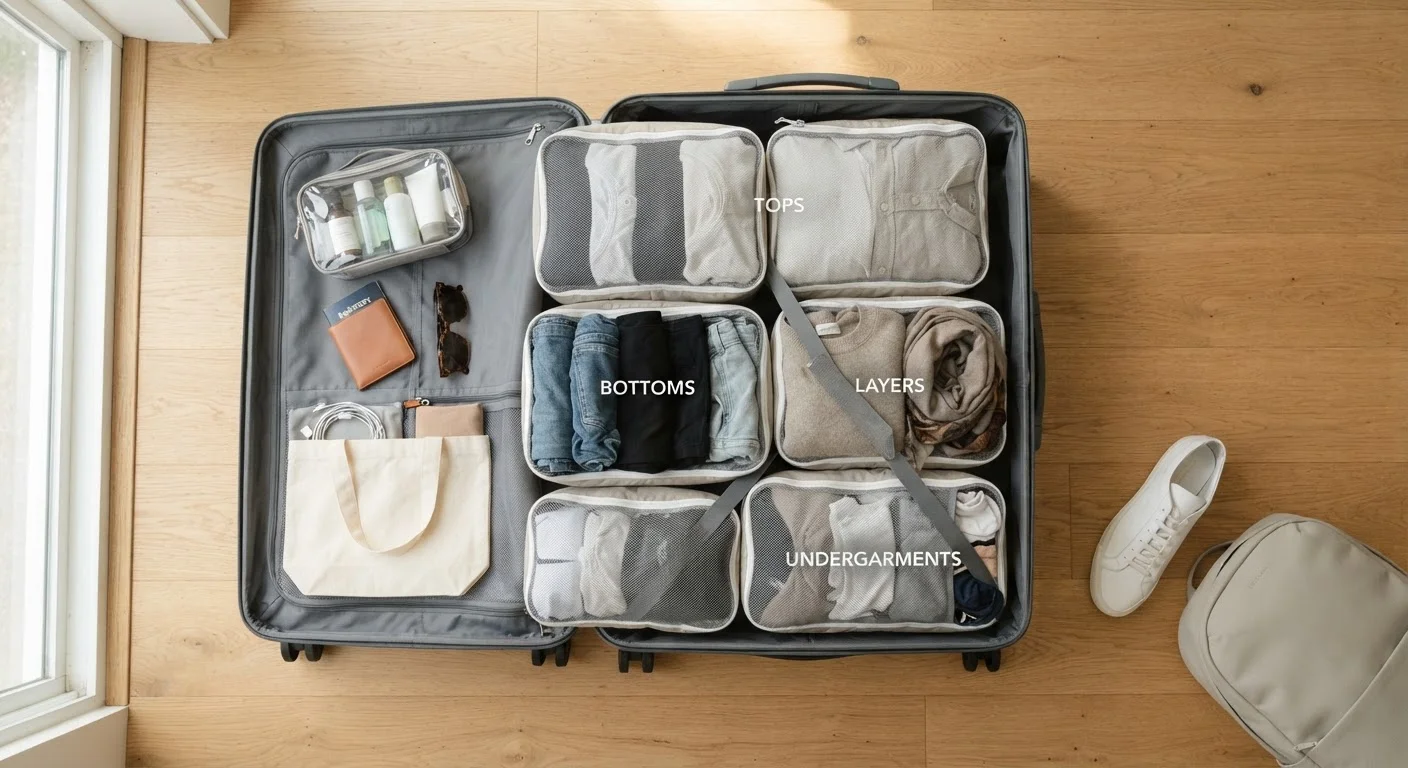
Photo: FaqsBay.com | Trending Blogs, Top Genres editorial
Key Takeaways
- Airline carry-on size limits vary — always verify before you pack.
- A versatile, neutral wardrobe drastically reduces what you need to bring.
- Packing cubes and layering techniques maximize limited space efficiently.
- Toiletries and liquids require TSA-compliant containers under 3.4 oz each.
- Planning your outfits by day prevents overpacking and duplicate items.
Why Carry-On Only Changes the Trip — Not Just the Packing
Checking a bag adds time, cost, and uncertainty to every journey. Baggage fees can meaningfully affect your travel budget — money that could go toward experiences instead. Our guide on building a complete travel budget covers exactly how these small costs accumulate into big gaps. Beyond the financial side, skipping checked luggage means walking off the plane and straight to wherever you're going — no carousel waiting, no lost-bag anxiety, no logistical bottleneck if a connection is tight.
The psychological shift matters too. Traveling with less forces intentionality: you choose what actually serves the trip rather than packing for every theoretical scenario. Most seasoned travelers will tell you that they've never once regretted packing light — and frequently regretted packing heavy.
Wear Your Bulkiest Items on Travel Day
What You Need Before You Start
Successful carry-on packing starts well before you open your suitcase. You need a clear picture of where you're going, what you'll be doing each day, and what your airline actually allows. Skip any of those inputs and you'll either overpack out of anxiety or arrive underprepared.
What you will need
Packing Cubes
Compress and organize clothing into compartments, making the most of every cubic inch.
TSA-Compliant Quart-Sized Bag
Required for carrying liquids and gels through airport security checkpoints.
Lightweight Compression Stuff Sack
Squeezes bulky items like a jacket or sweater into a fraction of their normal volume.
Travel-Sized Toiletry Containers
Transfer your preferred products into 3.4 oz or smaller containers for TSA compliance.
Wrinkle-Releasing Spray
Refreshes clothes that have been compressed in a bag, reducing the need for ironing.
Once you have those basics in place, the step-by-step process below will walk you through exactly how to go from a blank bag to a perfectly packed carry-on.
Gate-Checking Is Not a Guarantee
Step-by-Step: How to Pack a Carry-On for Any Trip
Follow these steps in order — each one builds on the last. Skipping ahead (especially the outfit-planning step) is the most common reason travelers end up overpacking even when they intend to go light.
Confirm your airline's carry-on rules
Before a single item goes into your bag, look up the exact carry-on dimensions and weight limit for every airline on your itinerary — not just the primary carrier. Budget carriers especially tend to enforce stricter size limits and may charge fees for oversized bags at the gate. Note both linear inches and individual dimensions (height × width × depth), and check whether a personal item is included in your fare.
Build a day-by-day outfit plan
Write out each day of your trip and assign one outfit per day. Identify which pieces can do double duty — a linen button-down that works at dinner and on a morning hike, or a versatile dress that transitions from sightseeing to a restaurant. Aim for a neutral color palette (navy, white, grey, olive) so everything mixes and matches naturally. This step alone eliminates the majority of overpacking. Our guide on cutting your packing list down to size goes deeper on the habits that add unnecessary bulk.
Choose the right fabrics
Fabric choice determines how much space your clothes take up and how usable they remain after hours in a compressed bag. Opt for materials that are lightweight, quick-drying, and resist wrinkles — merino wool, modal, and performance blends are especially useful for longer trips. Avoid bulky denim, thick cotton hoodies, and structured blazers unless one serves as a true outfit anchor worn on the plane.
Pack using the bundle or cube method
Use packing cubes to separate categories (tops, bottoms, underwear) and compress each cube before placing it in your bag. Alternatively, the bundle method — wrapping garments around a core item like a toiletry bag — reduces wrinkles and uses space efficiently. Either approach beats the unstructured fold-and-stuff method that leaves dead space and creased clothes. Pack heaviest items closest to the bag's wheels or back panel to keep weight centered.
Handle toiletries and liquids correctly
All liquids, gels, aerosols, and creams must be in containers of 3.4 oz (100 ml) or less and fit in a single quart-sized clear bag per TSA rules. Transfer your preferred products into reusable travel containers rather than buying travel-sized versions every trip — it's less wasteful and cheaper over time. Solid alternatives (shampoo bars, solid sunscreen, deodorant sticks) completely sidestep the liquid rule and free up space in your quart bag for items that truly need it. If you travel with medications, see our detailed guide on traveling with prescriptions for documentation and storage guidance.
Maximize your personal item
Your personal item — typically a backpack or tote — is just as valuable as your carry-on. Use it strategically for the items you'll want during the flight (laptop, headphones, snacks, passport) and for overflow from your main bag. A structured daypack that holds 20–25 liters typically qualifies as a personal item on most major carriers and doubles as your on-the-ground exploration bag, eliminating the need to carry your full suitcase to day activities.
Do a test pack — then edit
At least 48 hours before departure, pack everything into your bag and actually zip it closed. If it doesn't close comfortably, remove items rather than forcing it — overstuffed bags can exceed weight limits even if they fit the size gauge. Lay out everything you removed and ask: will I genuinely use this at least twice? If not, leave it. A trial pack also reveals what's missing, giving you time to grab anything essential without a last-minute rush.
Always Verify Entry and Customs Rules
Once your bag is packed and tested, you're in a strong position to focus on the trip itself. Pairing smart packing with a well-structured itinerary makes a significant difference — see our guide on building a trip itinerary that won't exhaust you for how to structure your days without overdoing it.
The content provided on our blog site traverses numerous categories, offering readers valuable and practical information. Readers can use the editorial team’s research and data to gain more insights into their topics of interest. However, they are requested not to treat the articles as conclusive. The website team cannot be held responsible for differences in data or inaccuracies found across other platforms. Please also note that the site might also miss out on various schemes and offers available that the readers may find more beneficial than the ones we cover.