
Time Zones, Layovers, and Connection Windows: Reading an International Itinerary

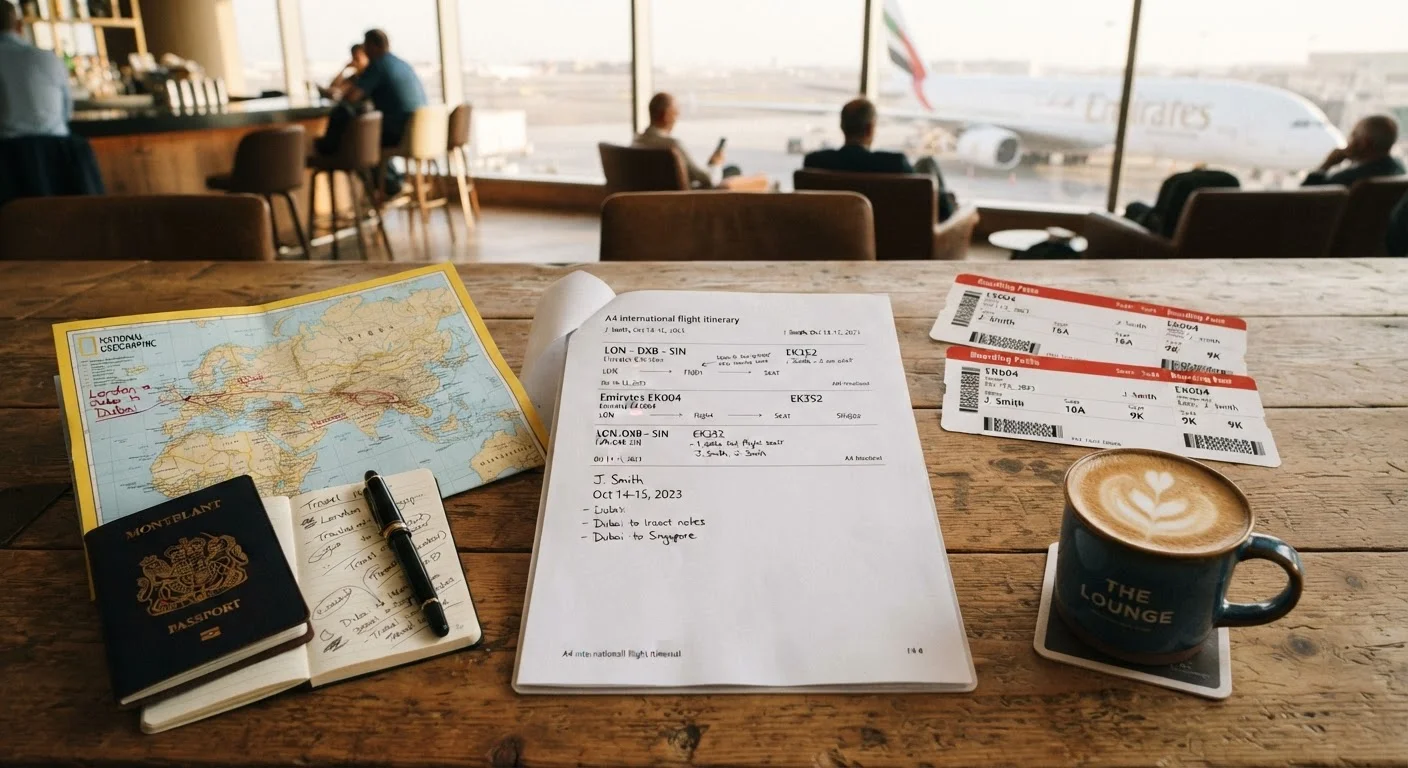
Photo: FaqsBay.com | Trending Blogs, Top Genres editorial
What All Those Times Actually Mean
Your booking confirmation lists departure and arrival times — but the details buried in those numbers trip up even seasoned travelers. Every time shown on an international itinerary is local to the airport listed. A flight departing Chicago O'Hare at 9:00 PM and arriving in London Heathrow at 11:00 AM the next day is not a 14-hour flight — it reflects the 6-hour time difference between Central Time and GMT. The actual flight duration will be noted separately, often in smaller print.
The +1 or +2 notation after an arrival time signals that you land a day (or two) after departure in calendar terms. This is standard on transpacific routes. Conversely, some westbound flights can technically land earlier on the clock than they departed — not time travel, just crossing time zones in the opposite direction.
Always check your itinerary for the IATA three-letter airport codes. Several major cities have multiple airports (London has five; Tokyo has two), and booking a departure from one and a return to another is an easy, expensive mistake. See our pre-booking checklist for a full scan of items to verify before confirming any reservation.
Connection Windows: How Much Time Is Really Enough?
A layover and a connection window are related but different things. The layover is the total time between your arriving flight and your departing flight. The connection window is the usable portion of that layover — accounting for deplaning, walking (sometimes a long way), clearing any transit security or immigration, and reaching the gate.
Airlines publish a Minimum Connection Time (MCT) for each airport — the shortest interval at which they'll book a legal connection. But legal doesn't always mean comfortable. MCTs for large hub airports with separate terminals can run 45–60 minutes, yet travelers regularly miss connections booked at exactly the MCT because of a delayed inbound flight or a gate change.
General guidance that many frequent travelers use:
- Domestic-to-international or international-to-international connections: Budget at least 90 minutes, ideally 2 hours, at familiar hubs.
- Connections requiring terminal changes or separate ticketing: 2.5–3 hours minimum.
- US Customs and Border Protection re-entry connections (e.g., returning through a preclearance hub): Allow 2–3 hours — CBP processing is unpredictable.
If your flights are on separate tickets rather than one itinerary, missed connections are entirely your financial responsibility. The airline for your second flight has no obligation to rebook you if your first flight runs late. This is a critical distinction when mixing budget carriers or using third-party booking platforms. For a broader look at how route structure affects planning, see our guide on long-haul vs. short-haul international routes.
Separate Tickets = Separate Risk
Reading the Fine Print: Codes, Dates, and Key Disclosures
International itineraries are dense with shorthand. Here's what to look for beyond the flight times:
- Operated by / marketed by
- A flight with one airline's code may be physically operated by a partner carrier. Your seats, baggage allowance, and service standards may differ from what you expect. Check the operating carrier before assuming any perks apply.
- Fare class and ticket rules
- A single letter code (like Y, B, or Q) indicates your fare class, which governs change fees, upgrade eligibility, and refund rules. Even within the same cabin, fares differ widely.
- Baggage allowances
- International routes often include one checked bag — but this can vary by carrier, route, and fare class. Verify for each flight segment separately; partner airlines may have different rules for the connecting leg.
Finally, confirm your passport validity requirements before you book. Many countries require six months of validity beyond your travel dates. Skipping this check is one of the most common and avoidable entry errors US travelers make — our companion article on passport, visa, and entry rules covers this in full. And before you head to the airport, run through the pre-departure checklist every US traveler should use to make sure nothing critical is overlooked.
Minimum Connection Time (MCT)
The shortest connection interval an airline will book at a given airport. It is a floor, not a recommendation — tight MCTs carry real risk if your inbound flight is delayed.
Codeshare flight
A flight marketed under one airline's code but physically operated by a different carrier. Baggage allowances, seat configurations, and onboard service may differ from the marketing airline's standards.
Separate ticketing
Booking two or more flights on different reservations rather than one itinerary. If you miss a connection, airlines have no obligation to rebook you onto a flight booked separately.
Layover vs. stopover
A layover is a connection under 24 hours at an intermediate airport. A stopover is an intentional stay of 24 hours or more, and may trigger additional visa or entry requirements.
Fare class
A single-letter code identifying the specific fare within a cabin. Fare class determines change fees, refund eligibility, upgrade priority, and mileage accrual — two passengers in the same cabin may have very different rules.
IATA airport code
The three-letter code assigned to every commercial airport by the International Air Transport Association. Always verify the code on your ticket matches your intended airport — cities like London and Tokyo have multiple options.
The content provided on our blog site traverses numerous categories, offering readers valuable and practical information. Readers can use the editorial team’s research and data to gain more insights into their topics of interest. However, they are requested not to treat the articles as conclusive. The website team cannot be held responsible for differences in data or inaccuracies found across other platforms. Please also note that the site might also miss out on various schemes and offers available that the readers may find more beneficial than the ones we cover.