
Crate Training: What It Offers and Where It Falls Short

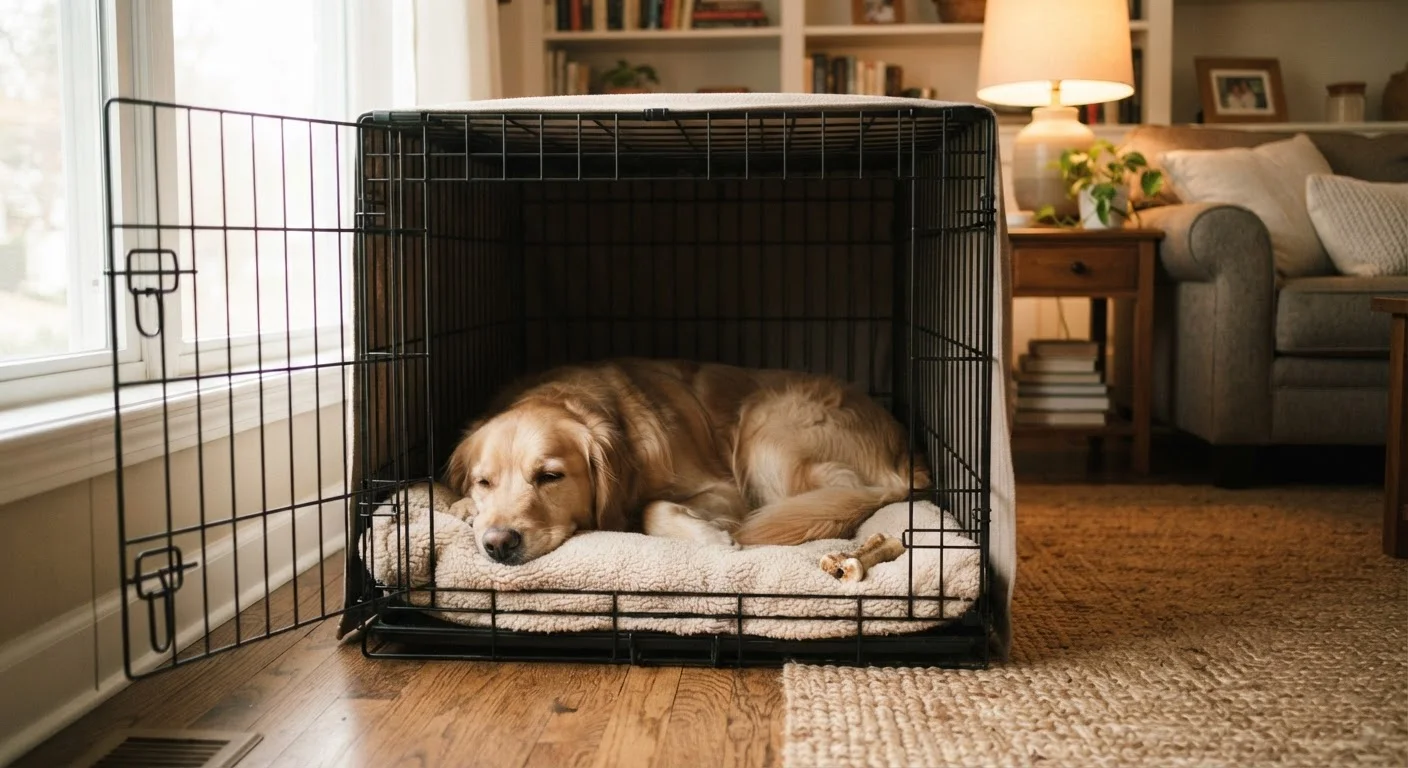
Photo: FaqsBay.com | Trending Blogs, Top Genres editorial
Key Takeaways
- Crate training works best when introduced gradually using positive reinforcement, never as punishment.
- Dogs are naturally inclined toward den-like spaces, which can make crates genuinely comfortable when used correctly.
- Leaving a dog crated for excessive hours causes stress and is not appropriate for most adult dogs.
- Puppies, anxious dogs, and dogs recovering from illness or surgery often benefit most from crate training.
- Crate training is one tool among many — it doesn't replace exercise, socialization, or behavioral training.
Accelerates house-training in puppies
Dogs naturally avoid soiling their sleeping areas. A properly sized crate leverages this instinct, helping puppies develop bladder control and establish a toileting routine more quickly.
Provides a safe space during stress or recovery
Dogs recovering from surgery, illness, or injury often need restricted movement. A familiar crate gives them a calm, contained environment that supports healing and reduces the risk of reinjury.
Supports safe vehicle and air travel
A crate-trained dog is significantly easier and safer to transport. Many airlines require crate travel, and in vehicles, a secured crate reduces injury risk in the event of an accident.
Helps manage dogs in multi-pet households
A crate offers a reliable separation tool when introducing new pets or managing resource guarding, giving each animal a protected space to decompress without conflict.
Can reduce anxiety by offering predictability
Some dogs find genuine comfort in a defined, enclosed space — particularly those who are noise-sensitive or overwhelmed by household activity. The crate can become a self-selected retreat.
Extended confinement causes physical and psychological harm
Adult dogs should not be crated for more than four to five hours at a stretch during the day. Prolonged confinement restricts movement, delays toilet needs beyond comfortable limits, and can lead to anxiety, depression, and destructive behavior.
Ineffective and harmful when used as punishment
Sending a dog to the crate as discipline erodes any positive association the dog has built with the space. It teaches fear and avoidance rather than the desired behavior.
Not appropriate for all dogs
Dogs with claustrophobia, a history of trauma, or severe separation anxiety may experience the crate as threatening rather than safe. For these dogs, forced crating can worsen the very problems it's meant to address.
Can mask behavioral issues rather than resolve them
A dog that is consistently crated to prevent destructive behavior may never learn the self-regulation skills needed to be trusted loose in the home. The crate manages the symptom without addressing the cause.
Requires significant time investment upfront
A proper introduction — building positive associations, increasing duration gradually over days or weeks — demands consistency and patience that not every owner is prepared for.
What Crate Training Actually Is
Crate training is the process of teaching a dog to view a crate — wire, plastic, or soft-sided — as a safe, comfortable space rather than a place of confinement. Done correctly, it relies entirely on positive reinforcement: the dog is gradually introduced to the crate with treats, meals, and praise until it associates the space with good things.
This approach is grounded in canine behavioral science. Dogs have an instinct to seek out enclosed, den-like spaces for rest and security, which is why many take to a well-introduced crate readily. What matters most is the introduction method. Forcing a dog into a crate, locking it inside without preparation, or using the crate as discipline fundamentally undermines that process and can cause lasting negative associations. For a broader look at how positive methods shape training outcomes, see our guide on force-free vs. balanced training.
The Genuine Benefits of Crate Training
Crate training offers concrete advantages in specific contexts — particularly for puppies and dogs in transition.
Accelerates house-training in puppies
Dogs naturally avoid soiling their sleeping areas. A properly sized crate leverages this instinct, helping puppies develop bladder control and establish a toileting routine more quickly.
Provides a safe space during stress or recovery
Dogs recovering from surgery, illness, or injury often need restricted movement. A familiar crate gives them a calm, contained environment that supports healing and reduces the risk of reinjury.
Supports safe vehicle and air travel
A crate-trained dog is significantly easier and safer to transport. Many airlines require crate travel, and in vehicles, a secured crate reduces injury risk in the event of an accident.
Helps manage dogs in multi-pet households
A crate offers a reliable separation tool when introducing new pets or managing resource guarding, giving each animal a protected space to decompress without conflict.
Can reduce anxiety by offering predictability
Some dogs find genuine comfort in a defined, enclosed space — particularly those who are noise-sensitive or overwhelmed by household activity. The crate can become a self-selected retreat.
4–5 hrs
Maximum recommended daytime crating for adult dogs
Most veterinary and behaviorist guidance suggests adult dogs should not be confined to a crate for more than four to five consecutive hours during the day.
~20%
Estimated prevalence of separation anxiety in dogs
Research published in behavioral veterinary literature suggests separation-related behavior problems affect a substantial proportion of the domestic dog population, underscoring the need for careful crate use.
For owners starting from scratch, crate training pairs well with other foundational methods. The new owner training guide covers how crate work fits into a broader early training plan.
Where Crate Training Falls Short
Despite its benefits, crate training is frequently misapplied — and those misapplications cause real harm to dogs' wellbeing.
Extended confinement causes physical and psychological harm
Adult dogs should not be crated for more than four to five hours at a stretch during the day. Prolonged confinement restricts movement, delays toilet needs beyond comfortable limits, and can lead to anxiety, depression, and destructive behavior.
Ineffective and harmful when used as punishment
Sending a dog to the crate as discipline erodes any positive association the dog has built with the space. It teaches fear and avoidance rather than the desired behavior.
Not appropriate for all dogs
Dogs with claustrophobia, a history of trauma, or severe separation anxiety may experience the crate as threatening rather than safe. For these dogs, forced crating can worsen the very problems it's meant to address.
Can mask behavioral issues rather than resolve them
A dog that is consistently crated to prevent destructive behavior may never learn the self-regulation skills needed to be trusted loose in the home. The crate manages the symptom without addressing the cause.
Requires significant time investment upfront
A proper introduction — building positive associations, increasing duration gradually over days or weeks — demands consistency and patience that not every owner is prepared for.
Crate Size Matters More Than You Might Think
It's also worth noting that crate training is not a substitute for behavioral work. A dog with true separation anxiety, for instance, may require a structured desensitization program guided by a veterinary behaviorist — not simply more time in a crate. Consistency in the broader training environment matters enormously; building a training routine that actually sticks can help owners understand how all the pieces fit together.
Using the Crate as Part of a Larger Plan
The most effective use of a crate is as one component of a thoughtfully constructed training and management approach — not the whole strategy. Dogs still need adequate daily exercise, social interaction, mental stimulation, and clear behavioral guidance regardless of whether a crate is in use.
Reward-based training methods, including clicker and verbal cue training, complement crate work well because they reinforce calm, voluntary behavior rather than compliance through restriction. When owners pair crate training with consistent positive reinforcement throughout the day, dogs tend to generalize that sense of security beyond the crate itself.
This article is for general informational purposes only. For behavioral concerns, anxiety, or health-related reasons for crating, consult a licensed veterinarian or a certified animal behaviorist.
The content provided on our blog site traverses numerous categories, offering readers valuable and practical information. Readers can use the editorial team’s research and data to gain more insights into their topics of interest. However, they are requested not to treat the articles as conclusive. The website team cannot be held responsible for differences in data or inaccuracies found across other platforms. Please also note that the site might also miss out on various schemes and offers available that the readers may find more beneficial than the ones we cover.