
The Debt Avalanche and Debt Snowball, Explained

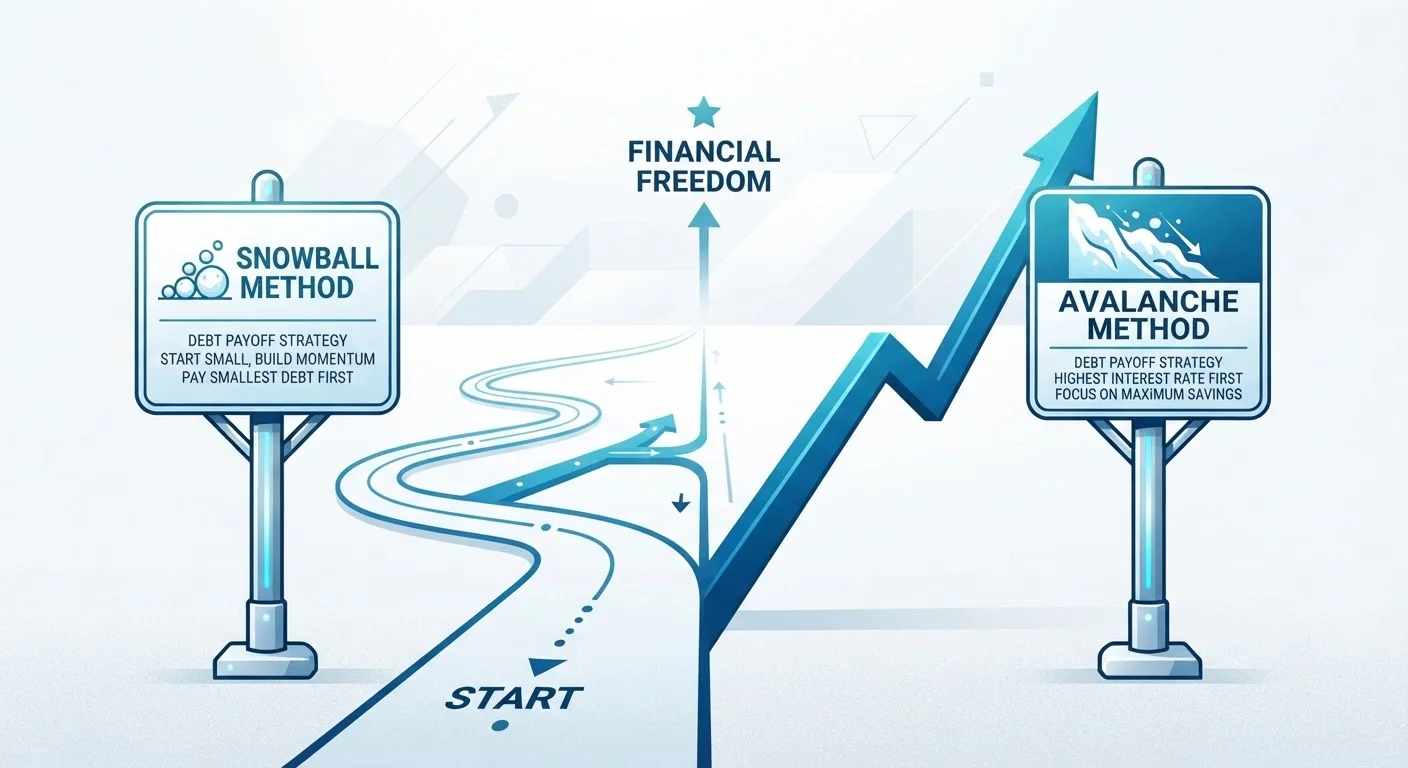
Photo: FaqsBay.com | Trending Blogs, Top Genres editorial
Key Takeaways
- The debt avalanche targets the highest-interest debt first, minimizing total interest paid.
- The debt snowball eliminates the smallest balances first, generating motivational momentum.
- Both methods require making minimum payments on all debts except the one being targeted.
- Research suggests the snowball method may help some people stay consistent due to quick early wins.
- Neither strategy is universally superior — the right choice depends on your personality and financial situation.
- Consulting a licensed financial professional can help you choose the approach that fits your circumstances.
How Each Strategy Works
Both the debt avalanche and the debt snowball share a common structure: each month, you make the minimum required payment on every debt you carry, then direct any remaining available funds toward one specific target debt. The strategies differ only in which debt gets that extra payment.
Debt Avalanche: You rank your debts from highest interest rate to lowest. The debt with the highest rate receives all extra payments until it is gone. Then you roll those freed-up funds into the debt with the next-highest rate — and so on down the list.
Debt Snowball: You rank your debts from smallest balance to largest, regardless of interest rate. You eliminate the smallest balance first, then apply those freed-up funds to the next-smallest — building a larger and larger payment "snowball" as you go.
| Criterion | Debt Avalanche | Debt Snowball |
|---|---|---|
| Payoff order | Highest interest rate first | Smallest balance first |
| Total interest paid | Generally lower | Generally higher |
| Time to first paid-off debt | Varies; can take longer | Faster initial wins |
| Motivational approach | Numbers-driven | Milestone-driven |
| Best for | Disciplined, math-focused borrowers | Borrowers needing quick momentum |
| Complexity | Requires tracking interest rates | Simple balance ranking |
Both methods benefit from a solid budgeting foundation. If you haven't mapped out your income and expenses yet, our guide on every major budgeting method explained side by side can help you identify how much extra you can realistically direct toward debt each month.
The Math and the Psychology
From a purely mathematical standpoint, the avalanche method wins. Paying down high-interest debt first reduces the rate at which interest accrues across your entire portfolio. Depending on your balances and rates, this can save hundreds or even thousands of dollars compared with the snowball method — though the exact amount varies widely by individual situation.
~$1,000+
Potential interest savings with avalanche vs. snowball
The exact savings depend on individual balances, rates, and extra payment amounts — illustrative estimates vary widely across consumer finance scenarios.
80%
Of people who start a debt payoff plan abandon it
Behavioral finance research consistently finds that consistency — not method optimization — is the single greatest predictor of debt payoff success.
The snowball's advantage is behavioral. Research in consumer behavior — including studies cited by academic journals such as the Journal of Marketing Research — suggests that people are more likely to persist with a debt repayment plan when they experience early, concrete progress. Closing out an account entirely, even a small one, signals genuine forward movement in a way that watching a large balance slowly decrease does not.
This is not a trivial consideration. A mathematically optimal plan you abandon after three months produces worse outcomes than a slightly less efficient plan you follow for three years. For more on the emotional dimensions of carrying debt, see why debt feels overwhelming and what helps.
The honest answer is that the best strategy is the one you will actually stick to — and only you can assess that about yourself.
Applying These Strategies to Different Debt Types
Both methods work across most consumer debt categories: credit cards, personal loans, auto loans, and medical debt. The calculation mechanics are identical regardless of debt type.
Student loans add some nuance. Federal student loans carry specific repayment plans, income-driven options, and potential forgiveness programs that may make a simple avalanche or snowball approach less straightforward. Our article on tackling student loan debt unpacks those considerations in detail.
If the volume of your debts feels unmanageable, you might also consider whether consolidation makes sense before choosing a payoff sequence. Debt consolidation can simplify repayment but comes with its own trade-offs — it is not a substitute for a payoff strategy.
For readers dealing with accounts in collections or struggling to meet minimums, negotiating directly with creditors may open doors that either method alone cannot. These approaches can be combined: negotiate better terms first, then apply avalanche or snowball logic to what remains.
Both Methods Assume Extra Payment Capacity
This article is for general informational and educational purposes only and does not constitute personalized financial or legal advice. Consult a licensed financial professional before making decisions specific to your situation.
The content provided on our blog site traverses numerous categories, offering readers valuable and practical information. Readers can use the editorial team’s research and data to gain more insights into their topics of interest. However, they are requested not to treat the articles as conclusive. The website team cannot be held responsible for differences in data or inaccuracies found across other platforms. Please also note that the site might also miss out on various schemes and offers available that the readers may find more beneficial than the ones we cover.