
Insulation R-Value Explained: What the Number Actually Measures and Why It Matters

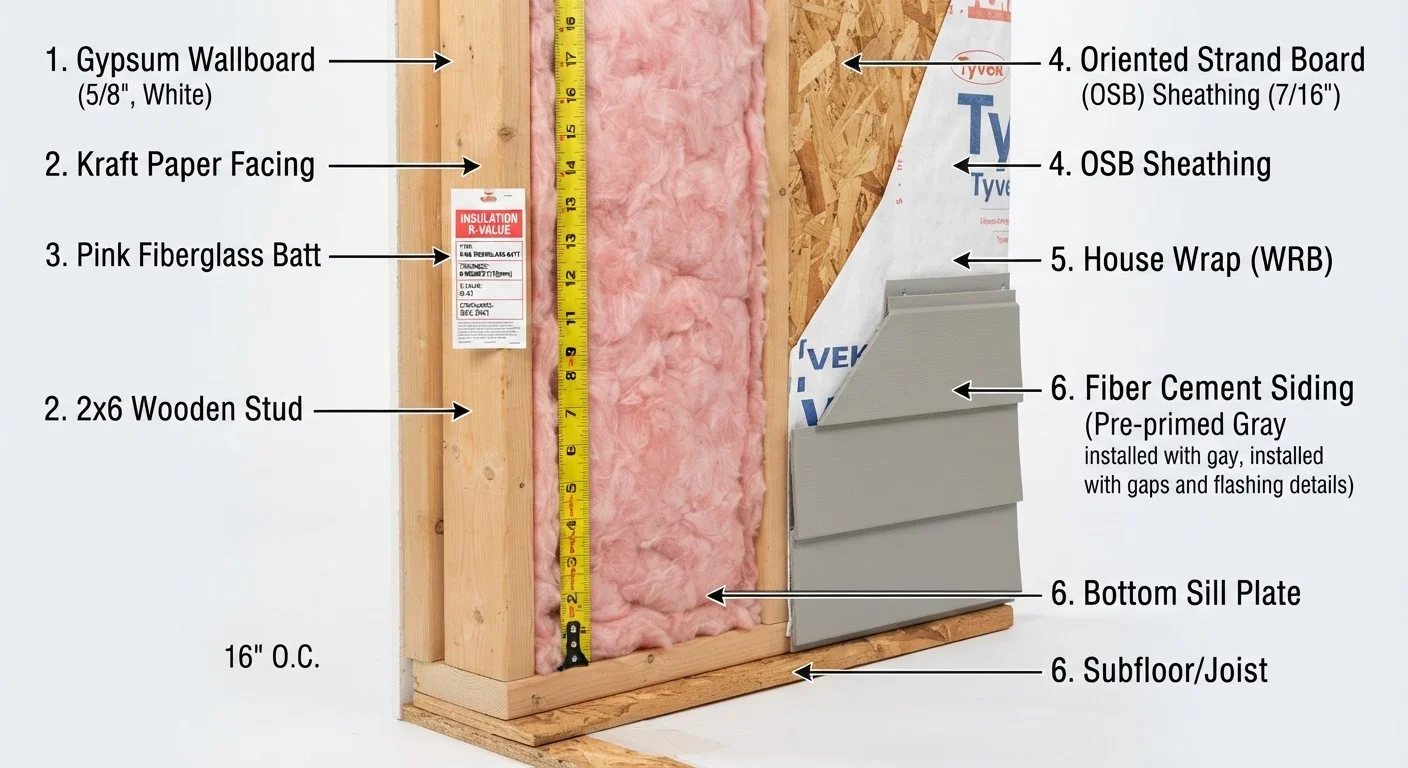
Photo: FaqsBay.com | Trending Blogs, Top Genres editorial
Key Takeaways
- R-value measures thermal resistance — higher numbers mean better insulating performance.
- Different parts of your home (attic, walls, floors) require different target R-values.
- The US Department of Energy divides the country into climate zones that determine recommended R-values.
- R-values from multiple insulation layers can be added together to reach your target.
- Insulation type, thickness, and installation quality all influence the real-world R-value achieved.
What R-Value Actually Measures
The "R" in R-value stands for resistance — specifically, resistance to heat flow. Heat naturally moves from warmer areas to cooler ones, and during winter it tries to escape through your walls, ceiling, and floors. In summer, the direction reverses and outdoor heat pushes inward. Insulation slows that movement, and R-value is simply the standardized way to quantify how well it does so.
In the US, R-value is expressed in units of °F·ft²·h/BTU. You don't need to memorize that formula, but it tells you that the measurement accounts for the temperature difference between two sides of a material and how quickly heat crosses it. A material rated R-15 resists heat flow more than one rated R-7 — the math is that direct.
One useful property of R-value is that it is additive. If you have two inches of rigid foam board (R-10) against a wall and add fiberglass batts inside the stud cavity (R-13), the combined assembly achieves approximately R-23. This makes layering insulation a practical strategy for reaching higher performance targets.
R-Value Doesn't Measure Everything
How Climate Zones Shape Your Target
The US Department of Energy (DOE) divides the country into eight climate zones, ranging from the hot and humid South (Zone 1) to the bitterly cold upper Midwest and Alaska (Zone 7–8). Your zone determines the minimum R-value recommended for each part of your home.
For example, the DOE generally recommends the following ranges for uninsulated attics:
- Zones 1–3 (Southern states): R-30 to R-49
- Zones 4–5 (Mid-Atlantic, Midwest): R-38 to R-60
- Zones 6–8 (Northern states, mountains): R-49 to R-60
Wall and floor recommendations are lower than attic targets because walls have less surface exposure and are more structurally constrained. A qualified insulation contractor or your local building department can tell you the current code requirement for your area, which may differ slightly from DOE guidelines.
~15%
Heat lost through an uninsulated attic
The US Department of Energy estimates that heating and cooling accounts for nearly half of home energy use, and attic air leakage and poor insulation are among the top contributors.
90%
US homes estimated to be under-insulated
North American Insulation Manufacturers Association (NAIMA) has cited survey data suggesting the vast majority of US homes fall below recommended insulation levels for their climate zone.
8
DOE climate zones across the US
The Department of Energy's zone map divides the continental US, Alaska, and Hawaii into eight zones that drive insulation recommendations for attics, walls, floors, and crawl spaces.
Insulation Types and Their Typical R-Values
Different insulation materials achieve different R-values per inch of thickness. Understanding this helps you choose what works in the available space.
| Insulation Type | Approximate R-Value per Inch |
|---|---|
| Fiberglass batts | R-2.9 to R-3.8 |
| Blown cellulose | R-3.2 to R-3.8 |
| Open-cell spray foam | R-3.5 to R-3.9 |
| Closed-cell spray foam | R-6.0 to R-6.5 |
| Rigid foam board (polyiso) | R-5.6 to R-6.5 |
Closed-cell spray foam and polyisocyanurate rigid board deliver the highest R-value per inch, making them practical where space is limited — such as insulating the underside of a roof deck or a thin basement wall. Blown cellulose and fiberglass are more cost-effective where depth isn't a constraint, like an open attic floor.
Installation Quality Is Just as Important as the Number
A roll of R-19 fiberglass batt installed poorly can perform significantly worse than its label suggests. Air gaps around electrical boxes, compressed sections near rafters, or batts stuffed into irregular cavities all reduce effective performance. This real-world gap between labeled and actual performance is sometimes called "installation factor" or is captured in a whole-wall R-value assessment.
Several practices help you get the R-value you pay for:
- Fill cavities completely — batts should fit snugly against all four sides of a stud bay without bunching or folding.
- Avoid compression — never squeeze batts into a space thinner than their rated thickness.
- Seal air leaks first — insulation resists conductive heat transfer, but air infiltration bypasses it entirely. Caulking gaps and using spray foam around penetrations before installing insulation significantly improves total performance.
- Use the right product for the location — faced batts, unfaced batts, vapor barriers, and rigid boards each have appropriate applications depending on climate and wall assembly.
If you're unsure about a larger project — particularly work involving existing wall cavities, conditioned crawl spaces, or unvented roof assemblies — consider consulting a certified energy auditor or insulation professional. Some installations also require building permits, especially when combined with structural or HVAC changes.
Start With an Energy Audit
Frequently Asked Questions
The content provided on our blog site traverses numerous categories, offering readers valuable and practical information. Readers can use the editorial team’s research and data to gain more insights into their topics of interest. However, they are requested not to treat the articles as conclusive. The website team cannot be held responsible for differences in data or inaccuracies found across other platforms. Please also note that the site might also miss out on various schemes and offers available that the readers may find more beneficial than the ones we cover.