
Meditation vs. Deep Breathing: Which Calming Practice Fits Your Life

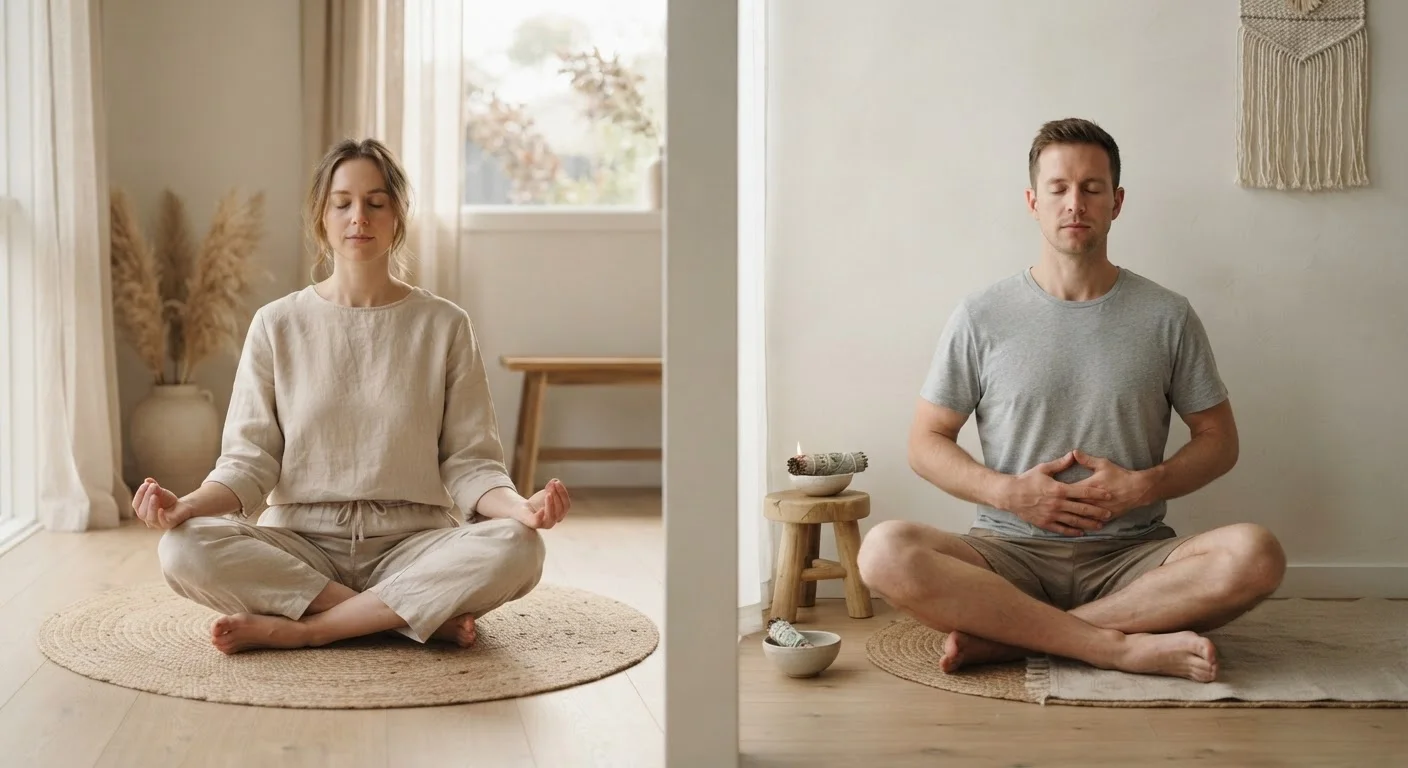
Photo: FaqsBay.com | Trending Blogs, Top Genres editorial
Key Takeaways
- Deep breathing activates the parasympathetic nervous system within minutes, making it ideal for acute stress.
- Meditation builds cumulative benefits in emotional regulation and self-awareness over weeks of regular practice.
- Both techniques are backed by peer-reviewed research and are safe for most healthy adults.
- The two practices complement each other and don't need to be an either-or choice.
- Neither replaces professional care for clinical anxiety, depression, or trauma - consult a qualified provider.
How Each Practice Works in the Body
Stress triggers a cascade of physical responses - raised heart rate, tightened muscles, shallow breathing - driven by the sympathetic nervous system. Both meditation and deep breathing interrupt that cascade, but through different entry points. To understand the full physiology, see our article on why stress feels so physical.
Deep breathing works bottom-up: deliberately slowing and deepening your breath stimulates the vagus nerve, which signals the parasympathetic nervous system to counteract the stress response. Techniques like diaphragmatic breathing, box breathing (inhale-hold-exhale-hold in equal counts), and the physiological sigh (a double inhale through the nose followed by a long exhale) have all been studied for their effect on heart rate variability and cortisol levels. The shift is measurable and fast - often within one to three minutes.
Meditation works top-down and over time. By repeatedly directing attention - to the breath, a phrase, a sensation, or simply observing thoughts without engaging them - practitioners gradually strengthen neural circuits associated with attention regulation and emotional processing. Studies using neuroimaging have found that consistent meditators show structural differences in the prefrontal cortex and amygdala, regions central to decision-making and fear response.
| Criterion | Meditation | Deep Breathing |
|---|---|---|
| Onset of effect | Cumulative over weeks | Within minutes |
| Primary mechanism | Top-down attention regulation | Bottom-up vagus nerve activation |
| Time commitment | 10-20+ min daily practice | 1-5 minutes as needed |
| Learning curve | Moderate; patience required | Very low; immediately usable |
| Environment needed | Quiet, low-distraction setting ideal | Works almost anywhere |
| Best application | Long-term resilience building | Acute stress and anxiety relief |
| Research depth | Extensive clinical literature | Growing, targeted studies |
What the Research Actually Shows
The evidence base for both practices is meaningful, though the research landscape differs in maturity and scope.
Slow, controlled breathing has been studied extensively in clinical contexts. A 2023 study published in Cell Reports Medicine found that five minutes of daily cyclic sighing - a specific breathing pattern - produced greater improvements in mood and reductions in anxiety compared with mindfulness meditation over a four-week period. That said, the study was relatively short and measured self-reported outcomes, so conclusions should be held with appropriate nuance.
Meditation's evidence base is broader and longer-standing. The American Psychological Association recognizes mindfulness-based stress reduction (MBSR) and mindfulness-based cognitive therapy (MBCT) as practices with meaningful research support for reducing symptoms of anxiety and depression. These structured eight-week programs combine meditation with awareness exercises and have been tested across thousands of participants.
8 weeks
Time for measurable brain changes from MBSR
Research published in Psychiatry Research found structural brain changes in participants after an eight-week mindfulness-based stress reduction program.
5 min
Daily breathing time shown to reduce anxiety
A 2023 Cell Reports Medicine study found five minutes of daily cyclic sighing reduced self-reported anxiety over a four-week intervention.
~40%
US adults who report using meditation
National Health Interview Survey data indicates a significant rise in meditation use among US adults over the past decade, though prevalence estimates vary by survey methodology.
It is worth noting that most studies on both practices involve self-selected, motivated participants, which can inflate results. Neither technique is a replacement for clinical treatment when mental health conditions are present - a qualified healthcare provider remains the right first contact for those concerns.
Choosing the Right Fit - or Using Both
Framing meditation and deep breathing as competitors misses the point. Many people find them most useful as a pair: deep breathing as an immediate tool for acute moments, meditation as a sustained habit that raises the baseline.
If you are deciding where to start, consider your current constraints. Deep breathing asks almost nothing logistically - no app, cushion, or quiet room is required. A few deliberate breath cycles before a stressful meeting or while waiting in traffic is a legitimate, evidence-informed intervention. For those who have never tried any formal calming practice, this low-barrier entry point often builds the confidence to explore longer forms. Our guide to starting a mindfulness practice with zero experience is a natural next step once you are ready.
Meditation asks for more: a consistent time commitment, a degree of patience with mental restlessness, and realistic expectations about early sessions feeling unremarkable. The payoff tends to accumulate over weeks rather than sessions. If you are already working with a therapist or structured mental health approach, meditation aligns well with those frameworks - for context on how mindfulness sits alongside other therapies, see our comparison of CBT and mindfulness-based therapy.
Ultimately, the practice you will actually do consistently is the right one for your life. Starting with five minutes of either - and sticking with it - delivers more benefit than the theoretically superior technique you abandon after three days.
This article is for general informational and educational purposes only and does not constitute medical or mental health advice. Consult a qualified healthcare professional for guidance specific to your individual health needs.
The content provided on our blog site traverses numerous categories, offering readers valuable and practical information. Readers can use the editorial team’s research and data to gain more insights into their topics of interest. However, they are requested not to treat the articles as conclusive. The website team cannot be held responsible for differences in data or inaccuracies found across other platforms. Please also note that the site might also miss out on various schemes and offers available that the readers may find more beneficial than the ones we cover.